
FRANCE SHIFTS TO “WAR ECONOMY”: PARIS UNVEILS AGGRESSIVE SURGE IN MISSILE AND DRONE ARSENALS


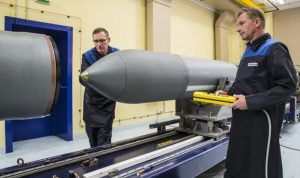
In a radical recalibration of its national security doctrine, France has officially announced its transition to a “War Economy.” According to the latest draft of the Military Programming Law (LPM) set for presentation on April 8, 2026, Paris is moving away from the procurement of expensive new platforms to focus on the “mass and lethality” of its munitions stockpiles.
The move, catalyzed by the intense consumption rates seen in Ukraine and recent high-intensity interceptions in the Middle East, prioritizes replenishing “empty shelves” over increasing the number of fighter jets or frigates.
The 8.5 Billion Euro Munition Blitz
The French government has earmarked an additional 8.5 billion euros specifically for ammunition and missile projects through 2030. This funding serves as the financial engine for what analysts call an “aggressive stockpile surge.” Key targets in the draft include:
-
Kamikaze (Loitering) Drones: A staggering 400% increase in inventory.
-
AASM Hammer Guided Bombs: Production to surge by 240%, reflecting their high effectiveness in modern precision strikes.
-
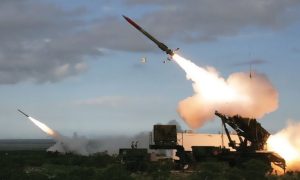
Aster & MICA Missiles: A 30% increase in stocks for both air-defense and air-to-air variants.
These systems, produced primarily by European giants MBDA and Safran, are the backbone of French air superiority. The surge is a direct response to recent operations in the UAE and the Red Sea, where French Rafale jets reportedly depleted significant MICA stocks while fending off swarms of Iranian-origin drones.
Strategy Shift: Lethality Over Platforms
In a surprising departure from traditional procurement, the 2030 roadmap does not include orders for new Dassault Rafale fighters or additional frigates. Instead, the “War Economy” model dictates that existing assets must be made more lethal and sustainable. By focusing on the “teeth” rather than the “tail,” France aims to ensure that its current fleet remains combat-effective in “high-intensity” scenarios.
The Tank Gap: Searching for a Leclerc Successor
France’s land forces are facing a looming capability vacuum. The Franco-German Main Ground Combat System (MGCS)—the planned successor to the Leclerc tank—is mired in industrial friction and is not expected to enter serial production until 2045.
To prevent a “tank gap,” Paris is now actively considering an intermediate-generation tank to serve as a bridge. French MP François Cormier-Bouligeon emphasized the urgency, stating that the military cannot afford to “waste the year 2026” without a concrete decision on a Leclerc replacement.
The Eurodrone Mystery
One of the most notable omissions in the new draft is the lack of funding for the Eurodrone (MALE UAV) project. While France remains a key partner alongside Germany, Italy, and Spain, the absence of allocated budget suggests that Paris may be deprioritizing the project in favor of lower-cost, high-attrition loitering munitions.