

Ballistic Missile
UGM-133 Trident II
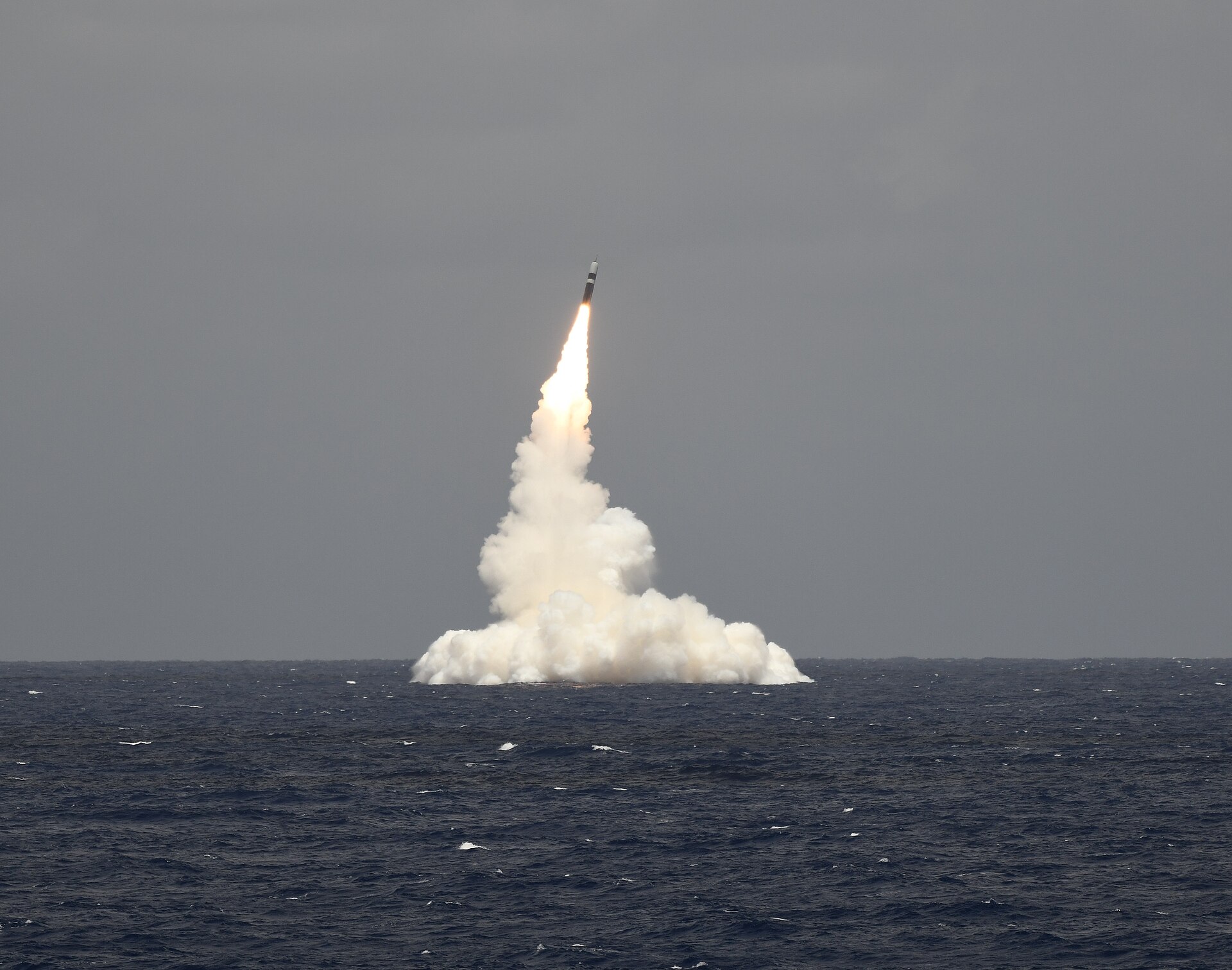
UGM-133 Trident II (D5) is a three-stage solid-fuel submarine-launched ballistic missile made by Lockheed Martin Space in the United States, in service since 1990. It is the only SLBM deployed by the US and the UK, with a range of about 12,000 km.
 United States|Lockheed Martin Space
What Is the UGM-133 Trident II? Overview, History and Development
Trident II first flew in January 1987 and entered service in 1990 aboard USS Tennessee. The missile is 13.42 m long and 2.11 m in diameter, with a launch mass of about 59 tonnes. Its range is about 12,000 km, varying with payload, and reentry speed is about 24,000 km/h. Warheads are the W76-1/-2 (90 kt or low yield) and W88 (about 455 kt), with up to eight per missile by design and typically four to five deployed.
The US Navy carries 20 missiles per Ohio-class submarine, while the Royal Navy carries up to eight on each Vanguard-class boat. UK missiles are pooled with the US at Kings Bay, Georgia. More than 190 consecutive successful test flights since 1989 are claimed by the Navy. The D5LE (from 2017) and D5LE2 (2030s) life-extension programmes keep it to the 2040s. More than 500 have been built, at about US$30 million each (estimate). Rivals include M51, Bulava and JL-3.
UGM-133 Trident II Specifications: Range, Speed, Warhead and Guidance
UGM-133 Trident II Variants and Versions Compared
Trident II D5 is the original version that entered service in 1990.
Trident II D5LE is the life-extended version with updated guidance and electronics, fielded from 2017.
D5LE2 is the planned further upgrade for the 2030s to serve on Columbia-class and Dreadnought-class submarines.
Which Countries Use the UGM-133 Trident II? Operators and Users
United States United Kingdom
UGM-133 Trident II FAQ: Price, Range, Operators and Most Asked Questions
How far can the Trident II missile fly?
The Trident II D5 flies about 12,000 km, which is roughly 7,360 miles. Range varies with the number of warheads carried, and the missile is launched from submerged submarines.
How fast is the Trident II missile?
The Trident II reaches about 24,000 km/h at reentry, or roughly Mach 24. Its three solid-fuel stages accelerate the warheads before they separate and descend to their targets.
How much does a Trident II missile cost?
A Trident II missile costs about US$30 million each according to DoD estimates. That figure is hedged, and more than 500 missiles have been built for the US and the UK.
Which countries use the Trident II?
The United States and the United Kingdom use the Trident II. Each Ohio-class submarine carries 20 missiles, while a UK Vanguard-class boat carries up to eight, drawn from a shared pool at Kings Bay.
How many warheads does a Trident II carry?
A Trident II is designed to carry up to eight warheads, though typically four to five are deployed in practice. Warheads include the W76-1/-2 and the W88, which yields about 455 kt.
Trident II vs Bulava: which is better?
The Trident II has a longer range of about 12,000 km against about 8,300 km for the Russian Bulava, and a long test record. The Bulava carries more warheads, 6–10 by reports, and was delayed by early test failures.