Attack Helicopter
Mi-28 Havoc
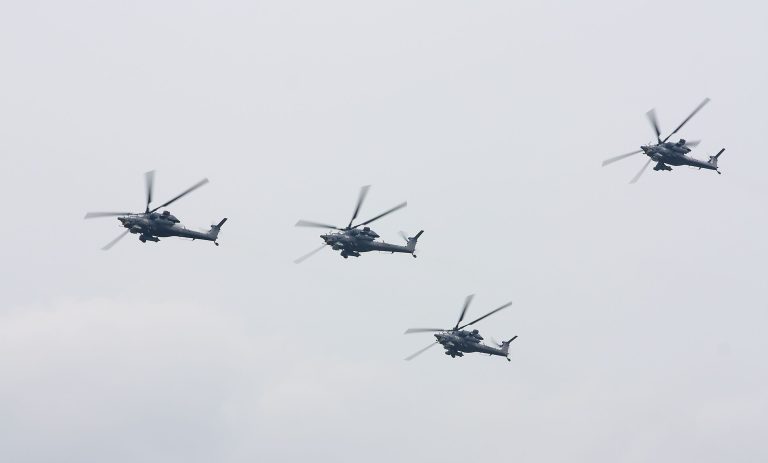
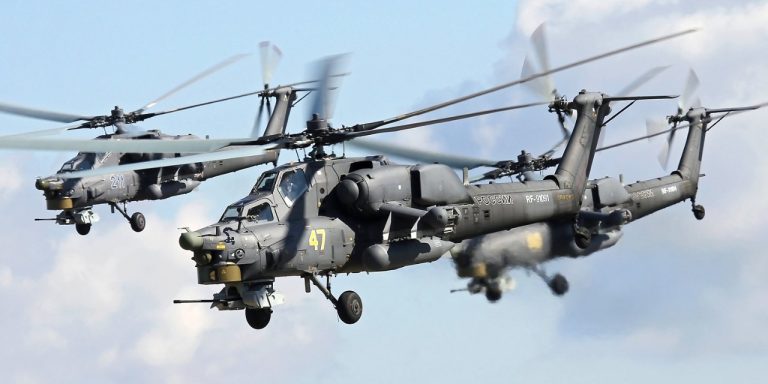
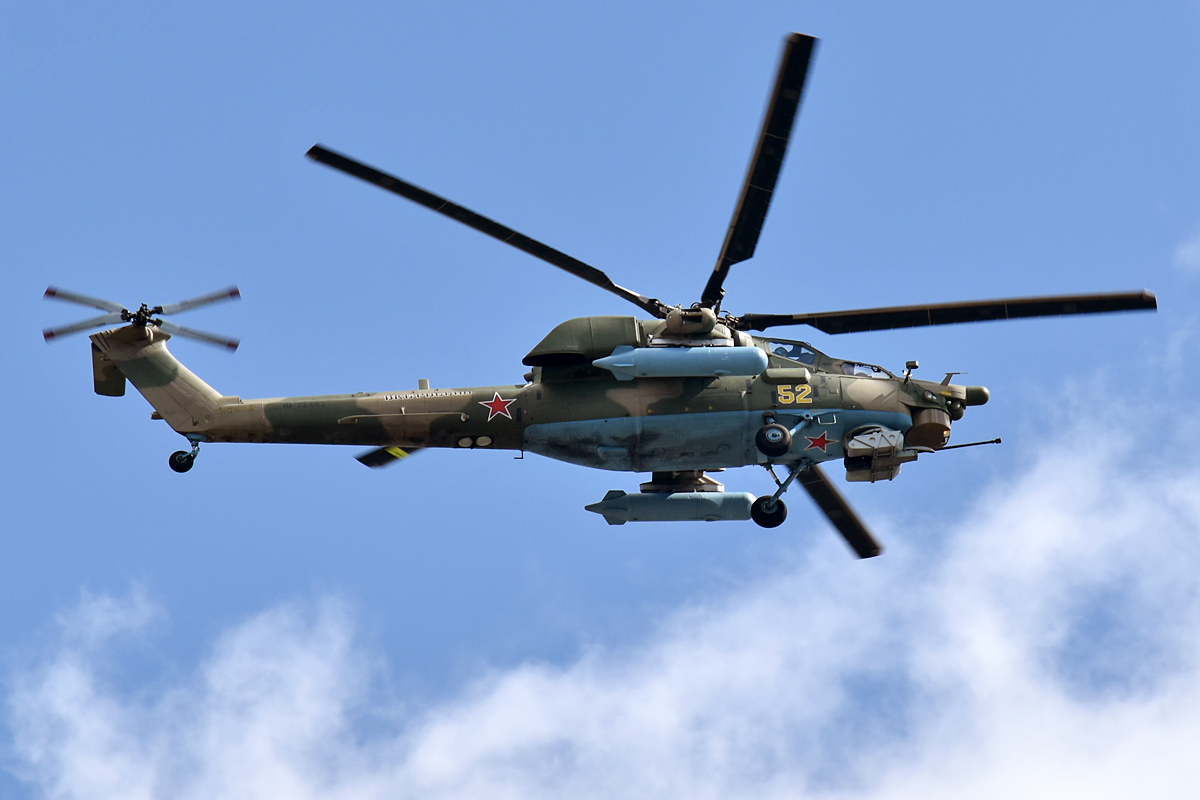
The Mi-28 Havoc is a Russian two-seat attack helicopter designed by Mil and built by Rostvertol in Rostov-on-Don. Its night-capable Mi-28N ‘Night Hunter’ version is one of Russia’s two main attack helicopters, alongside the Ka-52, and has seen combat in Syria, Iraq and Ukraine.
 Russia|Mil / Rostvertol
Overview
The prototype first flew on 10 November 1982 but lost the Soviet competition to the Kamov Ka-50, and work slowed through the 1990s. The all-weather Mi-28N was finally accepted into Russian service in October 2009. Its two crew sit in tandem armoured cockpits designed to withstand 12.7–20 mm fire. Current aircraft use two Klimov VK-2500 engines, while an N025 radar above the rotor and an EO/IR turret handle targeting.
Weapons include a 2A42 30 mm cannon, up to 16 Ataka anti-tank missiles, rockets and air-to-air missiles; the modernised Mi-28NM, delivered since 2019, adds the long-range LMUR missile. More than 190 have been built. Iraq, Algeria and Uganda fly the Mi-28NE export model, and photos in 2026 suggested one in Iran, without official confirmation. Open-source trackers had visually confirmed about 14 losses in Ukraine by late 2025.
Key Specifications
Variants
The standard Russian all-weather version with the N025 mast-mounted radar, accepted into service in 2009.
The export version, sold to Iraq, Algeria and Uganda, often together with Mi-35M helicopters.
A deep modernisation with a new radar, dual controls, uprated VK-2500P engines and the LMUR missile, delivered since 2019.
Operators
Russia Algeria
 Iraq
 Uganda
Frequently Asked Questions
How much does a Mi-28 cost?
There is no official unit price for the Mi-28. Export contract values vary widely depending on the weapons, training and support included, so any per-aircraft figure should be treated as an estimate.
How fast is the Mi-28?
The Mi-28 has a maximum speed of about 300–320 km/h and cruises at around 270 km/h. Its range is about 435 km, rising to roughly 1,100 km in ferry configuration, and its service ceiling is about 5,700 m.
Mi-28 vs Apache: which is better?
Neither is clearly superior. The AH-64 Apache has a larger fleet, a longer combat record and more mature sensors, while the Mi-28 has heavier cockpit armour and a 30 mm cannon. The Mi-28NM narrows the gap with a new radar and long-range missiles.
Mi-28 vs Ka-52: what is the difference?
The Mi-28 uses a conventional single main rotor and tandem seating, while the Ka-52 has coaxial rotors and side-by-side seats. Russia operates both as its main attack helicopters, often in the same combat areas.
Which countries use the Mi-28?
Russia is the main operator, and the Mi-28NE export version serves with Iraq, Algeria and Uganda. Photos from January 2026 suggested at least one Mi-28NE in Iran, but neither Moscow nor Tehran has confirmed a deal.
How many Mi-28 have been lost in Ukraine?
Open-source trackers had visually confirmed about 14 Mi-28 losses in Ukraine by November 2025. These counts rely on photo and video evidence, are disputed and change as new material appears.