

Air Defense
9K38 Igla
The 9K38 Igla is a Soviet and Russian man-portable air-defence missile designed by KBM Kolomna, in service since 1983. Known to NATO as SA-18 Grouse, it has a range of about 5.2 km and has been exported to more than 30 countries.
 Russia|KBM Kolomna
What Is the 9K38 Igla? Overview, History and Development
The 9K38 Igla was designed by KBM Kolomna, with a first flight in 1981 and Soviet service from 1983. NATO calls it SA-18 Grouse, while the Igla-1 is the SA-16 Gimlet. The missile is 72 mm in diameter, about 10.8 kg, with a 1.17 kg warhead and a system weight of about 18 to 19 kg. Range is about 5.2 km, ceiling about 3.5 km and speed about 570 m/s. A two-colour infrared seeker improves flare resistance. Igla-S (9K338, SA-24 Grinch) from 2004 has longer range and a heavier warhead.
Tens of thousands have been built and more than 30 countries operate Igla, including Russia, Ukraine, Belarus, Kazakhstan, India, Vietnam, Finland, Bulgaria, Hungary, Greece, Slovakia and Czechia, as commonly cited. Finland’s ITO 90 and the Polish Grom and Piorun are derivatives. Igla has been used in Afghanistan against Soviet aircraft, in Chechnya, Syria and Ukraine by both sides. Syria, Iraq, Libya and Yemen have used the Igla series, with many captured or transferred. Rivals include Stinger, Mistral, Starstreak and QW-series.
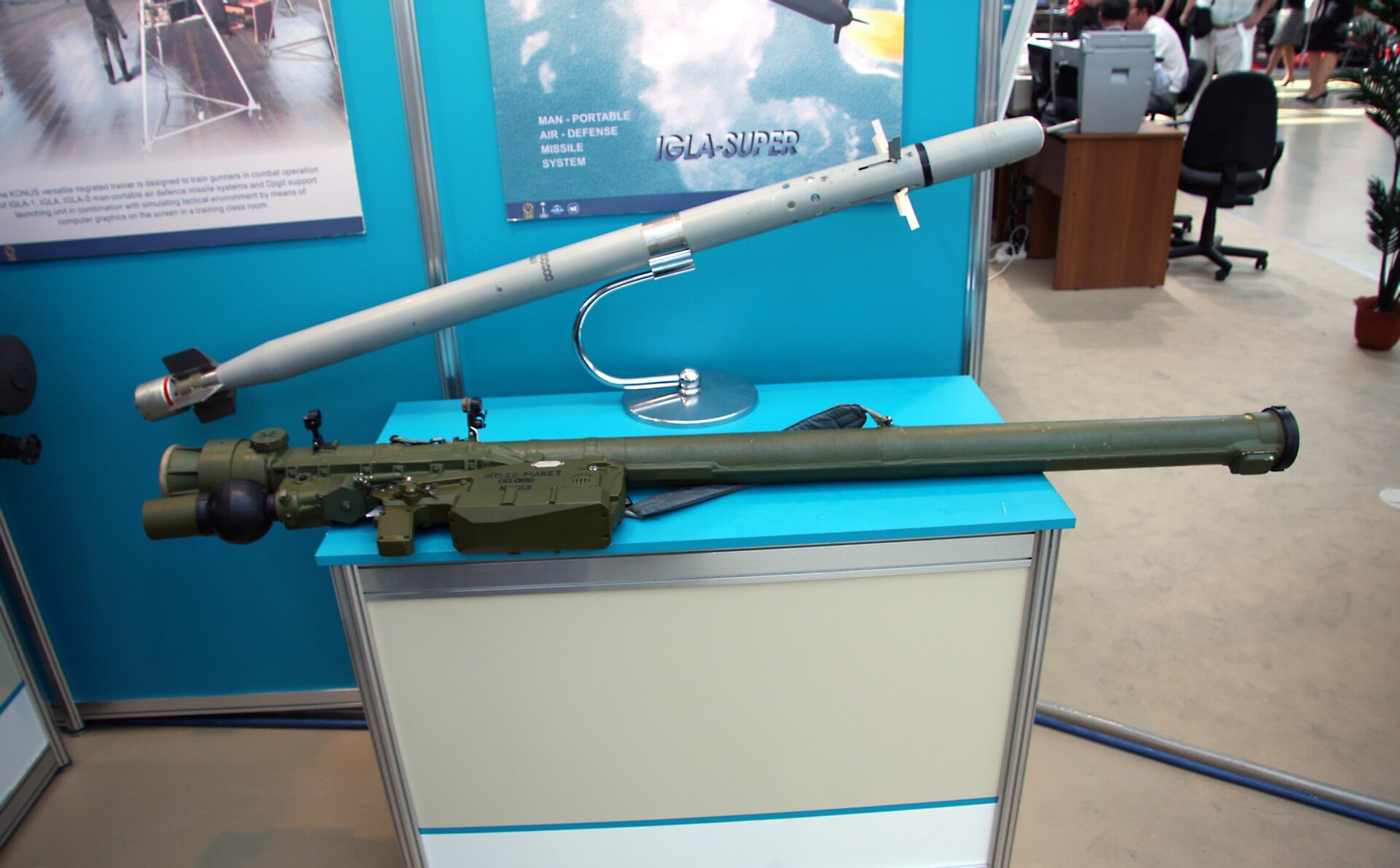
9K38 Igla Specifications: Range, Altitude, Missiles and Radar
9K38 Igla Variants and Versions Compared
9K38 Igla is the main version in Soviet service from 1983.
9K310 Igla-1 is the earlier version known to NATO as SA-16 Gimlet.
9K338 Igla-S is the improved version from 2004 with longer range and heavier warhead.
Which Countries Use the 9K38 Igla? Operators and Users
Russia Ukraine
 Belarus
 Kazakhstan
 India
 Vietnam
 Finland
 Bulgaria
 Hungary
 Greece
 Slovakia
 Czechia
9K38 Igla FAQ: Price, Range, Operators and Most Asked Questions
What is the range of the Igla missile?
The 9K38 Igla has a range of about 5.2 km and a ceiling of about 3.5 km. Its speed is about 2,050 km/h, or roughly 570 m/s.
What is the difference between Igla and Igla-S?
The Igla-S (9K338, SA-24 Grinch), introduced from 2004, has a longer range and a heavier warhead than the 9K38 Igla. Both use infrared homing.
Which countries use the Igla missile?
More than 30 countries use the Igla, including Russia, Ukraine, Belarus, Kazakhstan, India, Vietnam, Finland, Bulgaria, Hungary, Greece, Slovakia and Czechia. The list is partial and commonly cited.
What is the NATO name of the Igla?
The 9K38 Igla is known to NATO as the SA-18 Grouse. The Igla-1 is the SA-16 Gimlet, and the Igla-S is the SA-24 Grinch.
Igla vs Stinger: which is better?
The Igla and the US FIM-92 Stinger are both infrared man-portable missiles of similar class. The Igla has a two-colour seeker for better flare resistance and a range of about 5.2 km, but outcomes depend on version and operator training.
Has the Igla been used in combat?
Yes, the 9K38 Igla has been used in Afghanistan, Chechnya, Syria and Ukraine, where both sides use it. Syria, Iraq, Libya and Yemen have also used the Igla series.