Laser Weapon Power Levels Explained, From 10 kW to 300 kW
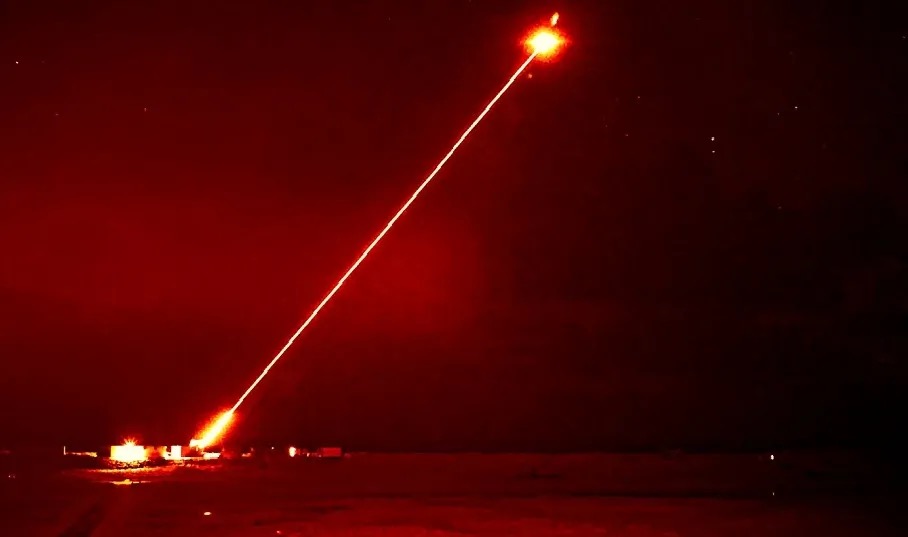
Laser weapon power levels span roughly 10 kW to 300 kW, and the number on the brochure decides whether a beam dazzles a sensor, burns a small drone in seconds or has a chance against a cruise missile. Fielded systems today sit mostly between 20 and 60 kW, while the much-discussed 100 kW and 300 kW classes remain prototypes or goals, so the gap between marketing and reality is wide.
What laser power levels mean
A kilowatt rating describes the optical power the laser puts out, not the energy that actually reaches the target. The damage done depends on power multiplied by time, reduced by atmospheric loss and how steadily the beam stays on one spot. A 50 kW beam held for five seconds delivers about 250 kilojoules, enough to burn through the skin of a small drone, while the same beam would need much longer to degrade a hardened missile.
That is why militaries speak of dwell time. Most modern military lasers are fiber lasers that combine many modules into one beam, and power scales by adding modules, at the cost of weight, cooling and electricity.
Laser weapon power tiers from 10 kW to 300 kW
| Power class | Typical targets | Status |
|---|---|---|
| Under 10 kW | Sensors, cameras, small quadcopters at short range | Widely demonstrated; dazzlers and small counter-drone lasers |
| 10-30 kW | Small and medium drones, mortars at short range | Fielded or in evaluation on trucks and vessels |
| 50-60 kW | Larger drones, fast boats, some rockets and mortars | Prototypes and early operational trials |
| 100 kW | Bigger drones, rockets, artillery shells, small boats | Army and Navy prototypes; limited fielding |
| 300 kW | Cruise missiles and other hard, fast targets | Development goal; not fielded, per public sources |
Under 10 kW, lasers mostly blind or confuse optics, a mission also performed by the infrared countermeasures explained in our guide to chaff, flares and DIRCM. Between 10 and 30 kW they begin to destroy quadcopters and small fixed-wing drones. Above 50 kW the list of targets widens, and at 300 kW developers hope to defeat cruise missiles, although heat, thermal blooming and dwell time all become harder.
Which laser weapons exist today
| System | Country | Power class and status |
|---|---|---|
| DE M-SHORAD | United States (Army) | 50 kW class on a Stryker; prototype vehicles fielded for evaluation |
| HELIOS | United States (Navy) | 60 kW class with growth potential; fitted to a destroyer for trials |
| LOCUST X3 E-HEL | United States (Army) | About 30 kW class turret for counter-drone use |
| DragonFire | United Kingdom | Reported around 50 kW class; firing trials on drones and plans for Royal Navy ships later this decade |
| EOS Apollo | Australia (Dutch interest) | Anti-drone laser; a Dutch letter of intent has been signed |
| Russian and Chinese systems | Russia and China | State-media claims only; capability and power levels unverified |
The Army’s DE M-SHORAD turned a Stryker into a mobile laser shooter. The UK’s DragonFire, led by MBDA and partners, has drawn attention because the Ministry of Defence says each shot costs only a few pounds, a government claim rather than an independent figure. Dutch interest in the EOS Apollo, covered in our article on the Apollo laser, shows the European market warming to the concept.
Why more power is not the whole answer
Raising output is the easy part. A 300 kW system needs roughly three times the electricity and cooling of a 100 kW one, which means a large vehicle, a ship or a fixed site. Even then, the beam must be held on one point for several seconds against a target that may be crossing at hundreds of meters per second.
The atmosphere also fights back. Rain, fog, smoke and dust scatter the beam, and intense heating of the air can defocus it. Reflective or ablative coatings can shrug off energy that would burn a plain drone. So the first operational users treat lasers as one layer in a defense, used against cheap drones, not as a replacement for interceptors.
Laser weapons vs microwaves and jammers
Lasers kill one target at a time with great precision and long range. High-power microwaves cover a cone of sky and work well against swarms but have shorter reach, a contrast described in our profile of Epirus and its Leonidas system. Jammers are cheap but fail against fiber-optic or autonomous drones. Most planners expect a mix of all three.
Laser weapon power frequently asked questions
How powerful are military lasers today?
Most fielded or trialed counter-drone lasers fall between roughly 20 and 60 kW, with some 100 kW-class prototypes in testing.
Can a laser shoot down a cruise missile?
Developers aim to do so at around 300 kW, but no such system is publicly known to be fielded. Hardened missiles need high power and long dwell time.
How much does a laser shot cost?
Governments say a few dollars or pounds per shot, excluding system cost. These are government claims.
What is DragonFire?
A British laser directed-energy weapon led by MBDA, reported to be in the 50 kW class and in trials for Royal Navy ships.
What stops a laser weapon from working?
Rain, fog, smoke, dust, reflective coatings and a moving target that denies the beam enough time on one spot.
- US Army and US Navy public information on DE M-SHORAD and HELIOS
- UK Ministry of Defence statements on DragonFire
- Wikipedia – Laser weapon and Directed-energy weapon (accessed October 2026)
- Manufacturer product literature (manufacturer claims)
- Defence & Tech reporting on counter-drone technology