
DF-21D, the Missile That Changed How Carriers Sail
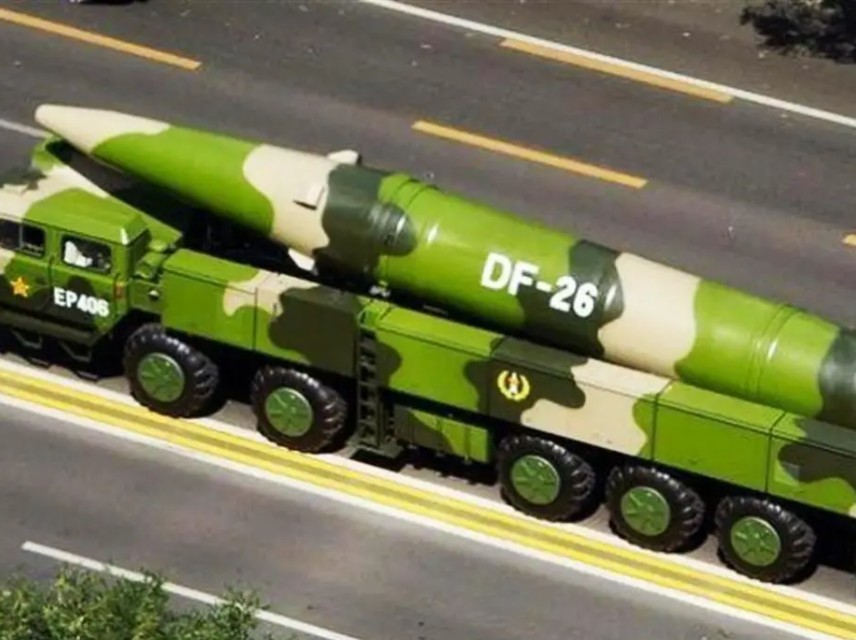
No weapon has moved American aircraft carriers as effectively as one that has never hit a ship. China’s DF-21D, the world’s first anti-ship ballistic missile, promises to drop a maneuvering warhead onto a moving carrier from 1,500 kilometers or more, and the mere possibility reorganized US Pacific strategy, budgets and fleet behavior.
From nuclear deterrent to ship-killer
The DF-21 began life as a two-stage, solid-fuel, road-mobile medium-range missile, 10.7 meters long, deployed from 1991 as a nuclear deterrent, with the A and C variants adding accuracy and conventional roles at ranges around 1,700 kilometers. The D variant, publicly acknowledged in the 2010s, repurposed that mature booster for a different problem entirely, holding American carrier strike groups at risk beyond the range of their own air wings.
How an ASBM is supposed to work
A ballistic trajectory crosses 1,500 kilometers in roughly ten minutes, far faster than any cruise missile, but a carrier moves during that flight. The DF-21D’s answer is a maneuverable reentry vehicle that receives targeting updates and steers during descent, using its own terminal seeker to find the ship beneath it. The engineering challenges are ferocious, plasma sheathing at reentry speeds interferes with seekers, the warhead must discriminate a carrier from escorts and decoys, and the whole attack depends on knowing where the ship was minutes before launch.
The kill chain is the weapon
The missile is arguably the easiest third of the system. Before launch, China must find a carrier in millions of square kilometers of ocean, identify it, and track it with enough freshness to aim a ballistic shot. That burden falls on ocean-surveillance satellites, over-the-horizon radars whose returns are coarse, maritime patrol aircraft and submarines, all fused fast enough to matter. Wartime kill chains degrade, satellites are jammed or attacked, aircraft are shot down, and every link an American commander can cut makes the missile blind. This is why US planners talk less about intercepting the DF-21D and more about breaking its eyes.
What the tests have and have not shown
| Claim | Status |
|---|---|
| Road-mobile launch, 1,500+ km range | Demonstrated missile capability |
| MaRV terminal maneuvering | Assessed from tests into desert target ranges |
| Hitting a moving ship at sea | Not publicly demonstrated |
| Wartime kill chain under attack | Untested |
| August 2020 salvo into South China Sea | Fired with DF-26B toward sea areas; results undisclosed |
Chinese tests have struck instrumented targets in desert ranges shaped like ships, and the August 2020 launches into the South China Sea, alongside DF-26B rounds, were reported to have engaged target areas at sea, but no public evidence confirms a hit on an actual moving vessel. The honest assessment is a weapon of demonstrated components and undemonstrated integration, which is still enough to change an admiral’s arithmetic when the cost of being wrong is 5,000 sailors.
How the US Navy answered
The American response has been layered and expensive, SM-6 interceptors with terminal ballistic defense capability aboard escorts, distributed operations that spread aircraft across more and smaller decks, carrier operating patterns that exploit the kill chain’s refresh lag, electronic attack on the surveillance layer, and longer-ranged air wings so carriers can stand farther out. The MQ-25 tanker drone and renewed interest in extended-range strike exist substantially because the DF-21D and its longer-armed sibling DF-26 compressed the carrier’s sanctuary. Deterrence by uncertainty, it turns out, works in both directions.
The Imitation Compliment
The concept China pioneered is now spreading. Iranian programs claim anti-ship ballistic missiles derived from their Fateh family, and Houthi forces in Yemen have fired ballistic missiles at merchant shipping and US warships in the Red Sea since 2023, the first actual combat use of the category. Those engagements, in which American destroyers successfully intercepted incoming rounds with Standard Missiles, offered a preview of the ASBM duel in miniature, and both sides of the Pacific studied the telemetry.
The Red Sea lesson cuts both ways. Interception worked, validating the defensive layer, but the attacks also forced warships to burn multimillion-dollar interceptors against cheap missiles for months, exactly the magazine-exhaustion problem a DF-21D salvo would pose at ten times the scale and sophistication.
Frequently asked questions
What is the DF-21D?
China’s road-mobile anti-ship ballistic missile, the first weapon designed to strike moving carrier groups at 1,500+ km with a maneuverable reentry vehicle.
Has the DF-21D ever hit a moving ship?
No publicly known test has demonstrated a hit on a ship moving at sea; desert-range and 2020 sea-area tests remain the public evidence base.
Can the DF-21D be intercepted?
US Aegis ships carry SM-6 and SM-3 interceptors with capability against such threats, but the preferred American counter is disrupting the surveillance kill chain the missile needs.
Why is the DF-21D called a carrier killer?
Because its warhead size, range and terminal guidance are sized specifically to threaten US aircraft carriers, forcing them to operate farther from Chinese shores.
- Wikipedia – DF-21 (accessed October 2026)
- US DoD China Military Power reports
- Analyses of the August 2020 South China Sea missile tests