Tekever, the Portuguese Drone Firm Watching Europe’s Seas
The most consequential European drone company you have never heard of is Portuguese. Tekever’s modest catapult-launched aircraft watch the English Channel for small boats, hunt for the Royal Air Force under the name StormShroud, patrol the Atlantic for five navies and fly electronic warfare missions over Ukraine, all from a company that began in 2001 as four engineering graduates writing software in Lisbon.
From software house to drone prime
Tekever spent its first decade in enterprise software and space communications, including inter-satellite link technology, before pivoting toward unmanned aircraft with a philosophy borrowed from its origins, the airframe is a truck, the sensors and autonomy software are the product. That software-first posture let a company from a mid-sized NATO nation compete against aerospace primes on missions where data quality, not airframe glamour, wins contracts.
The AR3 and AR5 workhorses
| System | Class | Launch | Typical missions |
|---|---|---|---|
| AR4 | Hand-launched mini | By hand | Squad-level reconnaissance |
| AR3 | Medium tactical | Catapult, parachute recovery | Maritime and land ISTAR, EW payloads |
| AR5 | Tactical SATCOM | Runway | Long-endurance maritime patrol, border surveillance |
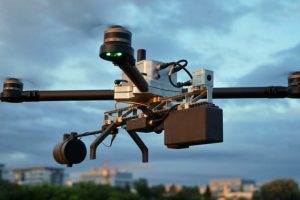
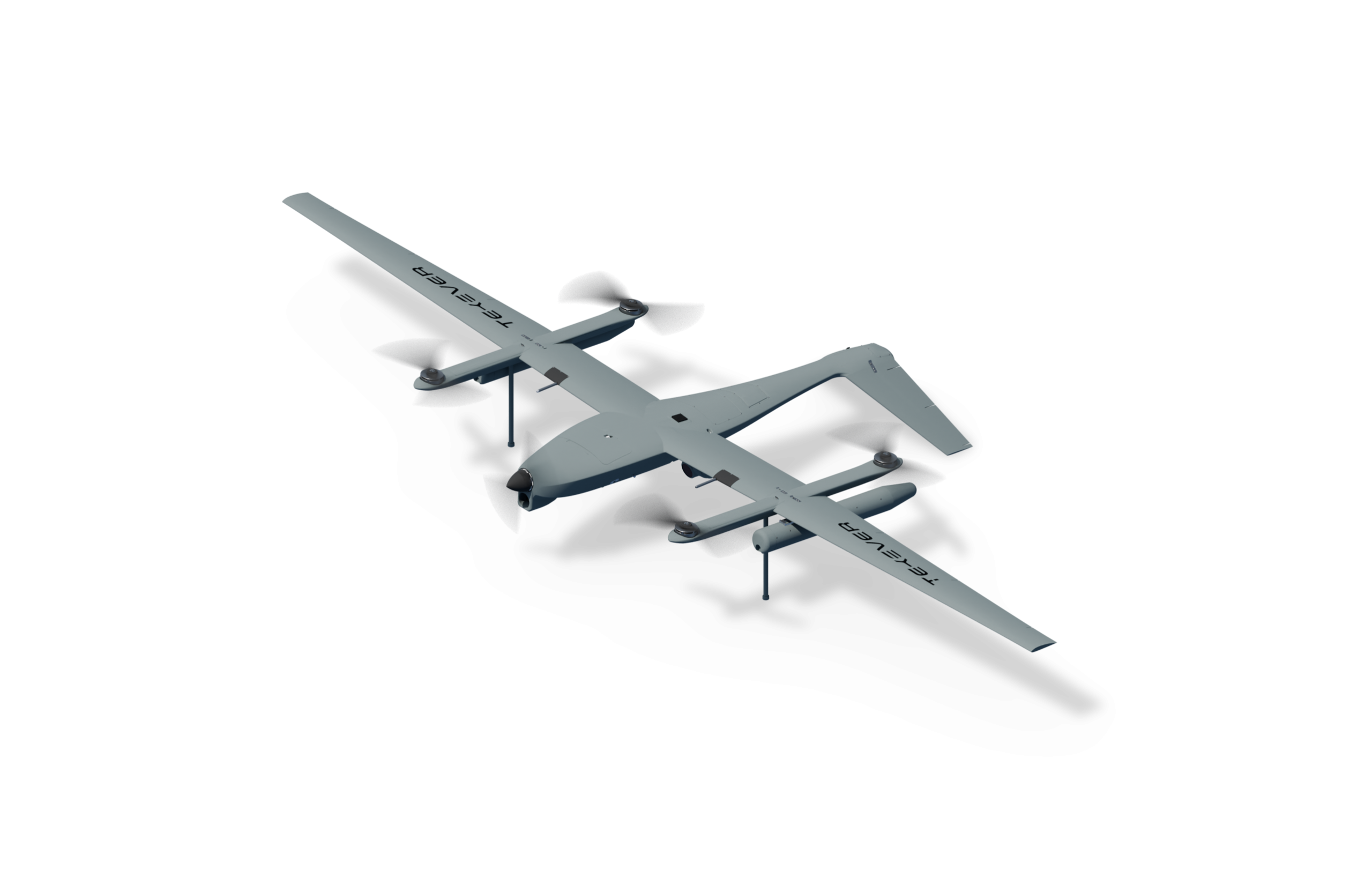
The AR3 is the volume product, small enough to operate from a ship deck or a field, carrying electro-optical, infrared, radar or electronic-sensing payloads with parachute recovery. The AR5 is the endurance platform, a twin-boom aircraft with satellite communications that stays aloft through long maritime patrol cycles, hunting periscopes, smugglers and distress cases across wide ocean areas. Neither is exotic, both are relentlessly iterated, certified for civil airspace segments and priced for fleets.
StormShroud and the British bet
Britain has become Tekever’s decisive market. The RAF fields the AR3 as StormShroud, pairing it with electronic warfare payloads to blind enemy radars alongside crewed fighters, the first operational fruit of the UK’s autonomous collaborative platform push. Project Corvus followed in 2025-2026, selecting the AR5 to replace the Army’s troubled Watchkeeper with up to 24 systems and £400 million, and the company has committed £400 million of its own to UK facilities. For a Portuguese firm to displace incumbent primes in British ISTAR is a small earthquake in European procurement.
The migration surveillance business
The commercial anchor is less martial. Under agreements with the UK Home Office worth up to £1 billion over successive contracts, Tekever aircraft patrol the Channel feeding live video of small-boat crossings to coastguard and border authorities, and similar maritime surveillance flies for Frontex-linked operations and Atlantic fisheries enforcement. Border surveillance is politically charged work, but it provides the steady civil revenue that lets a drone company survive procurement winters between defense contracts.
Ukraine, quietly
Tekever says little about Ukraine, but its aircraft have flown there since early in the war, reportedly including electronic-sensing missions mapping Russian jamming and radar emissions, and the company iterates hardware against that environment like every serious European drone maker now must. Combat exposure plus British institutional adoption has turned Tekever into the rare European answer when planners ask who besides the Americans and Turks can actually deliver proven tactical ISR at scale, and reporting in 2025 placed the company’s valuation above a billion dollars.
The Watchkeeper Lesson
Project Corvus carries symbolic weight beyond its £400 million. Watchkeeper, the system the AR5 replaces, became a British procurement cautionary tale, years late, over budget and retired with capabilities the army never fully used. Choosing a Portuguese SME’s derivative of a working commercial platform over a bespoke prime-led development is the Ministry of Defence deliberately inverting that model, buy what flies, iterate in service, and hold the vendor to software-era update cycles.
If Corvus succeeds on schedule, the precedent will echo through European drone procurement, because every ministry holds a Watchkeeper-shaped scar somewhere in its recent history and a Tekever-shaped temptation in its inbox.
Space, the Quiet Second Act
Tekever’s space unit predates its drones and still matters. The company builds inter-satellite link technology and small-satellite systems, capabilities that fold neatly into its surveillance business as drone-satellite data fusion becomes standard for maritime patrol. A firm that owns both the aircraft over the water and communications payloads above it can sell persistent maritime awareness as a service rather than hardware, which is where the margins in surveillance are migrating.
Frequently asked questions
What is StormShroud?
The Royal Air Force’s name for Tekever’s AR3 fitted with electronic warfare payloads, operated alongside crewed fighters to suppress enemy radars.
What is Project Corvus?
The British Army’s program replacing Watchkeeper with up to 24 Tekever AR5 systems, valued up to £400 million, with deliveries toward 2029.
What does Tekever do in the English Channel?
Under UK Home Office contracts worth up to £1 billion, its drones provide persistent surveillance of small-boat migrant crossings for border authorities.
Is Tekever in Ukraine?
Yes, its AR3 has served there since early in the war, including reported electronic-sensing missions, informing rapid product iteration.
- Wikipedia – Tekever (accessed October 2026)
- UK MoD announcements on StormShroud and Project Corvus
- Reporting on Home Office aerial surveillance contracts