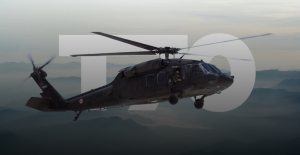

F-35 vs Su-57, a Fleet Against a Promise

F-35 versus Su-57 is the fifth-generation matchup that exists mostly on paper, because one side has built over a thousand jets and the other about forty. Still, the comparison matters: it defines Russia’s export pitch, shapes Indian and Algerian choices, and tests what ‘stealth fighter’ actually means when production, sensors and software, not airshow maneuvers, decide air wars.
Two different fifth generations
The F-35 was conceived as a networked sensor-striker built in industrial mass: one design, three variants, allied production and a software pipeline treated as the real weapon. The Su-57 is a different animal, an agile, twin-engine air-superiority frame with stealth applied as one trait among several, supermaneuverability and big internal fuel prioritized where Lockheed prioritized signature and fusion. Judged by its own doctrine each is coherent; judged as programs, one is a fleet and the other remains a development squadron.
F-35 vs Su-57 comparison table
| Parameter | F-35A | Su-57 |
|---|---|---|
| First flight / service | 2006 / 2015-16 | 2010 / December 2020 |
| Built | 1,100+ across variants | About 44 including ~10 test jets (2026) |
| Engines | One F135, 191 kN class | Two AL-41F1, 142 kN each; Izdeliye 30/AL-51 still in development |
| Open RCS estimates | ~0.005 m² class frontal | ~0.1-0.5 m² per airshow-era assessments |
| Radar | APG-81 AESA plus DAS/EOTS fusion | N036 Byelka AESA suite plus 101KS IRST complex |
| Weapons carriage | Internal bays, expanding external options | Tandem internal bays, R-77M and Kh-series |
| Combat use | Israeli, US and allied strike operations | Standoff launches and claimed missions over Ukraine, limited and contested |
| Unit cost | About $80-110M by variant | Undisclosed; export offers reportedly well below Western peers |
Stealth, the measurable gap
Stealth is where the designs diverge most visibly. The F-35’s shaping, serpentine inlets and coating regime target the fraction-of-a-birds RCS class open literature assigns it. The Su-57’s blended shape reduces signature dramatically against an Su-27, but visible rivets, panel gaps and an uncured engine installation, documented bluntly by observers at Zhuhai 2024, leave open estimates orders of magnitude higher, closer to a clean fourth-generation jet head-on than to an F-22. Russian sources claim 0.1-1 m²; even accepting the claim concedes the tier difference. What stealth buys, first look and first shot, thus accrues to the American jet in any meeting engagement either air force models.
Sensors and the software war
The Su-57’s sensor suite is genuinely ambitious, an N036 radar family distributed around the airframe plus the 101KS electro-optic complex, including IRST, that Russian doctrine has always loved. The F-35’s edge is integration: DAS staring coverage, EOTS, electronic warfare and radar fused into one picture and exported over Link 16 and MADL to a package of wingmen, ships and forthcoming drone teammates. Two decades of block upgrades, TR-3 and Block 4 in progress, treat the jet as a software platform; the Su-57’s equivalent pipeline is constrained by the same sanctions and budget that cap its airframe count.
Combat records compared
F-35s have flown strike and defense-suppression missions with multiple air forces, including extensive Israeli employment and US operations across the Middle East, with the type’s first air-to-air kills logged against drones and cruise missiles; the record is real if asymmetric. The Su-57’s war has been cautious: standoff missile launches from Russian airspace against Ukraine, claimed SEAD sorties without independent verification, two airframes damaged by Ukrainian long-range drones at Akhtubinsk in 2024, and one bizarre footnote, a Su-57 destroying its own Okhotnik drone gone rogue. Neither jet has met a peer fighter; only one has been risked like a strategic asset rather than employed like a fleet.
Exports and what buyers choose
The F-35 sells alliance membership as much as aircraft, twenty operators and counting, waitlists into the 2030s, with the political strings that implies. The Su-57E’s pitch is the opposite: no end-use lectures, industrial offsets, and a price reportedly far below Western tags, aimed at buyers sanctioned out of or politically allergic to the F-35. Algeria’s reported 2025-26 deliveries would make it the first export customer; India, having exited the joint program in 2018, keeps circling with indigenous ambitions as its real answer. The export scoreboard, like the production one, is not close, and it is the fairest single metric the rivalry offers.
Frequently asked questions
Is the Su-57 really stealth?
It is signature-reduced but, per open estimates and visible build quality, sits an order of magnitude or more above F-35-class RCS.
How many Su-57s exist?
About 44 including test aircraft as of 2026, against more than 1,100 F-35s delivered.
Has either fought the other?
No. F-35s have broad operational records; Su-57 employment over Ukraine has been standoff and limited.
Which is more maneuverable?
The Su-57, with thrust-vectoring and airframe agility; modern doctrine questions how often that decides beyond-visual-range fights.
Who buys the Su-57?
Algeria is the reported first export customer; the F-35’s twenty-nation club and backlog define the other pole.
- Wikipedia – Sukhoi Su-57 and F-35 program data (accessed October 2026)
- Open-source RCS assessments and Zhuhai 2024 observations
- Public reporting on Akhtubinsk strikes and Algerian deliveries