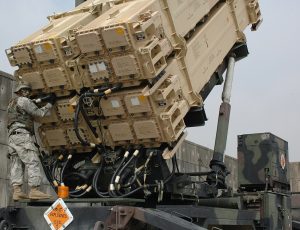

Patriot vs S-400, How the Rival Air Defense Systems Really Compare
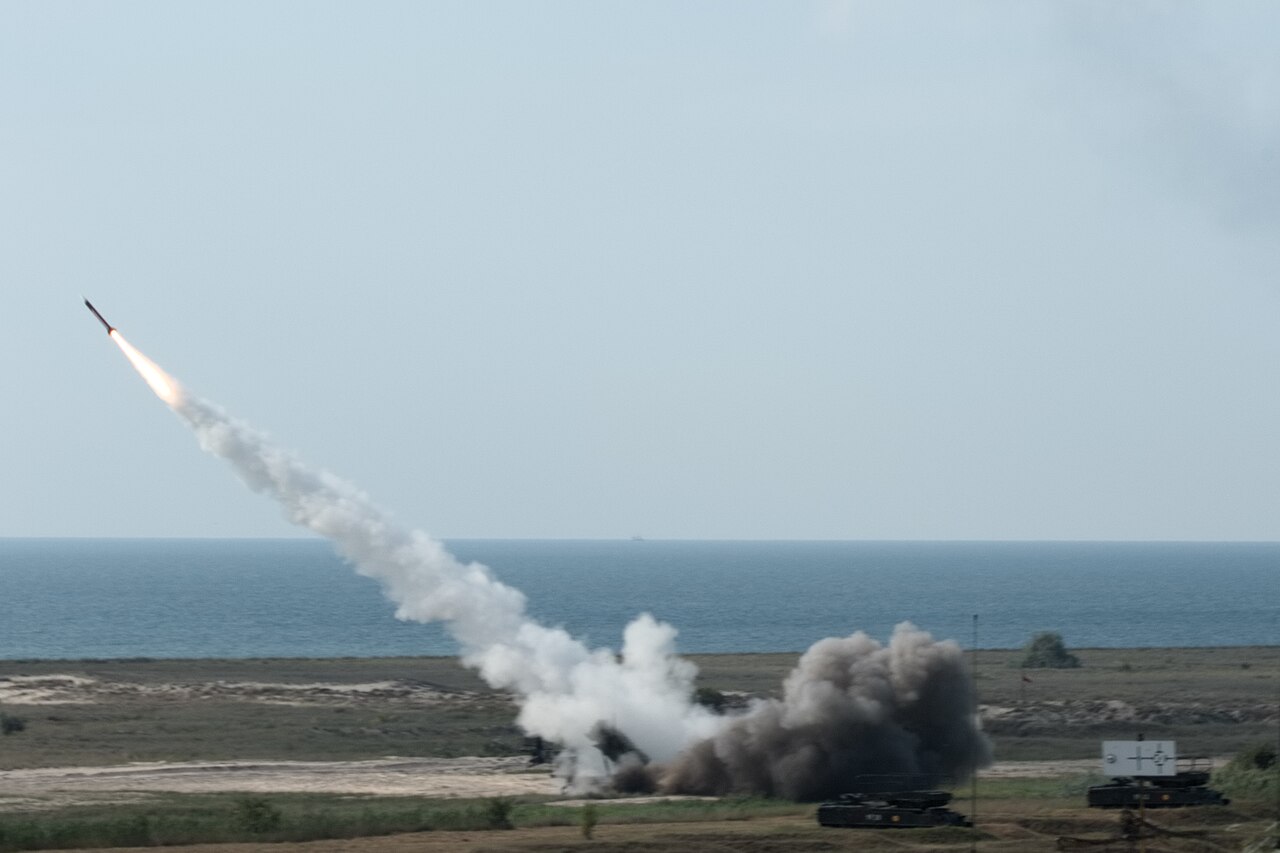
Patriot and the S-400 are the two most consequential air defense systems money can buy, and for a decade governments from Ankara to New Delhi have been forced to choose between them. One is an American combat veteran being modernized mid-life; the other is a Russian system with longer claimed reach and a harder-to-verify record. The war in Ukraine has, for the first time, put both under real fire. Here is how they actually compare.
Two philosophies of air defense
The comparison is not symmetric, because the systems were built to answer different fears. Patriot, fielded in 1984 by Raytheon and steadily upgraded, evolved into a ballistic missile killer: its PAC-3 MSE interceptor destroys targets by hitting them directly, a design optimized for precision against fast, hard targets. The S-400, fielded in 2007 by Almaz-Antey, is an area-denial weapon first: an umbrella meant to push aircraft, tankers and AWACS hundreds of kilometers back from Russian borders, with ballistic defense as a secondary role.
That difference in purpose explains almost every line of the specification sheet that follows: the S-400’s longer maximum range, Patriot’s tighter terminal accuracy, and the very different combat stories each has accumulated.
Patriot vs S-400 comparison table
| Parameter | Patriot (PAC-2/PAC-3) | S-400 Triumf |
|---|---|---|
| Country / maker | United States, Raytheon (RTX) | Russia, Almaz-Antey |
| In service | 1984, continuously upgraded | 2007 |
| Maximum range | 160 km (PAC-2 GEM-T); 120 km aerial / 60 km ballistic (PAC-3 MSE) | Up to 380-400 km claimed (40N6); 240 km with 48N6DM |
| Maximum altitude | About 32-36 km | About 27-30 km |
| Kill mechanism | Blast-fragmentation (PAC-2); hit-to-kill (PAC-3) | Blast-fragmentation |
| Radar | AN/MPQ-53/65 PESA; AESA upgrades and 360-degree LTAMDS arriving | 91N6E + 92N6E, about 340 km, sector coverage |
| Battery cost | About $1.09 billion domestic; $2.37-2.5 billion export packages | About $500 million domestic; $1-1.25 billion export |
| Cost per missile | About $4 million (PAC-3 MSE) | Not reliably published |
| Operators | 18+ countries | Russia, China, India, Turkey, Belarus, Algeria |
| Verified combat intercepts | Extensive, including Kinzhal ballistic missiles over Kyiv | Contested; Indian claims unverified, Ukraine losses documented |
Radar and missiles compared
On paper the S-400’s sensor reach and 380-kilometer missile outrange anything Patriot fires. The fine print matters, though. The 40N6’s headline range applies against large, high-flying, non-maneuvering targets; against low-altitude cruise missiles every ground radar is limited by the horizon to a few tens of kilometers, where the two systems converge. Patriot’s radar is older technology, a passive array with sector coverage, but its replacement, the 360-degree GaN LTAMDS, is in testing while the S-400’s radar family has no announced equivalent leap; our AESA radar explainer covers why that semiconductor shift matters.
On interceptors, the philosophies split cleanly. Patriot’s PAC-3 MSE is a hit-to-kill weapon that flies into its target, the approach that has repeatedly worked against ballistic threats in combat. The S-400 relies on proximity-fuzed fragmentation warheads across its four missile types, a flexible mix, with the 9M96 family offering agility against maneuvering targets, but one whose anti-ballistic performance remains publicly undemonstrated.
Combat record, the decisive difference
Combat evidence is where the comparison stops being close. Patriot batteries in Ukraine have shot down Kinzhal aeroballistic missiles, Iskander ballistic missiles, cruise missiles and aircraft, including engagements Russia said were impossible, and Gulf-based batteries have years of intercepts against ballistic and drone attacks. The system’s early record was genuinely poor, with the 1991 Gulf War intercept claims largely debunked by later analysis, but three decades of upgrades have been validated under fire since.
The S-400’s ledger runs the other way. Its claimed successes, such as India’s reported 300-kilometer kill in the May 2025 clash with Pakistan, lack independent verification. What is documented is attrition: Ukraine has repeatedly destroyed S-400 radars and launchers in Crimea with ATACMS and drones, and the system failed to stop deep Ukrainian strikes it was positioned to prevent. None of that proves the S-400 cannot perform; it proves that its record is asserted while Patriot’s is observed.
Cost and politics
The S-400 undercuts Patriot by roughly half per battery, which is a real advantage for budget-limited buyers, and Russia attaches fewer end-use conditions. But the purchase carries political freight: Turkey’s S-400 buy triggered US CAATSA sanctions and expulsion from the F-35 program, a warning label every subsequent buyer has read. Patriot’s problem is the opposite one, demand: with 18-plus operators and Ukraine consuming interceptors, production of PAC-3 missiles is sold out years ahead even as output climbs toward 650 a year, and buyers from Kyiv to the Gulf are queuing.
What buyers have actually chosen
The market has voted through the past decade’s contracts. NATO and NATO-adjacent states, Poland, Romania, Sweden, Switzerland, Germany’s replenishment buys, chose Patriot even at twice the price, valuing the combat record and network effects. The S-400’s customers came from a different map: states hedging between blocs or locked out of Western supply, and notably no new export customer has signed publicly since Ukraine’s strikes began documenting S-400 losses in 2023, while Patriot’s order book added multiple countries in the same window. Price lists matter less than what happens after the first missile flies, and procurement officials watch the same footage everyone else does.
Which system wins for which buyer
Frequently asked questions
Is the S-400 better than Patriot?
It has longer claimed range and costs less, but Patriot has an extensive verified combat record, including Kinzhal intercepts in Ukraine, while the S-400’s claims are unverified and its losses are documented.
What is the range difference?
S-400 claims up to 380-400 km with the 40N6; Patriot reaches about 160 km with PAC-2 GEM-T. Against low-flying targets, the radar horizon equalizes both.
Why did Turkey buying the S-400 matter?
It triggered US sanctions and Turkey’s removal from the F-35 program, making the S-400 purchase a geopolitical decision, not just a technical one.
Has Patriot really shot down hypersonic missiles?
Patriot PAC-3 has verified intercepts of the Kh-47M2 Kinzhal aeroballistic missile over Ukraine; true hypersonic glide vehicles remain an open challenge for both systems.
Which countries use each system?
Patriot: 18+ countries across NATO, the Gulf and Asia. S-400: Russia, China, India, Turkey, Belarus and Algeria.
- Wikipedia – MIM-104 Patriot and S-400 missile system (accessed October 2026)
- US program data and public reporting on Ukraine engagements
- Manufacturer figures (Almaz-Antey), labeled as claims
- Defence & Tech air defense reporting