

S-400 Triumf Missile System, Range, Operators and Combat Record

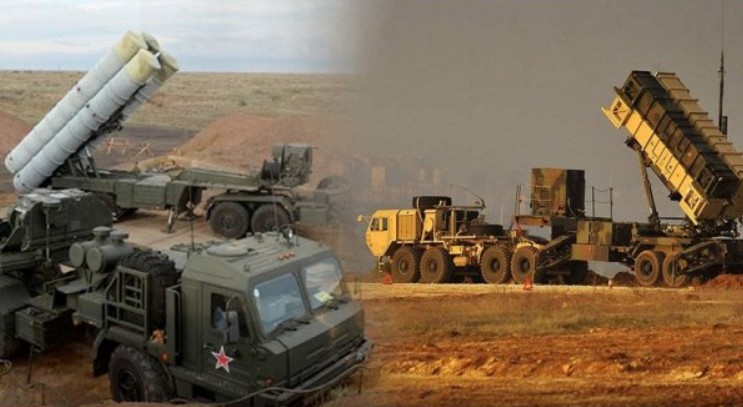
The S-400 Triumf is Russia’s flagship long-range air defense system, credited by its maker with engagement ranges out to 380 kilometers and exported to China, India and Turkey in deals that reshaped alliances. Nearly two decades after entering service, it remains the most politically consequential air defense product on the market, and the war in Ukraine has given the first hard evidence of both its reach and its vulnerabilities.
What is the S-400 Triumf
The S-400, developed by Almaz (now part of Almaz-Antey) as the successor to the S-300 family, was approved for Russian service on April 28, 2007, with the first battalion standing up that August. It is a road-mobile, long-range surface-to-air missile system designed to engage aircraft, cruise missiles and shorter-range ballistic missiles, and it anchors Russia’s ground-based air defense the way Patriot anchors NATO’s.
S-400 range and missiles
The system’s headline feature is its missile mix. Rather than one interceptor, an S-400 battery can fire four different missiles matched to the target, from agile short-range weapons to the very long-range 40N6.
| Missile | Claimed range | Role |
|---|---|---|
| 40N6E | 380 to 400 km | Very long range, including large aircraft such as tankers and AWACS |
| 48N6DM / 48N6E3 | 240 km | Long-range mainstay |
| 48N6E2 | 200 km | Earlier long-range round |
| 9M96E2 | 120 km | Agile medium-range interceptor |
| 9M96E | 40 km | Short-to-medium range, high maneuverability |
S-400 radars and battery composition
A standard battalion pairs the 91N6E panoramic surveillance radar and the 92N6E multifunction engagement radar, both quoted at 340 kilometers of range with the ability to track dozens of targets, with a 55K6E command post and 5P85TE2 or 5P85SE2 transporter-erector-launchers. The system is quoted against targets flying up to Mach 14 and at altitudes up to about 30 kilometers.
S-400 specifications table
| Parameter | Figure |
|---|---|
| Developer | Almaz-Antey (design bureau NPO Almaz), Russia |
| Service entry | 2007 |
| Maximum engagement range | 380-400 km with 40N6 (manufacturer figure) |
| Maximum target altitude | 27-30 km |
| Maximum target speed | Up to 4.8 km/s (about Mach 14), per manufacturer |
| Main radars | 91N6E surveillance and 92N6E engagement, about 340 km |
| Battery cost | About $500 million domestic; $1-1.25 billion export with missiles (2021 reporting) |
From S-300 to S-400, the development story
The S-400 began in the late Soviet period as a deep modernization of the S-300P family rather than a clean-sheet design, which is why early Western reporting called it S-300PMU-3. Development stretched through Russia’s lean 1990s; the system Almaz finally delivered in 2007 kept the S-300’s road-mobile architecture but rebuilt the radars, command system and missile interfaces around new electronics. The result is a family logic Russian industry has continued since: the shorter-range S-350 below it and the S-500, aimed at exo-atmospheric and hypersonic targets, above it.
Deployment tells you what Moscow thinks the system is for. S-400 regiments ring Moscow and St Petersburg, garrison Kaliningrad and Crimea, and deployed to Syria’s Hmeimim air base in 2015 after Turkey shot down a Russian Su-24, where the system’s presence changed allied air operations more by threat than by fire. The export map, China first in 2018, then Turkey, India, Belarus and Algeria, doubles as a map of states willing to price in Washington’s displeasure.
Who operates the S-400
| Country | Status |
|---|---|
| Russia | Primary operator, 40+ regiments reported |
| China | Deliveries from 2018, first export customer |
| Turkey | Four batteries delivered in 2019-2020; triggered US CAATSA sanctions and F-35 program removal |
| India | Five squadrons contracted (about $5.4 billion); three delivered by early 2023, remainder delayed |
| Belarus | Operated jointly with Russian forces |
| Algeria | Reported operational from May 2025 |
S-400 combat record in Ukraine and beyond
The war in Ukraine has been the S-400’s first sustained combat test, and the record cuts both ways. Russia uses S-400 batteries for long-range air denial and has even fired its missiles in a surface-to-surface role, while Ukraine has repeatedly claimed destruction of S-400 radars and launchers in Crimea and the border regions through 2023 and 2024, using ATACMS, Storm Shadow and drones. Those losses point to the system’s core weakness: its large, emitting radars are findable, and a battery that cannot relocate quickly is targetable.
Outside Ukraine, India claimed successful S-400 intercepts during its May 2025 clash with Pakistan, including what Indian officials called a record-range surface-to-air kill at about 300 kilometers; Pakistan rejected the claims, and there is no independent verification. The system has never been publicly tested against a mass raid of modern low-observable cruise missiles, the scenario its critics cite most, and the hypersonic weapons now entering service present a target class beyond its original design brief.
S-400 frequently asked questions
What is the range of the S-400?
Up to 380-400 kilometers with the 40N6 missile, per Russian figures; the workhorse 48N6DM reaches about 240 kilometers.
How much does an S-400 cost?
Public reporting puts a domestic battery near $500 million and export packages at $1 to $1.25 billion including missiles.
Which countries have bought the S-400?
China, Turkey, India, Belarus and Algeria, alongside Russia itself.
Can the S-400 stop ballistic missiles?
It is designed against shorter-range ballistic targets; performance against modern ballistic and hypersonic threats is claimed by the maker but unproven publicly.
Has the S-400 been destroyed in combat?
Ukraine has claimed multiple successful strikes on S-400 radars and launchers since 2023, underscoring the vulnerability of its emitting radars.
- Wikipedia – S-400 missile system (accessed October 2026)
- Public reporting on operator contracts and Ukraine-war losses
- Manufacturer (Almaz-Antey/Rosoboronexport) published figures, labeled as claims


