

Hypersonic Missiles Explained, How They Work, Who Has Them and How to Defend Against Them

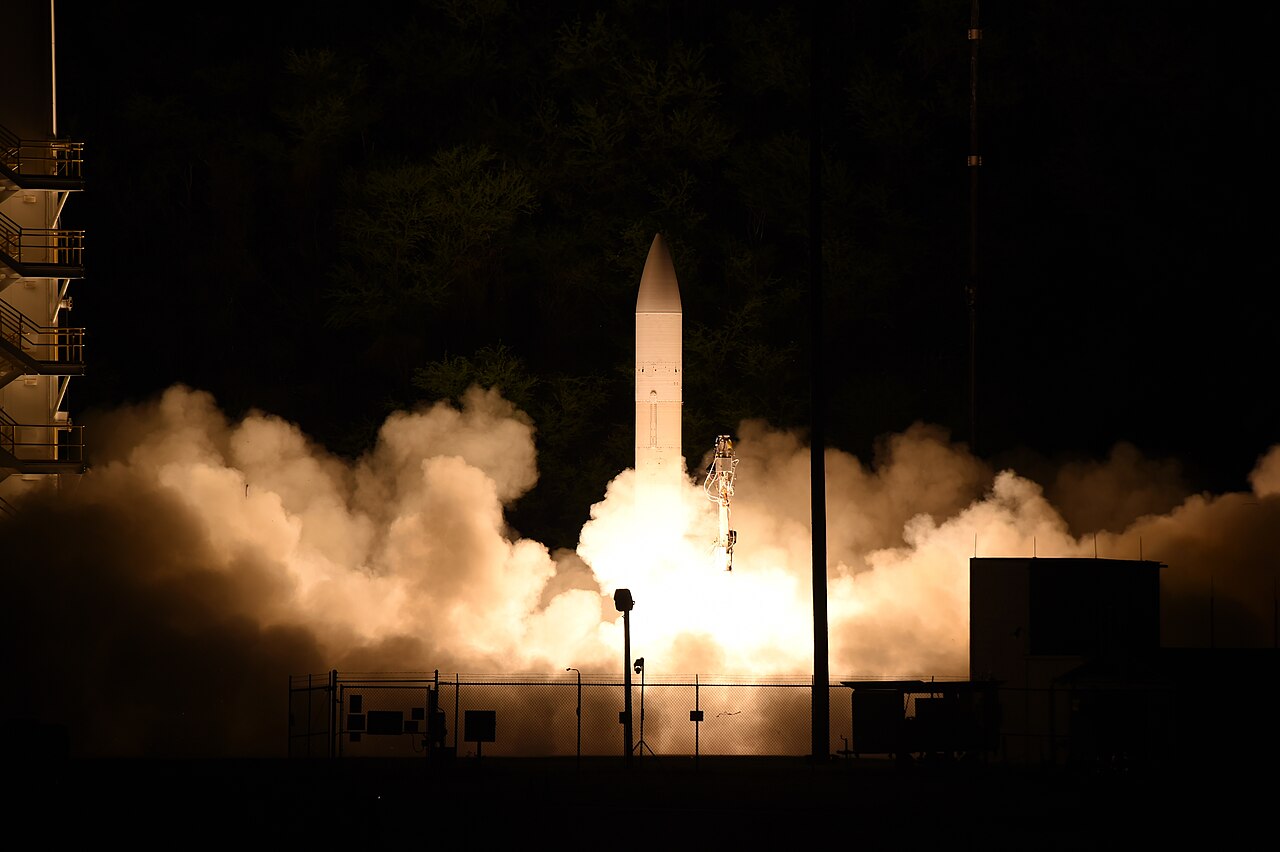
A hypersonic missile is a weapon that flies at Mach 5 or faster, at least five times the speed of sound, and can maneuver in the atmosphere instead of following a fixed arc like a conventional ballistic missile. There are two main types: hypersonic glide vehicles, launched on a rocket and then gliding to the target, and hypersonic cruise missiles, which use a scramjet engine.
Russia, China and North Korea say they have fielded such weapons, the United States is fielding its first, and France, the UK, Japan and India are developing their own. This explainer covers how the types differ, who has what, how defences are responding, and which companies build the hardware. Status is as of 30 September 2026.
What Is a Hypersonic Missile?
According to Wikipedia, a hypersonic weapon travels at Mach 5 or faster and can make significant manoeuvres during atmospheric flight, including considerable cross-range. That manoeuvring, not speed alone, is what separates it from an ordinary ballistic missile, whose reentry vehicle also reaches hypersonic speed but follows a predictable path. The idea is old: the US ASALM programme reached Mach 5.5 in the late 1970s before cancellation in 1980.
The two families work differently. A hypersonic glide vehicle (HGV) is carried up by a rocket booster, released, and then glides unpowered through the upper atmosphere. A hypersonic cruise missile flies within the atmosphere under its own scramjet power, an air-breathing engine that burns fuel in supersonic airflow.
How Do Hypersonic Missiles Differ From Ballistic and Cruise Missiles?
| Type | Propulsion | Flight path | Examples |
|---|---|---|---|
| Ballistic missile | Rocket burns early, then coasts | Predictable high arc through space, then falls | Conventional and nuclear ballistic missiles |
| Subsonic or supersonic cruise missile | Air-breathing engine throughout | Low, flexible path, but slower than Mach 5 | Tomahawk (see our explainer) |
| Hypersonic glide vehicle | Rocket boost, then unpowered glide | Lower than a ballistic arc and manoeuvrable | Dark Eagle, DF-17, Avangard |
| Hypersonic cruise missile | Scramjet | Sustained flight in the atmosphere at Mach 5+ | HACM, Zircon (claimed) |
Some Russian weapons blur the lines. The Kinzhal is an air-launched ballistic missile, yet it is counted among hypersonic weapons because of its speed, per Wikipedia. Analysts also note that a weapon’s claimed top speed and its sustained flight speed can differ widely.
Which Countries Have Hypersonic Missiles?
| Country | Programme | Type | Status |
|---|---|---|---|
| Russia | Avangard | Glide vehicle on ICBM | Operational since December 2019; about 12 deployed as of May 2025 |
| Russia | Kh-47M2 Kinzhal | Air-launched ballistic | Service since December 2017; used in Ukraine |
| Russia | 3M22 Zircon | Ship-launched, scramjet | In service January 2023; used in Ukraine from February 2024 |
| China | DF-17 | Glide vehicle on MRBM | Public debut October 2019; range 1,600 to 2,500 km |
| United States | LRHW Dark Eagle | Ground-launched glide body | First battery activated December 2025 |
| United States | Conventional Prompt Strike | Sea-launched glide body | Ship testing expected 2027 or 2028 |
| United States | HACM | Air-launched scramjet | In development; fielding targeted from fiscal 2027 |
| North Korea | Hwasong-11Ma-1 | Claimed glide vehicle | Test on 20 September 2026; claims disputed |
| France | ASN4G | Nuclear scramjet | Development contract June 2026; service around 2035 |
| United Kingdom | HTCDF framework | Technology programme | GBP 1 billion, seven-year framework |
| Japan | HVGP | Glide projectile | Block 1 scheduled for 2026 |
| India | BrahMos-II | Scramjet cruise | Flight tests expected 2026 or 2027 |
Wikipedia’s Zircon entry says analysts put sustained flight at Mach 5.5 to 6, well below the claimed Mach 9. For North Korea, see our report on the Hwasong-11Ma-1 test, where South Korean and Japanese measurements differed sharply from Pyongyang’s stated 908 km flight. Our earlier ranking of the world’s fastest missiles gives more speed context.
What Is the US Dark Eagle Hypersonic Missile?
The Long-Range Hypersonic Weapon, nicknamed Dark Eagle, is the US Army’s ground-launched glide missile. The Congressional Research Service gives it a reported range of 1,725 miles and describes a two-stage booster from Lockheed Martin and Northrop Grumman carrying a Common Hypersonic Glide Body, whose prototypes Dynetics, part of Leidos, produces. A battery has four trailer launchers with two rounds each, per DefenseScoop.
Delivery was late: the target of the end of fiscal 2023 and then September 2025 were both missed. Bravo Battery of the 3rd Multi-Domain Task Force at Joint Base Lewis-McChord was activated in December 2025, and a launch from Cape Canaveral succeeded on 26 March 2026, per the CRS. The CBO estimated $41 million per missile in 2023. For deployment debate, see our piece on Dark Eagle and the Middle East.
The Navy version, Conventional Prompt Strike (CPS), uses the same glide body. Lockheed Martin received a $1.35 billion modification on 2 April 2026 for Zumwalt-class integration, with four tubes carrying three missiles each and completion set for September 2032, according to The Defense Post. Testing aboard USS Zumwalt is expected in 2027 or 2028.
What Is HACM and How Is It Different?
The Hypersonic Attack Cruise Missile is the Air Force’s air-breathing counterpart. Raytheon (RTX) won a $985.3 million contract, with Northrop Grumman supplying the scramjet, Air & Space Forces Magazine reported, and it grew from the US-Australia SCIFiRE partnership. Wikipedia lists Mach 8 and 1,000 nautical miles as design figures, with operational service targeted from fiscal 2027 and a limited number of test flights after schedule delays reported in June 2025. See our RTX profile.
How Do You Defend Against a Hypersonic Missile?
Defence is hard because gliders fly below the arc that ballistic-missile radars expect and can change course. The current answer is layered. The Navy’s SM-6 on Aegis ships is the nearest fielded option: in March 2025 USS Pinckney tracked a new hypersonic warhead, designated HTV-1, with a virtual SM-6 Block IAU, and a live intercept test is planned as FTM-43, per Wikipedia. THAAD, covered in our THAAD explainer, is built against ballistic missiles.
The purpose-built answer is the Glide Phase Interceptor (GPI). Northrop Grumman was selected as sole prime on 25 September 2024, and Japan joined as a partner in May 2024. Fielding is unlikely before 2035 without added funding, per Wikipedia. Japan’s Mitsubishi Heavy Industries is a partner; see our MHI profile.
Who Builds Hypersonic Missiles?
| Company | Role | Programmes |
|---|---|---|
| Lockheed Martin | Prime and booster | Dark Eagle, CPS |
| RTX (Raytheon) | Prime | HACM |
| Northrop Grumman | Scramjet, booster, interceptor prime | HACM engine, LRHW booster, GPI |
| Leidos (Dynetics) | Glide body, test bed | Common Hypersonic Glide Body prototypes, MACH-TB |
| Kratos | Test vehicles and motors | Erinyes, Dark Fury, Zeus, MACH-TB 2.0 |
Kratos is the newest entrant. Its Erinyes test vehicle first flew in June 2024 from Wallops Island above Mach 5, cost under $15 million to develop, and is aimed at cheap test flights, Defense News reported. Kratos lists Dark Fury alongside it as a hypersonic flyer. In January 2025 it won the MACH-TB 2.0 test-bed contract, worth up to $1.45 billion over five years, with Leidos and Rocket Lab as partners, per The Aviationist. See our Kratos, Lockheed Martin and Northrop Grumman profiles.
Hypersonic Missile FAQ
How fast is a hypersonic missile?
At least Mach 5, about 6,100 km/h at sea level. Some Russian systems are claimed to reach Mach 10 or more, but claims and sustained speeds differ.
Is a hypersonic missile the same as a ballistic missile?
No. Ballistic missiles follow a predictable arc after the rocket burns out. Hypersonic weapons manoeuvre in the atmosphere, although glide vehicles are launched on ballistic boosters.
Which country has the fastest hypersonic missile?
Russia claims the fastest, with Avangard above Mach 20 (Wikipedia). Independent confirmation is limited.
Does the US have hypersonic missiles?
Yes. The Army activated its first Dark Eagle battery in December 2025. Navy and Air Force versions are still in development.
Can hypersonic missiles be intercepted?
Ukraine reportedly intercepted a Kinzhal with Patriot on 4 May 2023 (Wikipedia). Dedicated glide-phase interceptors are not expected before the 2030s.
What is the difference between Dark Eagle and HACM?
Dark Eagle is a rocket-boosted glide vehicle launched from the ground. HACM is a scramjet cruise missile launched from aircraft.
- Wikipedia, Hypersonic weapon
- Congressional Research Service, Dark Eagle (IF11991), April 2026
- DefenseScoop, Dark Eagle fielding plans
- The Defense Post, Zumwalt hypersonics
- Air & Space Forces Magazine, HACM contract
- Wikipedia, HACM
- Wikipedia, Avangard
- Wikipedia, Kinzhal
- Wikipedia, Zircon
- Wikipedia, DF-17
- Wikipedia, Glide Phase Interceptor
- Wikipedia, SM-6
- Wikipedia, ASN4G
- Wikipedia, BrahMos-II
- Defense News, UK hypersonic framework
- Australian Defence Magazine, Japan hypersonic programmes
- Defense News, Kratos Erinyes
- The Aviationist, MACH-TB 2.0
- Wikipedia, Dynetics
- Defence & Tech, Hwasong-11Ma-1 test

[…] IRIS-T SLM, which Diehl rates at up to 40 km range and 20 km altitude, is the workhorse and the system most partners have actually ordered. Patriot is covered in detail in our Patriot specifications, variants and operators guide. Arrow 3 is Germany’s national choice for the top layer; no other ESSI member has announced an Arrow 3 purchase. It is designed to intercept long-range ballistic missiles above the atmosphere, a different task from defending against the manoeuvring threats covered in our explainer on hypersonic missiles and the defences against them. […]