Dutch ASW Frigate Slips to 2033 as Belgium Weighs Options
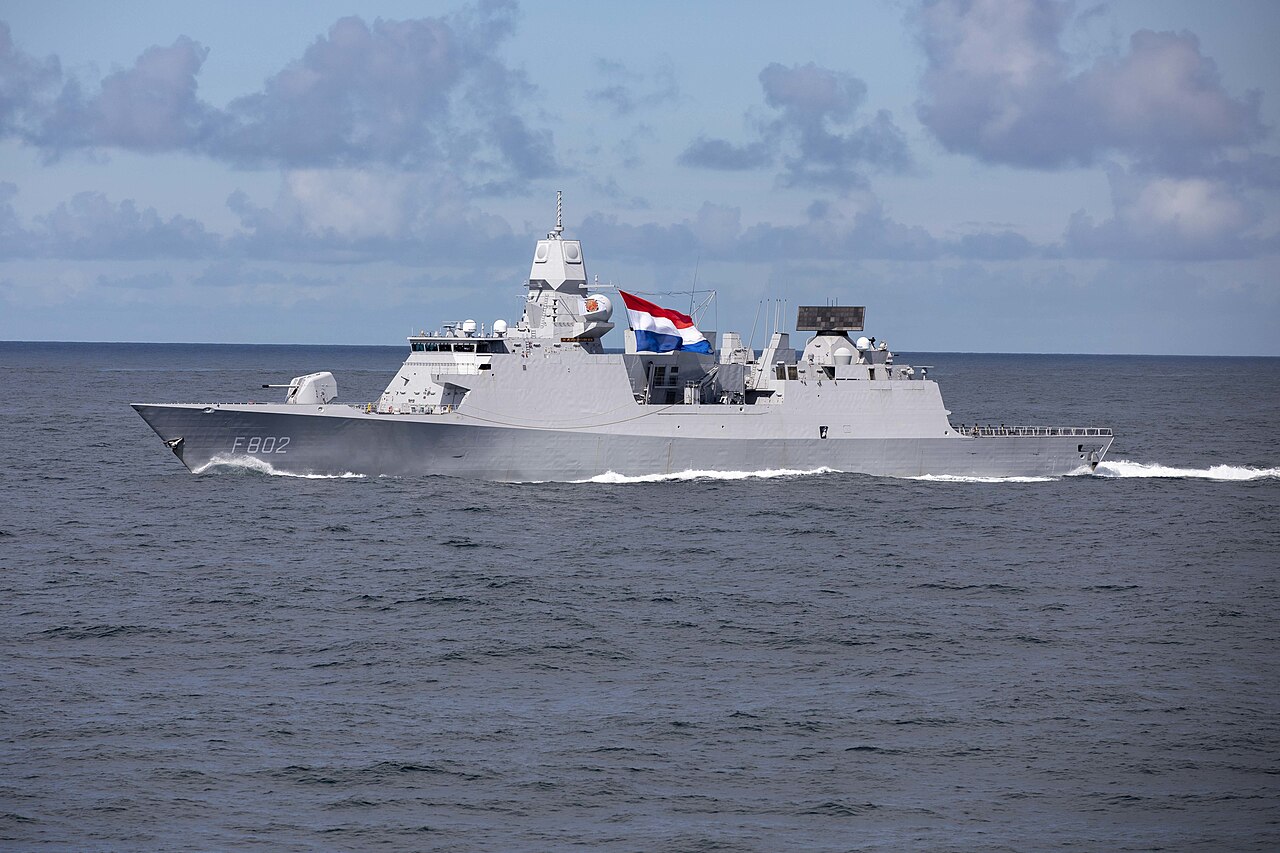
The first of the Netherlands’ new anti-submarine warfare frigates will not reach the Royal Netherlands Navy until 2033, three years later than the most recent plan, after design work exposed stability problems that forced a substantial enlargement of the hull. The slip deepens uncertainty over Belgium’s participation in the joint programme, with Brussels weighing alternatives and a decision expected before the end of the year.
Dutch State Secretary for Defence Derk Boswijk set out the revised schedule in a letter to the House of Representatives dated September 18, 2026. The Anti-Submarine Warfare Frigate (ASWF) programme, led industrially by Damen Naval, is intended to replace the two navies’ ageing Karel Doorman-class (M-class) multipurpose frigates with four specialised ASW ships, two for each country.
Hull grows by seven metres
The root of the latest delay is the ship’s stability margin. During the design phase, engineers found the original configuration could not retain adequate stability while preserving the space and weight reserves needed for mid-life upgrades. The fix required what the ministry described as an enlargement and redesign of the hull.
According to reporting on the parliamentary update, the hull has been lengthened by roughly seven metres and projected displacement has risen from about 5,500 tonnes to around 7,200 tonnes, a change that ripples through structural design, propulsion sizing, systems integration and production planning.
The programme has already slipped repeatedly. When the Dutch and Belgian governments launched it in 2018, the first ship was due in 2025. A revised memorandum of understanding in 2023 moved that to 2029–2030 and was accompanied by a cost increase of around 40 percent. The latest letter pushes the Dutch lead ship to 2033 and does not yet quantify the additional budget impact, which the ministry said will be addressed in a later update to parliament.
Work continues despite the delay
The ministry stressed that the programme is moving forward. Detailed engineering formally began in September 2026, and construction of the integrated mast module, the sensor tower that will house the ships’ radars and communications, started at the end of June. The Dutch-Belgian Joint Steering Committee overseeing the project met on September 1.
The Hague is also examining whether engineering, design, management and industrial capacity at Damen that was committed to Germany’s F126 frigate programme could be reassigned to accelerate the ASWF. Berlin cancelled its contract with Damen for the F126 earlier this year after persistent delays on that project, a decision that has cast a shadow over the Dutch shipbuilder’s large-surface-combatant workload.
Belgium keeps its options open
For Belgium, the question is whether to stay in the binational programme at all. The Belgian Navy’s two remaining M-class frigates, Leopold I and Louise-Marie, are approaching the end of their service lives, and a further three-year slip would widen the capability gap.
Belgian defence authorities issued a request for information over the summer to examine alternative frigate designs, with Italy’s Fincantieri and its FREMM EVO design cited among the options. Reports of an outright Belgian withdrawal have been described as premature, and negotiations between the two defence ministries are continuing. A decision is expected between mid-October and the end of 2026.
A Belgian exit would be a significant blow to one of Europe’s most integrated naval partnerships. Under the long-standing BENESAM arrangement, the Netherlands leads frigate procurement and maintenance for both navies while Belgium leads on mine countermeasures vessels, a division of labour that the ASWF and the parallel rMCM mine-hunter programme were designed to continue.
Why the ships matter
The ASWF is designed around towed-array and hull-mounted sonar, helicopter operations and a quiet hull to hunt submarines in the North Sea and the North Atlantic, a mission that has gained urgency as Russian submarine activity around NATO’s northern flank and undersea infrastructure has increased. The ships are expected to carry the Dutch-developed integrated mast, torpedoes, air-defence missiles and a medium-calibre gun, and to operate NH90 helicopters and uncrewed systems.
Each year of delay extends reliance on the M-class frigates, which entered service in the early 1990s and are becoming more expensive and difficult to keep at sea. For NATO planners who count on Dutch and Belgian contributions to the alliance’s anti-submarine screen, the revised timeline means that capability will arrive well into the next decade.
Sources
- Dutch Ministry of Defence – Letter to the House of Representatives on the ASWF programme, State Secretary Derk Boswijk (September 18, 2026)
- Naval News – “Dutch ASWF Frigate Program Faces Further Delays as Belgium Evaluates Options” (September 2026)
- Infodefensa – Netherlands anti-submarine frigate programme delayed and Belgium studies alternatives (September 29, 2026)
- Breaking Defense – Netherlands discloses ASW frigate delivery delay (May 2026)