Italy Signs €3.7B Deal for Two 13,500-Tonne DDX Destroyers
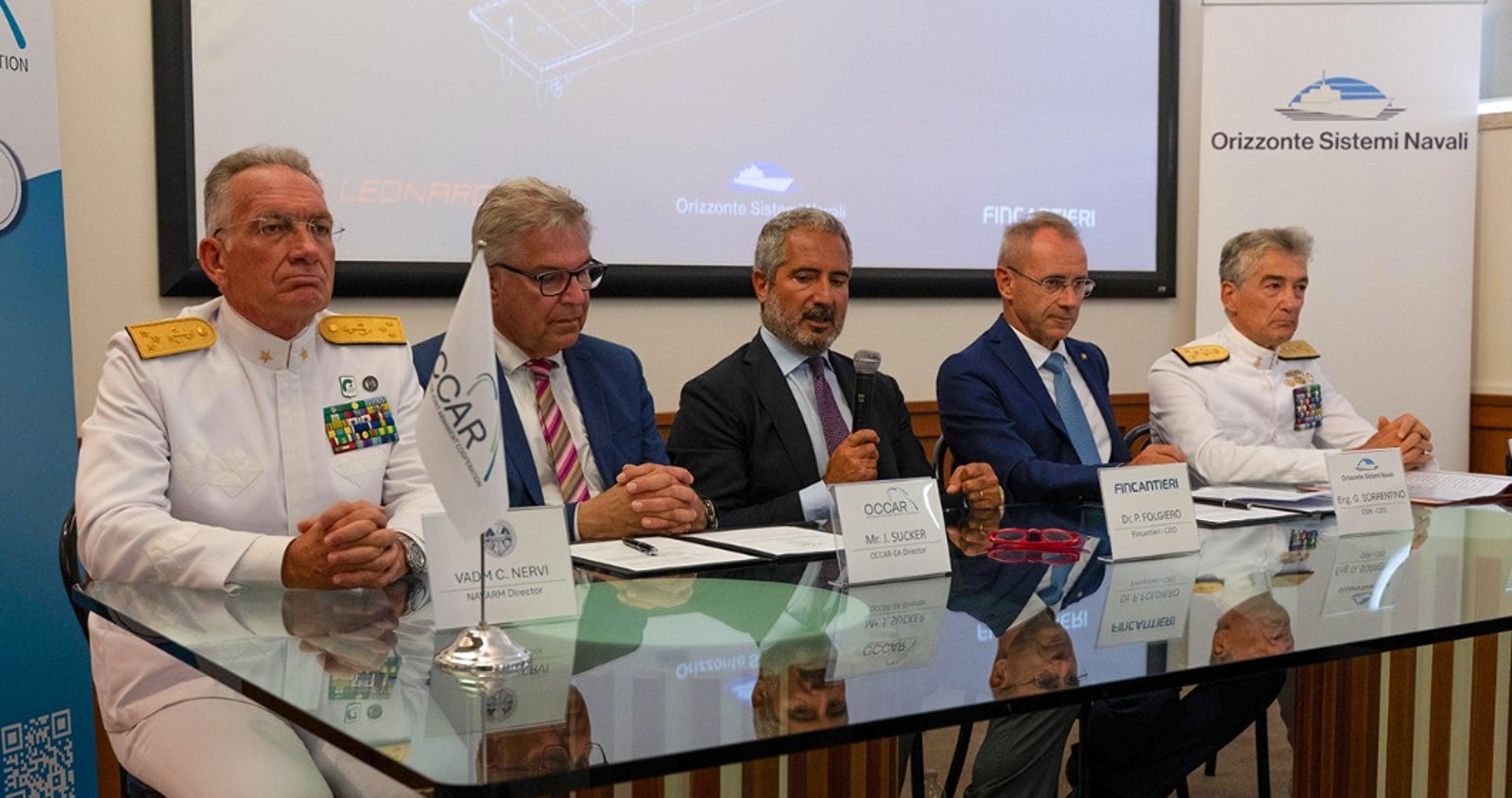
Rome — Italy has placed a contract worth up to €3.7 billion for two new-generation DDX destroyers, the largest surface combatants in the Italian Navy’s modern fleet plan and a clear sign that Rome intends to field a heavyweight air and missile defense capability in the Mediterranean in the next decade.
The deal was signed on September 24, 2026, between the Organisation for Joint Armament Cooperation (OCCAR), which manages the program on Italy’s behalf, and Orizzonte Sistemi Navali (OSN), the naval joint venture owned 51 percent by Fincantieri and 49 percent by Leonardo. According to the two companies, the first ship is scheduled for delivery in 2033 and the second in 2035.
What the Contract Covers
The contract covers development, production, logistic studies and initial in-service support for the two ships. Of the headline €3.7 billion, roughly €1.3 billion is made up of options, meaning the firm portion of the award is closer to €2.4 billion.
OSN will in turn place sub-contracts with its parent companies. Fincantieri, which acts as platform system integrator, will receive approximately €1.8 billion, of which about €800 million is in options. Leonardo, responsible for the combat system, will receive about €1.7 billion, including around €480 million in options.
The split mirrors the arrangement used on earlier Italian and Franco-Italian programs such as the Horizon destroyers and the FREMM frigates, with Fincantieri building the hull and machinery and Leonardo delivering the sensors, command-and-control and much of the weapons integration.
A Much Bigger Ship
At 180 meters long and with a displacement of about 13,500 tonnes, the DDX is almost twice the size of the Italian Navy’s current Horizon-class air defense destroyers, which displace around 7,000 tonnes. Fincantieri and Leonardo say the ships will have a range of more than 4,000 nautical miles and accommodation for 251 personnel.
That size puts the DDX in the same weight class as the largest Western surface combatants now in service or in development, and well above the typical European frigate or destroyer. The extra volume is expected to be used mainly for missile magazine capacity, power generation and growth margin for future sensors and weapons.
Combat System and Sensors
The destroyers will be built around Leonardo’s SADOC 5 C5I combat management system and a new high-power, fully digital S-band AESA radar. MBDA will supply the missile system, and the ships are designed to provide Integrated Air and Missile Defense (IAMD) against a spectrum of threats that the companies say includes ballistic and hypersonic missiles.
The electronic warfare suite will come from Italy’s ELT Group, while the gun and close-in defense systems are planned to fire advanced guided munitions. On the platform side, the companies highlighted a DC power sub-network with energy storage, an integrated stabilization and steering system, a digital ship management system and an open, scalable architecture intended to make it easier to insert new technology during the ships’ service lives.
Neither company has disclosed the number of vertical launch cells or the exact missile types, details that are likely to be settled as the design matures.
Why It Matters for Italy
The DDX program is expected to succeed Italy’s two ageing Durand de la Penne-class destroyers, which entered service in the early 1990s. The new ships will give the Italian Navy a dedicated ballistic missile defense layer at sea, a mission that European navies have so far only partially addressed.
Italian officials have repeatedly pointed to the missile and drone threats seen in the Red Sea since 2023, where European warships including Italian units were used to intercept Houthi drones and missiles aimed at merchant shipping. Those operations exposed limits in magazine depth and in the ability of existing frigates and destroyers to sustain long deployments under fire.
A larger hull with more launch cells and more electrical power directly addresses those lessons. The emphasis on hypersonic defense also aligns the DDX with wider European efforts to field interceptors capable of engaging maneuvering high-speed threats.
Industrial and Regional Context
For Fincantieri and Leonardo, the contract secures a major domestic naval program into the mid-2030s at a time when both companies are also competing for export warship and combat system work. OCCAR’s role as contracting agency keeps the program aligned with the European procurement framework used for other Italian naval programs.
The order also comes as several European navies move toward larger air defense combatants. Germany is developing the F127 frigate with ballistic missile defense capability, and the United Kingdom is studying a future air defense destroyer to replace its Type 45 fleet. Italy’s decision to go to 13,500 tonnes places the DDX among the most capable planned surface combatants in Europe.
With deliveries scheduled for 2033 and 2035, the Italian Navy will need to keep its current destroyer force in service for several more years. Design reviews and the selection of key subsystems, including the missile suite, will be the next milestones to watch.