Airbus Secures $140.7 Million US Army Contract for UH-72B Lakota Helicopters
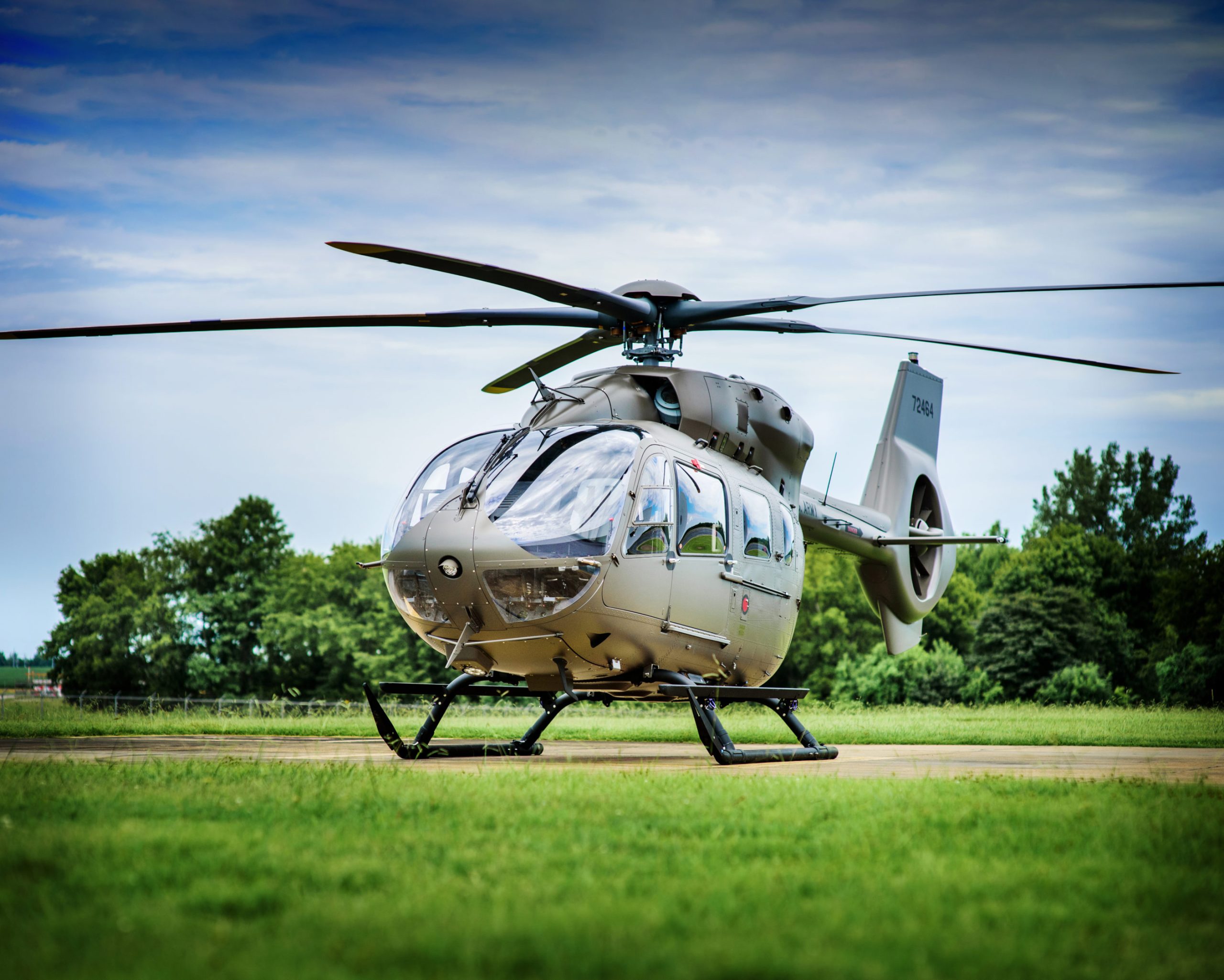
The U.S. Army awarded Airbus Helicopters Inc. a $115.4 million firm-fixed-price contract on Aug. 14 for 10 UH-72B Lakota light utility helicopters, with options for two additional aircraft that would bring the cumulative face value to $140.7 million, according to the Department of War contract announcement and Army Recognition reporting.
The new aircraft will be assembled at Airbus’ Columbus, Mississippi facility and delivered between 2027 and 2029, with the contract’s period of performance running through Dec. 31, 2030. The order supports Army National Guard operational units carrying out domestic response missions.
An Upgraded Variant for a Two-Decade-Old Program
The UH-72B is the latest evolution of a Lakota program that began in 2006, when the Army selected what was then the EC145-derived UH-72A as its light utility helicopter. More than 480 Lakotas have been delivered since, logging over 1.7 million flight hours across 49 U.S. states and territories in training, search-and-rescue, medical evacuation, reconnaissance, and disaster-response roles.
The B-model, based on the newer H145 platform, raises maximum takeoff weight to 3,800 kilograms from 3,585 kilograms on the A-model and pairs twin Safran Arriel 2E engines — 894 horsepower each, 1,788 horsepower combined — with a five-bladed bearingless main rotor and an enclosed Fenestron tail rotor. In a 2+2+7 seating configuration, it cruises at 130 knots (241 km/h), has a 345-nautical-mile (639-kilometer) range, and can hover out of ground effect at 9,000 feet at maximum takeoff weight.
Why the Army Is Still Buying Lakotas
The order arrives as the Army simultaneously retires roughly 220 older UH-72As from Initial Entry Rotary Wing Training under its Flight School Next initiative, which has shifted primary flight instruction toward a mixed fleet including fixed-wing and simulator-heavy syllabi. Rather than winding the Lakota program down, the Army is redirecting new-production UH-72Bs to National Guard units, where the aircraft’s twin-engine reliability and civil-certification lineage make it well suited to short-notice domestic missions: flood response, wildfire support, search-and-rescue, and medical evacuation in terrain civil operators fly daily.
That domestic-response role has become more prominent as state Guard units are increasingly tasked with disaster response independent of federal mobilization, and a modernized UH-72B fleet gives governors’ offices newer avionics and better hot-and-high performance than the aircraft it is gradually replacing in Guard service.
Program and Industrial Context
The Lakota remains one of the few U.S. military helicopter programs built on a militarized civil airframe rather than a clean-sheet military design, a choice that has kept unit costs and sustainment costs below purpose-built military helicopters of comparable size. Airbus’ Columbus plant, which has produced every U.S. Army Lakota since the program’s start, continues to serve as the sole final-assembly line for the type, giving the Army a stable, single-source supply chain for a helicopter class it has bought continuously for nearly two decades.
Sources
- Department of War contract announcement, Aug. 14, 2026 — official record of the $115.4 million award and $140.7 million cumulative value.
- Army Recognition, Aug. 2026 — reporting on delivery schedule, assembly location, and technical specifications.