

Bahrain and Kuwait Conducted Secret Airstrikes on Iranian UAV and Missile Depots Amid Escalating Regional War


 React
React
The crisis in the Middle East has taken a dramatic new turn. As the United States and Iran exchange heavy blows following the collapse of a mutual agreement, a new report by the Wall Street Journal claims that Bahrain and Kuwait have covertly entered the fray, launching secret airstrikes against Iranian territory.
Following the mutual cancellation of a de-escalation agreement—initially established after rising tensions in the Strait of Hormuz—the United States has resumed direct airstrikes against Iranian targets. In rapid retaliation, Tehran has significantly amplified the scale of its military response.
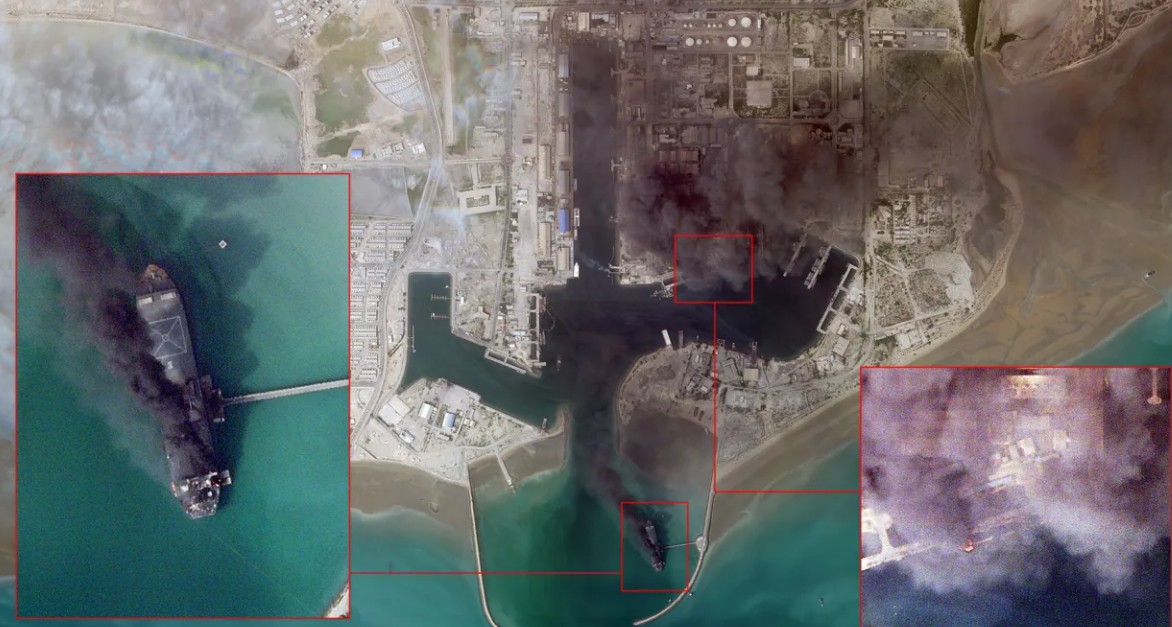
The Iranian Armed Forces have initiated a widespread campaign using ballistic missiles and unmanned aerial vehicles (UAVs). These retaliatory strikes are not only targeting U.S. military bases stationed in Gulf countries but are also aimed at critical regional infrastructure, including power plants and strategic facilities.
“Secret Strikes from Bahrain and Kuwait”
As the intensity of the mutual bombardment increases, a striking claim has emerged from the U.S.-based Wall Street Journal. The publication reports that Bahrain and Kuwait have conducted covert aerial operations deep into Iranian territory, specifically bombing drone storage sites and missile manufacturing facilities. This unprecedented move severely elevates the risk of the current crisis spiraling into a full-scale regional war.
Citing sources familiar with the matter, the WSJ highlighted that the retaliatory strikes against Iran were executed by certain Gulf nations directly.
“Fighter Jets Deployed Covertly”
According to the sources, Bahrain and Kuwait—both of which host significant U.S. military bases—secretly scrambled fighter jets to conduct precision airstrikes in response to Tehran’s ongoing regional attacks. The covert operations reportedly focused on neutralizing Iranian military installations, primarily taking out UAV and missile depots to degrade Iran’s offensive capabilities.
The report notes that government officials in both Kuwait City and Manama have not responded to requests for comment regarding the alleged covert operations.
Historically, several Arab nations in the Gulf, particularly Kuwait and Bahrain, have frequently reported that their air defense systems have intercepted incoming aerial threats originating from Iran. However, a transition from defensive interceptions to offensive covert airstrikes marks a massive escalation in the Persian Gulf theater.
React