
Baykar’s Bayraktar Mini: The Drone That Started It All for Turkey
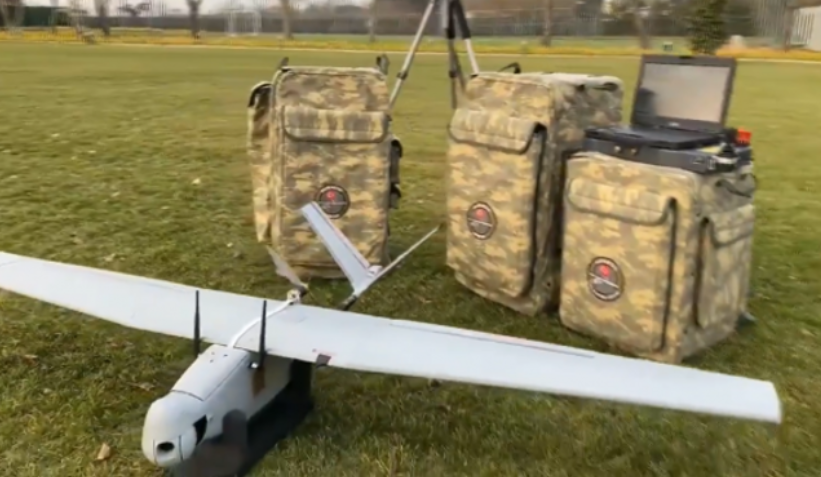
Before the TB2 became a global phenomenon, before AKINCI set high-altitude records, there was the Bayraktar Mini — Turkey’s first fully indigenous mini UAV system. Introduced into Turkish Armed Forces inventory in 2007 and achieving Turkey’s first UAV export in 2012, it is the platform that proved Baykar could build sovereign unmanned systems from scratch.
| Specification | Value |
|---|---|
| Max Takeoff Weight | 5.8 kg |
| Payload | 580 g |
| Endurance | 100 minutes |
| Max Speed | 30–35 KTAS |
| Service Ceiling | 8,000 ft |
| Operating Altitude | 3,000 ft |
| Communication Range | 15+ km |
| Engine | Electric motor |
| Wingspan | 2.45 m |
| Length | 1.25 m |
| Takeoff | Hand-launched |
| Landing | Automatic parachute or belly landing |
| Structure | Carbon fiber + Kevlar, shock-absorbing frame |
Why a Mini UAV Matters
At 5.8 kg and 2.45 m wingspan, the Bayraktar Mini sits in the category military planners call “man-portable” — carried in a single backpack, assembled in minutes, hand-launched by one soldier. For infantry units probing ahead of an advance or monitoring urban terrain, this class of capability reduces reliance on scarce helicopter reconnaissance and removes the logistics tail of larger drone systems. Turkey’s decision to develop it entirely indigenously — electronics, software, structural components — was an industrial sovereignty statement that proved foundational to everything that followed.
Built to Survive the Field
The carbon fiber and Kevlar airframe with shock-absorbing construction handles the rough landings that fieldwork demands: belly landings on unprepared ground, parachute recovery in confined spaces, and the occasional hard impact when communications go down. An automatic return-home function ensures that a lost-link event does not mean a lost aircraft — the system navigates back to launch coordinates and lands without operator input.
ISR Capability in a Soldier’s Pack
A 2-axis stabilized gimbal carries interchangeable day and night ISR cameras, delivering stable imagery at 3,000-foot operating altitude over a 15-km communication range. Multi-UAV command and control support lets a single operator manage several aircraft simultaneously — useful when monitoring multiple approach routes or maintaining continuous surveillance during shift changes. Smart battery management provides accurate endurance warnings before the aircraft must return.
The Foundation That Built a Dynasty
The engineers who solved the Mini’s challenges — autonomous flight control under communications loss, composite airframe fabrication, indigenous avionics — carried those solutions forward. The triple-redundant autopilot concept that defines TB2 and AKINCI has its roots in lessons learned from the Mini. Its export success in 2012 demonstrated that foreign customers trusted Turkish unmanned technology, opening the commercial relationships that later scaled into the TB2 program’s global footprint.