
New Directives from Khamenei: The Fragile Ceasefire and the Looming Crisis in the Strait of Hormuz



 React
React
TEHRAN / WASHINGTON — The geopolitical fault lines in the Middle East are once again under immense pressure. Following the devastating 38-day conflict initiated by U.S. and Israeli forces—dubbed “Operation Project Freedom”—the region remains locked in a high-stakes strategic deadlock. A shaky ceasefire, mediated by Pakistan in early April, is now threatening to collapse under the weight of naval blockades, nuclear ultimatums, and new military posturing from Tehran’s highest echelons.
Mojtaba Khamenei Consolidates Command
On Sunday, Iranian State Television reported a critical development: the newly appointed Supreme Leader, Mojtaba Khamenei, held a direct meeting with the head of the military central command, Ali Abdollahi. During this meeting, Khamenei reportedly issued “new directives and guidance for the continuation of operations to confront the enemy.”
This marks a significant public signaling of continuity and command. Mojtaba Khamenei ascended to the position of Supreme Leader in March following the February 28 U.S.-Israeli airstrikes that killed his father, Ali Khamenei. The younger Khamenei was also injured in the bombardment. Over the weekend, Iranian officials launched a coordinated PR effort to assure the public of his condition, with protocol chief Mazaher Hosseini stating that the Supreme Leader is now in “full health” after recovering from shrapnel and blast-wave injuries.
Despite remaining largely out of public view and allegedly relying on trusted couriers to evade electronic surveillance, U.S. intelligence assessments confirm that Mojtaba Khamenei remains mentally alert and is actively shaping Tehran’s wartime strategy and negotiation posture. In a recently published written statement, he struck a defiant tone, declaring that the only place for the U.S. in the Persian Gulf is “at the bottom of its waters” and vowing to protect Iran’s nuclear and missile capabilities as non-negotiable “national assets.”
The Naval Standoff and Trump’s Ultimatum
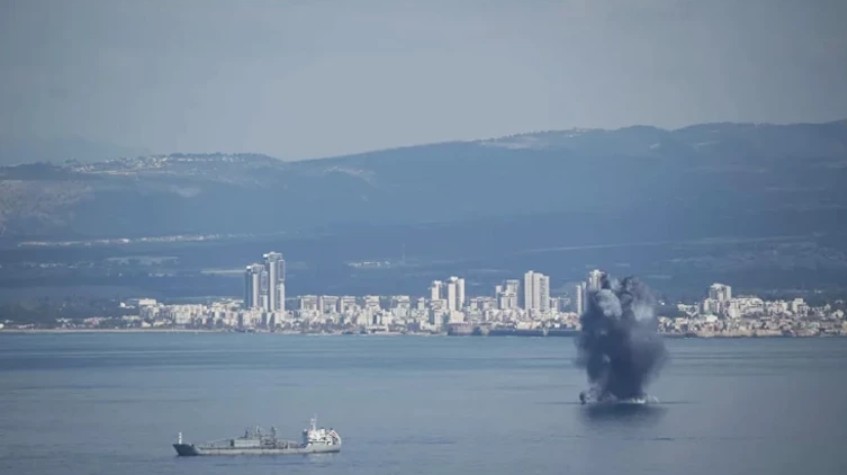
While the aerial bombardment has paused, the conflict has shifted decisively to the maritime domain. The United States has imposed a severe naval blockade aimed at strangling Iran’s oil exports. In retaliation, Tehran has effectively militarized the Strait of Hormuz, leveraging its asymmetric naval capabilities to threaten shipping lanes and reportedly demanding multi-million dollar transit fees from commercial vessels.
The situation escalated violently last week when U.S. forces fired on an Iranian-flagged oil tanker. Amid these naval clashes, U.S. President Donald Trump issued a stark ultimatum to Tehran: surrender all highly enriched uranium to the United States or face a renewed bombing campaign at a “much higher level and intensity.”
A Zero-Sum Game
Tehran has categorically rejected this demand. Iranian Parliament Speaker Mohammad Bagher Ghalibaf—who is reportedly managing day-to-day government operations—accused the U.S. of attempting to destroy the country’s cohesion through economic warfare and demanded an immediate end to the blockade before any real negotiations can occur.
Defense analysts note that both sides are currently trapped in the “insurgent’s dilemma.” The U.S. has demonstrated overwhelming aerial superiority, severely degrading (though not eliminating) Iran’s missile launch infrastructure. However, Washington has failed to translate tactical victories into strategic dominance, allowing Iran to retain a chokehold on global energy markets via the Strait of Hormuz.
As the naval standoff protracts, the window for diplomatic off-ramps is rapidly closing. With an emboldened new Supreme Leader issuing fresh military directives and Washington drawing hard red lines over nuclear material, the current ceasefire appears to be little more than a tactical pause before the next, potentially more devastating, phase of the conflict.
React