
Ceasefire in Name Only: Trump Extends Truce as Strikes Rock Lebanon and Hormuz Standoff Deepens


 React
React
WASHINGTON — In modern geopolitics, the distance between a diplomatic declaration in the Oval Office and the kinetic reality on the battlefield is often measured in mere hours.
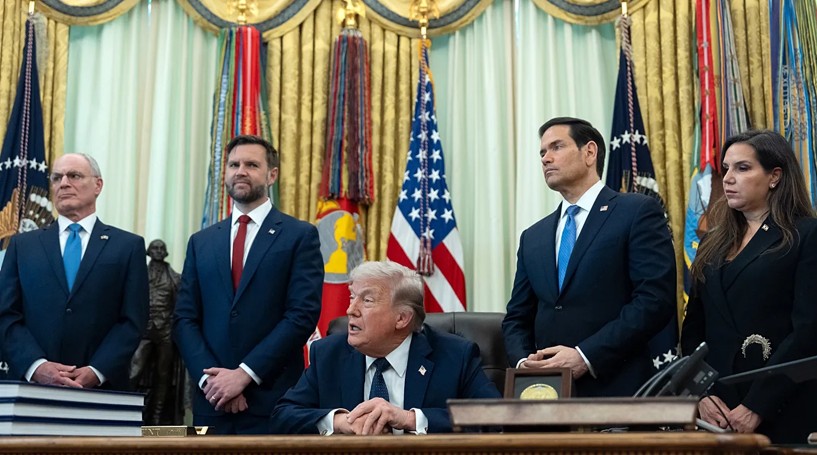
On Thursday, US President Donald Trump announced that Israel and Lebanon had officially agreed to extend their initial 10-day ceasefire by an additional three weeks. The agreement followed a second round of high-level talks between Israeli and Lebanese ambassadors at the White House—the first direct diplomatic engagements between the two nations in decades. Trump characterized the meetings as “very well” executed, writing on his Truth Social platform that the US would work alongside Lebanon to help protect it from Hezbollah. He also announced plans to host Israeli Prime Minister Benjamin Netanyahu and Lebanese President Joseph Aoun in the coming weeks.
However, the diplomatic optimism was violently shattered almost immediately.
The Immediate Ceasefire Violation
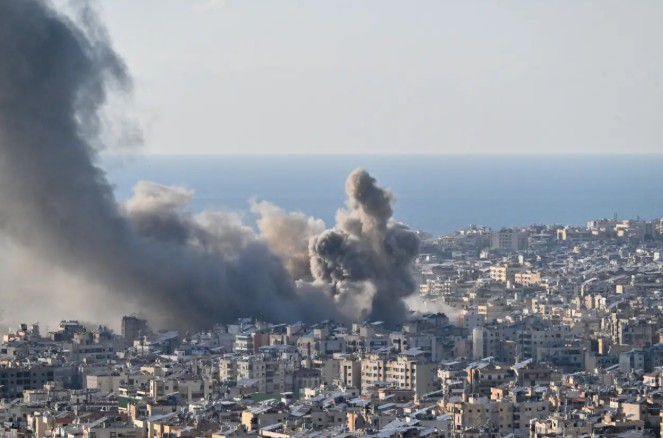
Despite the newly signed three-week extension, the guns did not fall silent. Disregarding the White House announcement, Israel launched fresh military strikes into Lebanese territory.
Targeting the village of Yater and the wider Nabatieh region, the Israeli Defense Forces (IDF) carried out artillery and aerial bombardments that resulted in civilian casualties, including a child, and the deaths of three militants. In immediate retaliation, Hezbollah—which officially opposes the Washington-brokered talks—launched a barrage of rockets toward Israeli positions, claiming to target the IDF units responsible for the strikes. The rapid resumption of fire exposes the profound fragility of the truce, demonstrating that political agreements in Washington are struggling to dictate the tactical realities of the IDF and Hezbollah on the ground.
The Second Front: The Strait of Hormuz Standoff
While the Levantine front burns, the broader regional war involving the United States and Iran continues to escalate dangerously in the Persian Gulf.
The tense naval standoff in the Strait of Hormuz shows no signs of de-escalation, marked by a cycle of mutual ship seizures. Escalating the rules of engagement, President Trump issued a direct order to the US military early Thursday to “shoot and destroy” any Iranian vessels attempting to lay naval mines in the strategic chokepoint.
Speaking to reporters, Trump projected an image of calculated patience, dismissing notions that he is rushing to end the war. “I don’t want to rush myself. Because every news story says ‘Trump is under time pressure.’ I’m not… You know who is under time pressure? They are,” he stated, claiming that Iran’s leadership is in “turmoil” and struggling to maintain control of the country.
Trump further asserted that the US military now maintains “total control” over the Strait of Hormuz, explicitly stating his refusal to allow Iran to reopen the waterway to prevent Tehran from generating $500 million a day in oil revenues before a comprehensive settlement is reached.
Tehran’s Defiance
Iran immediately pushed back against Washington’s narrative. The Iranian Foreign Ministry dismissed Trump’s claims of internal chaos as a “distraction tactic,” insisting that the nation’s leadership remains completely unified.
Furthermore, Iranian Parliament Speaker Mohammad Bagher Ghalibaf firmly drew Tehran’s red line. He declared that reopening the Strait of Hormuz is functionally “impossible” as long as the suffocating US naval blockade remains in place, condemning the blockade itself as a blatant violation of any broader ceasefire framework.
As Washington attempts to juggle two highly volatile fronts, the simultaneous collapse of the Lebanon truce and the hardening of the Hormuz blockade suggest that the Middle East is settling into a protracted, multi-domain war of attrition.
React