
What is the Euro-Atlantic Partnership Council (EAPC)? The Bridge Between NATO and its Partners


 React
React
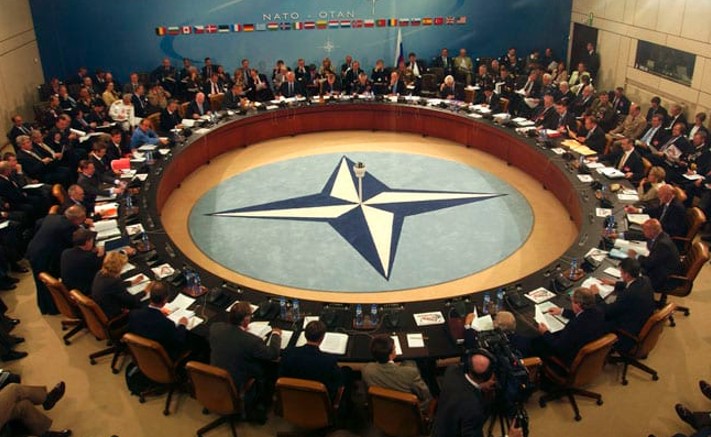
When global security crises erupt in Europe or the surrounding regions, the immediate focus naturally shifts to NATO. However, the North Atlantic Treaty Organization does not operate in a vacuum. Surrounding its core membership is a vast, highly structured network of neutral states, former Soviet republics, and regional partners.
The multilateral forum that holds this massive geopolitical network together is the Euro-Atlantic Partnership Council (EAPC).
To understand the modern security architecture of the Northern Hemisphere, one must understand how the EAPC functions as the critical bridge between NATO and the rest of Europe and Central Asia.
The Origins: Adapting to a Post-Cold War World
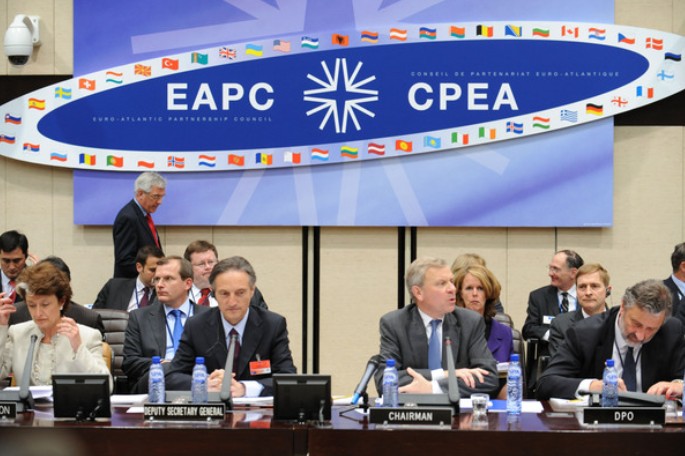
Following the collapse of the Soviet Union, the geopolitical landscape of Europe was fundamentally fractured. NATO needed a mechanism to build trust and prevent conflicts with former Warsaw Pact countries and newly independent Soviet states without immediately absorbing them into the alliance.
In 1997, the EAPC was established to replace the earlier North Atlantic Cooperation Council (NACC). Its mandate was revolutionary: create a permanent, multilateral political forum where NATO allies could sit at the same table as non-NATO nations to discuss security issues as equals. Today, the EAPC consists of 50 nations—the 32 NATO member states and 18 Partner countries. (Note: Russia and Belarus were historically members, but their participation is currently suspended following the invasion of Ukraine).
The Political Roof of the Partnership for Peace (PfP)
If the EAPC is the political boardroom, the Partnership for Peace (PfP) is the operational arm.
The EAPC provides the overarching political framework for the PfP. Through this mechanism, partner countries can choose their level of engagement with NATO. This is highly attractive to nations with strict policies of military neutrality—such as Switzerland, Austria, and Ireland. These nations cannot sign a mutual defense pact (Article 5), but through the EAPC, they can participate in vital security dialogues and joint training.
Core Focus Areas: What Does the EAPC Actually Do?
Because the EAPC is not a collective defense alliance, its operations focus on transnational threats and crisis management where broad international cooperation is required. Key focus areas include:
-
Interoperability and Peacekeeping: Ensuring that when an international crisis occurs (such as in the Balkans or Afghanistan), non-NATO partner militaries can seamlessly plug into NATO command structures and communications networks.
-
Civil Emergency Planning: Coordinating international disaster relief, whether responding to massive earthquakes, floods, or global pandemics.
-
Counter-Terrorism & Cyber Defense: Sharing intelligence and best practices to protect critical infrastructure from non-state actors and state-sponsored cyber warfare.
-
Arms Control and Border Security: Assisting partner nations in safely destroying obsolete Cold War-era stockpiles of landmines and small arms, and securing porous borders against smuggling.
The Strategic Importance of the EAPC
In an era of renewed great power competition, the EAPC serves as an indispensable “shock absorber” for European security.
It prevents the continent from being starkly divided into two isolated, hostile camps. For countries aspiring to join NATO (such as Bosnia and Herzegovina), the EAPC serves as the ultimate waiting room and training ground. For neutral nations, it provides a voice in the continent’s security architecture without compromising their sovereignty.
Ultimately, the Euro-Atlantic Partnership Council proves that modern defense is not just about kinetic deterrence; it is about maintaining open lines of communication, building interoperability, and addressing common threats before they escalate into open conflict.
React