
How Air Defense Systems Work: The Anatomy of the Ultimate Sky Shield
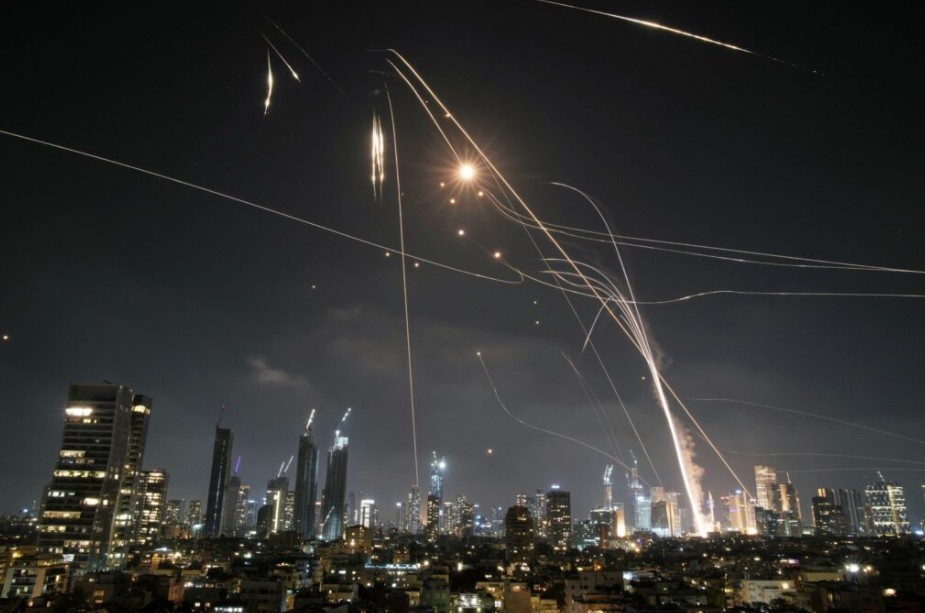
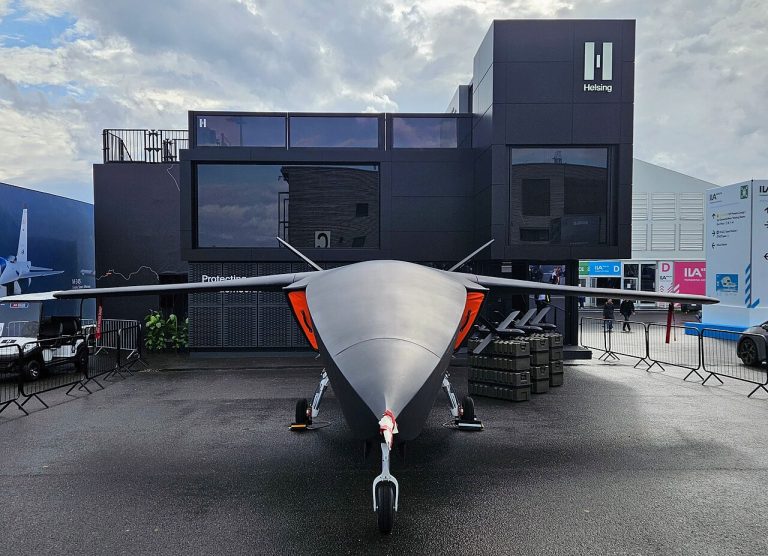
In an era where threats range from $20,000 loitering munitions to hypersonic ballistic missiles traveling at Mach 5, control of the skies is no longer maintained by fighter jets alone. The true guardians of modern airspace are complex, ground-based, and naval Air Defense Systems.
But how do air defense systems work? They are not simply tubes that shoot rockets into the sky. A modern air defense network is a highly sophisticated “kill chain”—a synchronized dance of electromagnetic sensors, artificial intelligence, and kinetic energy that operates in fractions of a second.
To understand the anatomy of the ultimate sky shield, we must break down its operation into three distinct phases: Detection, Command and Control, and Interception.
Phase 1: Detection and Tracking (The Eyes)
Before a threat can be destroyed, it must be seen. This is the job of the sensor suite, primarily consisting of advanced radar systems.
Modern air defense relies heavily on AESA (Active Electronically Scanned Array) radars. Unlike older radars that physically rotate a large dish to sweep the sky, AESA radars are composed of thousands of tiny, solid-state transmit/receive modules. These modules can steer electronic beams instantly in multiple directions without the antenna moving an inch.
This allows the system to simultaneously scan the horizon for incoming cruise missiles, track high-altitude bombers, and identify small drone swarms. Once an anomaly is detected, the radar locks on, continuously painting the target with electromagnetic waves to calculate its exact speed, altitude, and trajectory.
Phase 2: Command and Control – C2 (The Brain)
Seeing the target is only half the battle; deciding what to do with it is the critical next step. The radar feeds its raw data into the Command and Control (C2) Center, effectively the “brain” of the air defense system.
Here, powerful computers—increasingly augmented by Artificial Intelligence—analyze the data. The C2 system performs several split-second calculations:
Identification (IFF): Is the aircraft a friendly fighter, a commercial airliner, or a hostile cruise missile?
Threat Prioritization: If a swarm of 50 drones and 2 ballistic missiles are approaching, which target poses the most immediate danger to critical infrastructure?
Weapon Assignment: Which missile battery is in the best physical position to intercept the target with the highest probability of a kill?
Once the C2 system calculates the optimal firing solution, the engagement order is electronically transmitted to the launchers.
Phase 3: Interception (The Muscle)
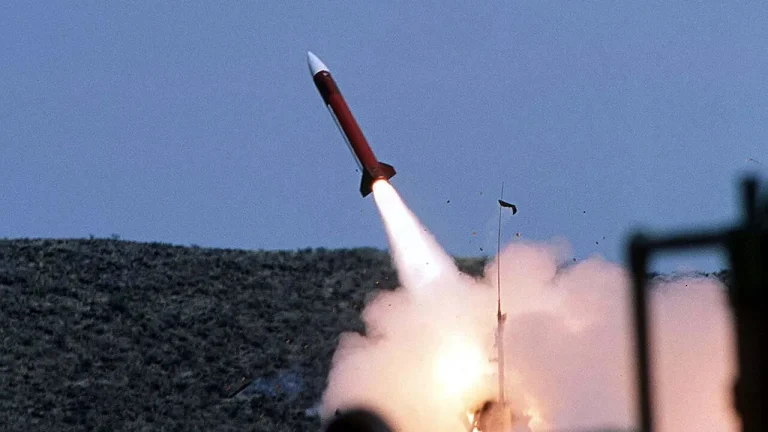
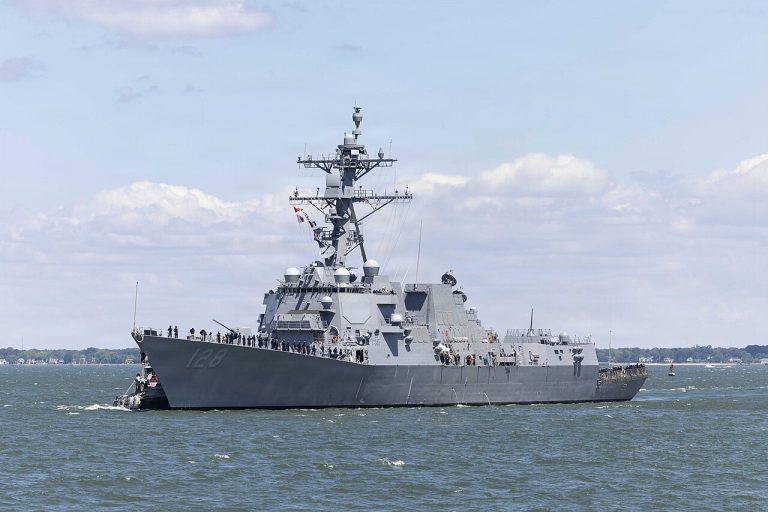
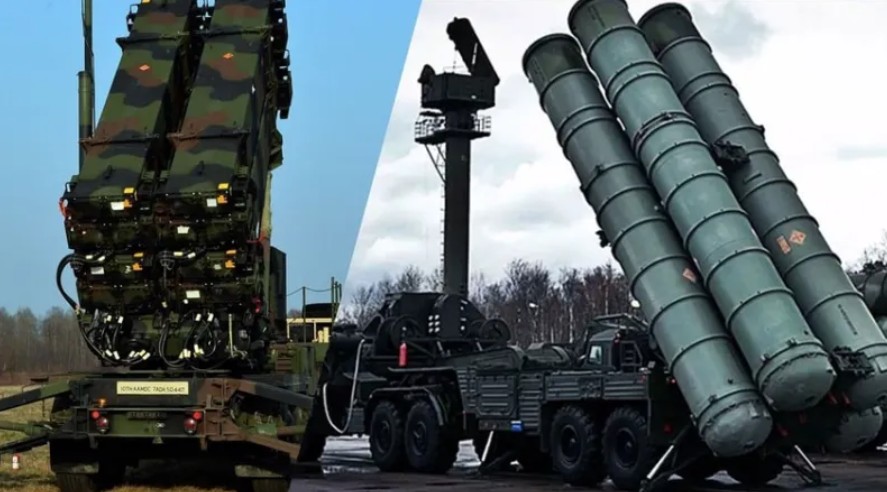
This is the kinetic phase. Upon receiving the command, the launch systems are activated. Modern naval and land-based systems frequently utilize Vertical Launch Systems (VLS). Instead of rotating a launcher toward the target, VLS cells fire the interceptor missile straight up into the air. Once clear of the launcher, the missile quickly pitches over and maneuvers toward the target, allowing for rapid, 360-degree engagement capabilities.
As the interceptor missile streaks through the sky, it receives mid-course guidance updates from the ground radar. In the terminal phase (the final seconds before impact), the missile often activates its own internal seeker—either an active radar or an infrared sensor—to lock onto the enemy target autonomously.
The interception is rarely a direct physical collision. Most interceptor missiles use a proximity fuze. As the missile passes within lethal range of the target, it detonates a specialized warhead, casting a high-velocity cloud of shrapnel that shreds the incoming threat.
The Multi-Layered Doctrine
No single system can stop every threat. This is why modern militaries employ a Multi-Layered Air Defense Doctrine:
Point Defense: Short-range systems (like CIWS or 30mm airburst cannons) designed to protect a specific asset from drones and close-range missiles.
Area Defense: Medium-to-long-range systems designed to deny airspace to enemy fighter jets and cruise missiles over a large region.
Ballistic Missile Defense (BMD): Exo-atmospheric interceptors designed to destroy nuclear or conventional warheads in space before they re-enter the atmosphere.
Conclusion
An air defense system is a masterclass in modern physics and computer science. As the offensive capabilities of adversaries evolve into the realm of hypersonics and autonomous drone swarms, the “kill chain” will continue to rely heavier on AI and, eventually, directed-energy weapons (lasers) to maintain the ultimate shield over our skies.