
FIBER-OPTIC DRONES: RANGE, LIMITATIONS AND NEXT-GEN CAPABILITIES IN MODERN WARFARE
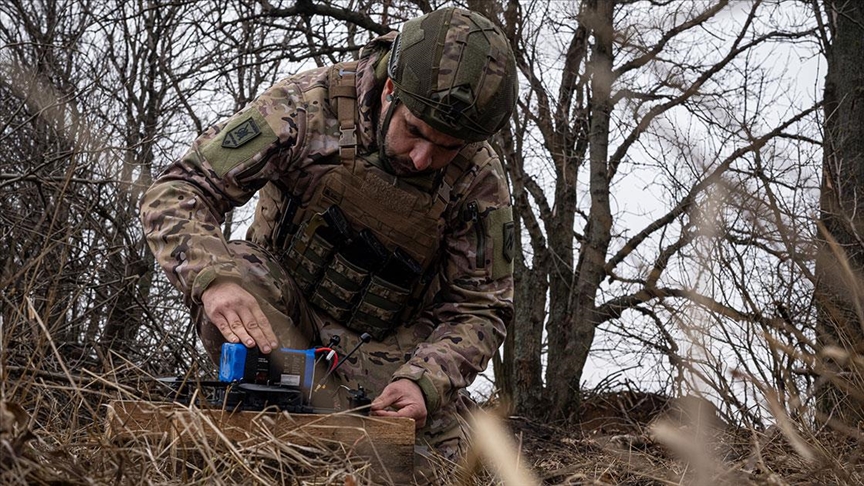
Fiber-optic controlled drones are emerging as a critical technology in modern battlefields, offering a decisive advantage against electronic warfare systems. Unlike traditional radio-controlled platforms, their operational range is determined not by signal strength but by the physical length of the fiber-optic cable they carry.
OPERATIONAL RANGE DRIVEN BY CABLE LENGTH
In current deployments, fiber-optic drones typically operate within a 5 to 20-kilometer range, depending on mission requirements and hardware capacity. Manufacturers provide a wide range of spool options, commonly including 1, 2, 3, 5, 10, 15, 20, 25 and 30 kilometers.
On today’s battlefields, especially in high-intensity conflict zones, drones are most frequently used within the 10–20 km range, balancing maneuverability, payload and control reliability.
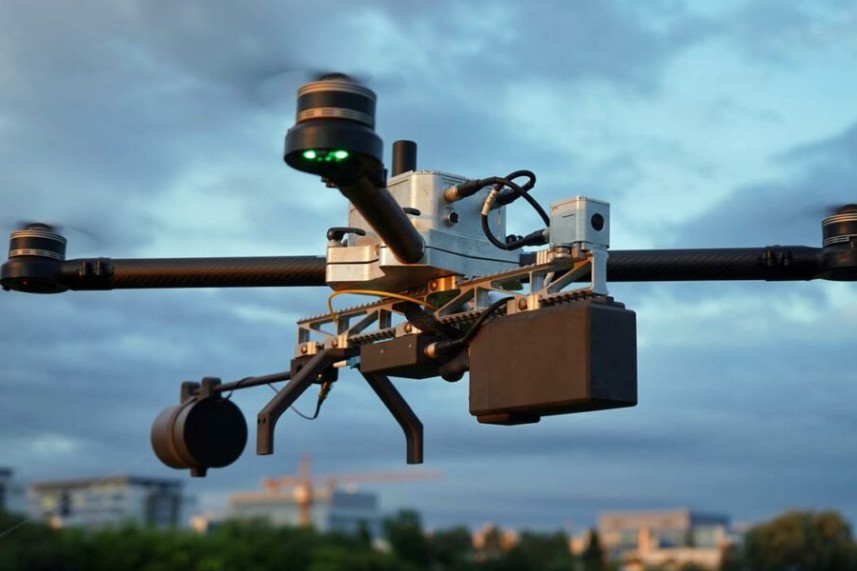
NEXT-GENERATION SYSTEMS PUSHING RANGE LIMITS
Recent technological advancements are significantly extending these limits.
In the Ukraine war, both sides are actively developing longer-range systems, with some models reportedly reaching 30 to 32 kilometers. Examples include Russian “Veterok” drones and newly developed Ukrainian platforms.
Türkiye-based defense firm Ender ARGE has introduced loitering munition systems with 10 km, 20 km and 50 km launcher-based variants, highlighting a shift toward extended-range capabilities.
Meanwhile, reports suggest that Russian developers have integrated 40 km fiber-optic cables into low-cost Molniya-2 drones. On the theoretical side, optical transmission systems are being designed to support 20, 40 and even 60 km ranges, with prototype systems already demonstrating up to 50 km capability.
KEY FACTORS LIMITING RANGE
Despite these advances, several operational constraints continue to define real-world performance:
Payload Trade-Offs:
Longer cables increase spool weight and volume, directly reducing the drone’s payload capacity—particularly critical for explosive or sensor loads.
Flight Profile Constraints:
To prevent cable slack, entanglement or breakage, drones must fly at low altitude and along relatively straight paths. Complex maneuvers or obstacles can compromise the mission.
Cable Management Challenges:
Environmental factors such as terrain, vegetation and urban structures increase the risk of cable damage during extended missions.
REPEATER DRONES EXTEND TACTICAL REACH
To overcome range limitations, militaries are experimenting with repeater drone concepts. In this setup, a fiber-connected relay drone transmits signals to other attack drones, effectively extending operational reach.
Field reports indicate that such systems have enabled strikes at distances of up to 38 kilometers, with theoretical extensions reaching 60 kilometers through multi-layered relay networks.
STRATEGIC IMPORTANCE IN ELECTRONIC WARFARE ENVIRONMENTS
Fiber-optic drones are gaining prominence due to their immunity to jamming and signal interception, making them highly effective in contested electromagnetic environments.
As conflicts increasingly feature electronic warfare, these systems are expected to play a growing role in reconnaissance, precision strikes and asymmetric operations.