

WHY CAN’T ISRAEL AND THE US STOP IRAN’S MISSILES? HAS THE IRON DOME COLLAPSED?

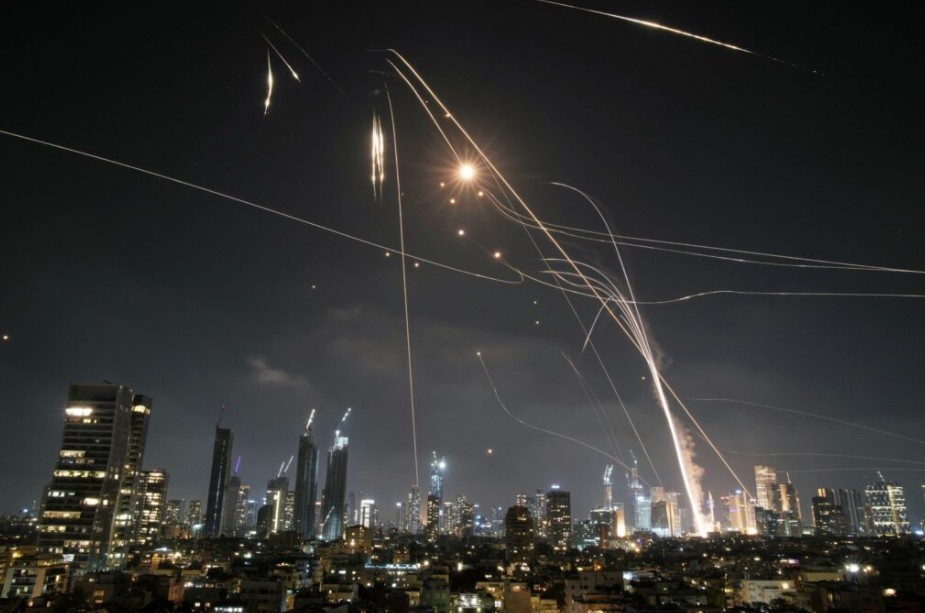

TECHNICAL ANALYSIS — The missile strikes across the Tel Aviv metropolitan area on April 2, 2026, serve as a definitive case study in the limitations of modern air defense. For decades, the global defense market has been dominated by the narrative of “impenetrable shields.” However, the kinetic reality on the ground confirms that these systems—specifically the multi-layered Arrow and David’s Sling networks—possess critical vulnerabilities when faced with next-generation ballistic and hypersonic technology.
1. The Saturation Point: Exploiting the Capacity Gap
The primary reason for the interception failure is a mathematical principle known as Saturation. Every air defense system, regardless of its sophistication, has a finite limit to the number of targets its radar can track and its batteries can engage simultaneously.
Iran’s “Operation True Promise III” utilized a high-volume cluster tactic. By launching hundreds of Kheibar Shekan and Fattah-2 missiles in synchronized waves, the attacker forced the defense computers into a state of “Target Overflow.” When the number of incoming projectiles exceeds the available interceptors in a specific sector, the remaining missiles become mathematically unstoppable.
2. The MaRV Factor: Defeating Linear Interception
The technical “bypass” of the defense net is largely attributed to MaRV (Maneuverable Re-entry Vehicle) technology. Traditional ballistic missiles follow a predictable, fixed parabolic trajectory. Defensive interceptors calculate a meeting point based on this fixed path.
However, Iran’s Fattah-2 hypersonic glide vehicles are designed for terminal-phase maneuvering. As the warhead re-enters the atmosphere at speeds exceeding Mach 13, it executes erratic course corrections.
-
The Tracking Dilemma: The defense radars (such as the Green Pine or Aegis systems) detect the movement, but the interceptor—moving at extreme velocities—cannot adjust its own kinetic energy and trajectory fast enough to compensate for the attacker’s shift.
-
Result: The interceptor passes through the “predicted” empty space, while the warhead proceeds to its target.
3. The Interception Probability Formula
In the field of ballistics, no defense system provides 100% certainty. The probability of a successful hit ($P_k$) is always less than 1. Analysts use the following formula to determine the failure rate ($P_f$) when multiple interceptors ($n$) are fired at a single high-speed target:
When faced with hundreds of high-velocity targets, the statistical “leakage” is inevitable. Even with a high theoretical success rate, a percentage of warheads will always bypass the shield due to sensor noise, atmospheric variables, and the extreme speeds involved.
4. The Strategic Myth: “Has the Iron Dome Collapsed?”
To address the question of “collapse,” a technical distinction is necessary. The Iron Dome has not collapsed mechanically; it has been rendered irrelevant strategically.
The Iron Dome is a short-range system designed for low-velocity rockets. The defense failure in Tel Aviv lies with the Arrow-2, Arrow-3, and David’s Sling—the systems designed for high-altitude, long-range threats.
The “collapse” is in the Cost-Benefit Ratio.
-
Interceptor Cost: A single Arrow-3 interceptor costs approximately $3.5 million.
-
Attacker Cost: An Iranian ballistic missile is estimated to cost between $150,000 and $500,000.
The defender is forced to spend ten times the amount of the attacker to achieve a non-guaranteed result. This economic attrition is a systemic failure of Western-style passive defense.
5. US Aegis Limitations in the Mediterranean
Despite the deployment of US Navy destroyers equipped with the Aegis Combat System, the results remained inconsistent. The velocity of hypersonic glide vehicles reduces the “engagement window” to mere seconds. By the time a ship-based SM-3 interceptor is launched and reaches its apex, the maneuverable Iranian warhead has already exited the optimal “kill zone,” leaving the metropolitan targets exposed.
Conclusion: The End of Passive Supremacy
The events of April 2nd demonstrate that the era of relying on “unbreakable shields” is over. The advantage in modern warfare has shifted back to the side of Speed, Volume, and Maneuverability. Until directed-energy weapons (lasers) can provide a cost-effective and instantaneous defense, the current generation of anti-ballistic systems remains vulnerable to high-tech saturation tactics.