
THE CONVERGENCE OF SILICON AND STEEL: HOW AI IS REDEFINING THE MODERN BATTLEFIELD

GLOBAL TECHNOLOGY DESK — In the history of military innovation, there are moments that change everything: the invention of gunpowder, the split of the atom, and now, the integration of Artificial Intelligence (AI). We are witnessing a paradigm shift where the “smartest” platform, not necessarily the “heaviest” one, dictates the outcome of a conflict. The age of purely mechanical warfare is over; the age of Cognitive Warfare has begun.
What is Defense Technology (DefTech)?
Defense Technology encompasses the tools, systems, and software used to protect national security. While it includes physical hardware like tanks and jets, the modern focus has shifted to “Software-Defined Defense.” This means that a vehicle’s capability can be upgraded with a code update rather than a physical overhaul.

The Pillars of Modern Defense Technology
1. Artificial Intelligence & Machine Learning (The Brain)
AI is the ultimate force multiplier. It doesn’t just fly drones; it analyzes petabytes of satellite data in seconds to find hidden enemy movements that a human eye would miss.
Autonomous Systems: From self-navigating UGVs (Unmanned Ground Vehicles) to AI-piloted jets.
Predictive Maintenance: Using algorithms to predict when a tank engine will fail before it actually breaks.
2. Quantum Computing (The Code Breaker)
Quantum technology is the next frontier in encryption. A quantum computer could theoretically break all modern military codes, making Quantum-Resistant Cryptography a top priority for global superpowers.
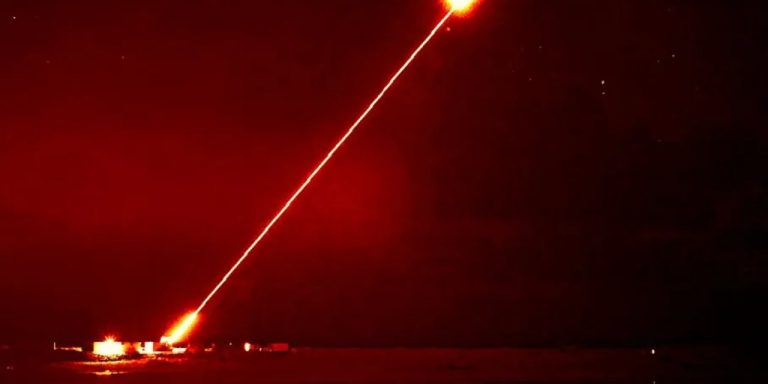
3. Directed Energy Weapons (DEW)
The “Sci-Fi” reality. Using high-energy lasers or microwaves to destroy drones or missiles at the speed of light, with a “cost-per-shot” that is significantly lower than traditional missiles.
4. Augmented Reality (AR) for the Tactical Edge
Soldiers are now using AR visors to see “digital markers” over the real world—identifying friendly forces, mapping terrain in 3D, and seeing through smoke or walls using fused sensor data.
Why Technology is the New Frontline
Decision Superiority: In modern combat, the side that can process information and make a decision the fastest wins (the OODA Loop). AI reduces this decision time from minutes to milliseconds.
Asymmetric Advantage: Small nations can now challenge global powers by utilizing low-cost, high-tech solutions like swarm drones and cyber-warfare tools.