THE RISE OF GHOST FLEETS: UNDERSTANDING UNMANNED NAVAL SYSTEMS
GLOBAL MARITIME DESK — The era of manned-only naval warfare is coming to an end. From the Black Sea to the Indo-Pacific, Unmanned Naval Systems are emerging as the new “force multipliers” of modern fleets. These autonomous and remotely operated platforms are designed to take on the “3D” missions—Dull, Dirty, and Dangerous—allowing human sailors to stay out of harm’s way while expanding the reach of naval power.
What are Unmanned Naval Systems?
Unmanned Naval Systems are autonomous or semi-autonomous platforms that operate on the water’s surface or beneath it. They are equipped with advanced sensors, AI-driven navigation, and, increasingly, modular weapon systems. Unlike traditional ships, they don’t require life-support systems, allowing for smaller, stealthier, and more cost-effective designs.
The Two Main Categories: USVs and UUVs
The unmanned maritime domain is divided into two primary environments:
1. USV (Unmanned Surface Vehicles)
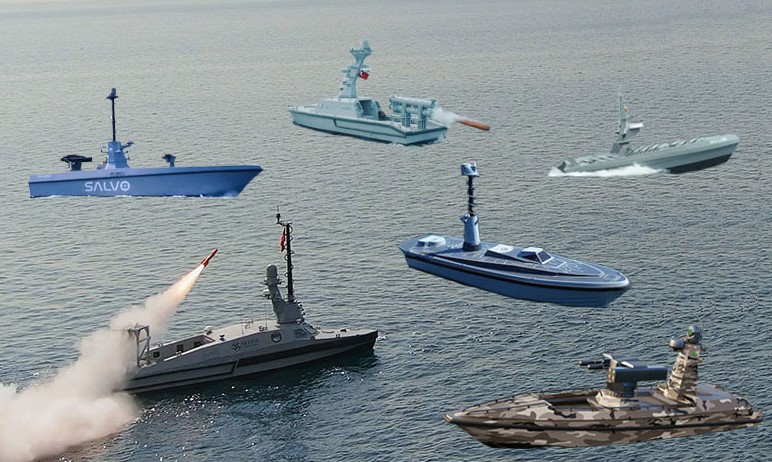
Commonly referred to as SİDA (Armed Unmanned Surface Vessels) when weaponized, these operate on the ocean surface.
Role: Coastal defense, anti-piracy, electronic warfare, and “kamikaze” strikes.
Advantages: High speed, low radar cross-section, and the ability to operate in “swarms” to overwhelm much larger enemy warships.
Global Examples: The AUSV (Armed Unmanned Surface Vehicle) category, featuring pioneers like the Turkish ULAQ or the US Navy’s Sea Hunter.
2. UUV (Unmanned Underwater Vehicles)
These operate beneath the waves and are often called “Underwater Drones.”
ROVs (Remotely Operated Vehicles): Connected to a host ship by a cable, used for deep-sea repairs or mine identification.
AUVs (Autonomous Underwater Vehicles): Independent gliders or “torpedo-shaped” drones that map the seabed or hunt for enemy submarines.
XLUUV (Extra-Large Unmanned Underwater Vehicles): The “Giant Drones” of the deep, capable of carrying mines or torpedoes over thousands of miles.
[Image comparing a small tactical USV and a large autonomous underwater vehicle]
Why are They Essential for Modern Navies?
Risk Reduction: They perform high-risk tasks like Mine Countermeasures (MCM) without risking human divers or expensive ships.
Persistent Surveillance: Unlike a manned ship that must eventually return to port for the crew’s welfare, an unmanned glider can stay at sea for months, powered by wave or solar energy.
Cost Efficiency: You can build and deploy dozens of USVs for the price of a single modern frigate.
Asymmetric Warfare: Small, fast-attack USVs can disable a billion-dollar destroyer, shifting the balance of power toward smaller, more agile navies.
The Future: Manned-Unmanned Teaming (MUM-T)
The goal is not to replace the traditional navy but to create MUM-T architectures. In this setup, a manned “Mother Ship” (like an LHD or a Frigate) controls a swarm of USVs and UUVs, using them as its “extended eyes and arms” to dominate a vast area of the ocean simultaneously.