Dominion Dynamics Builds Scout Arctic Drone Around Pratt & Whitney Canada Engine
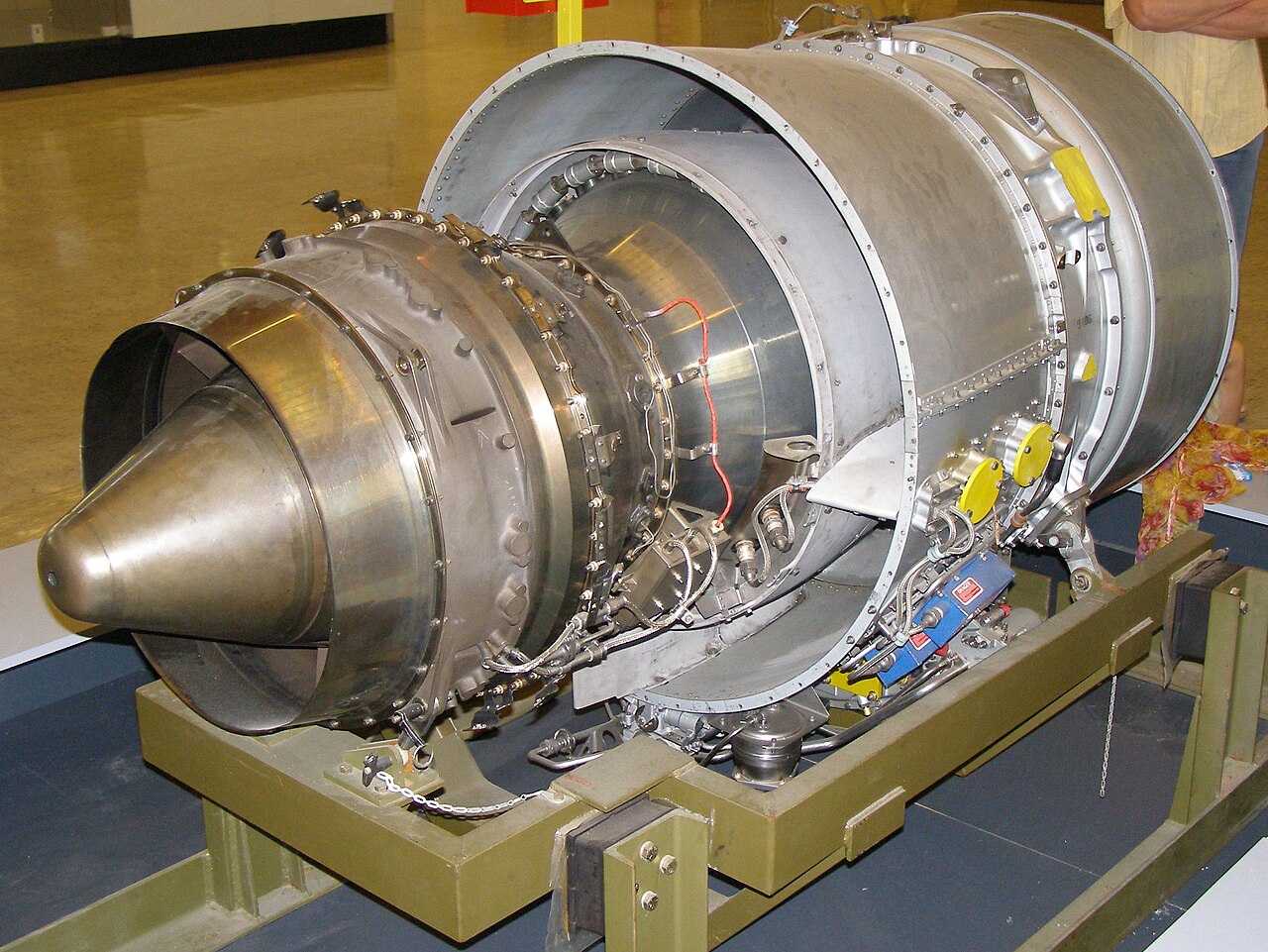
Dominion Dynamics has chosen a Pratt & Whitney Canada PW300-series engine to power Scout, its uncrewed Autonomous Collaborative Platform for Arctic operations. The Ottawa company announced the collaboration on November 17, 2026, in a press release.
Scout is intended to fly alongside crewed fighters and take tasking from airborne or ground-based command systems. Dominion said the airframe is being designed around the engine, with work split between teams in Ontario, Quebec and Nova Scotia.
Dominion Scout Gets a Canadian-Built Engine
| Item | Detail |
|---|---|
| Developer | Dominion Dynamics, Ottawa |
| Engine supplier | Pratt & Whitney Canada |
| Engine | PW300-series, Canadian-built |
| Platform | Dominion Scout, an Autonomous Collaborative Platform (ACP) |
| Role | Operate alongside crewed fighters, tasked from airborne or ground-based command systems |
| Environment | Arctic, with extreme cold and limited infrastructure |
| Work locations | Dominion: Ontario, Quebec, Nova Scotia. Pratt & Whitney Canada: Quebec, Ontario, Nova Scotia, Alberta |
| Financial terms | Not disclosed in the release |
| Announced | November 17, 2026 |
“Collaborating with Pratt & Whitney Canada places proven Canadian aerospace expertise and reliability at the heart of Scout,” said Eliot Pence, Dominion’s founder and chief executive. He said the aircraft is built for the demands of the Canadian Arctic, with aspirations to serve allies facing similar challenges.
Canada’s Industry Minister, Mélanie Joly, was also quoted in the release. She said the collaboration shows the strength of the country’s aerospace sector and supports domestic supply chains and skilled jobs.
Pratt & Whitney Canada is headquartered in Longueuil, Quebec. Its operations in Quebec, Ontario, Nova Scotia and Alberta form the manufacturing base the collaboration draws on, according to Dominion.
Why Build a Drone Around a Commercial Engine
Scott McElvaine, Pratt & Whitney Canada’s vice president of business development and marketing, said working with Dominion early lets the engine maker fold its expertise into the aircraft’s design. “By leveraging a commercial off-the-shelf solution, we can deliver an innovative product more efficiently,” he said.
The company says the PW300 family has more than 6,000 engines produced and 33 million flight hours behind it. Dominion’s release describes the airframe as optimised for the engine family, so the choice shapes the design rather than being bolted on later.
For a start-up founded in 2025, a fielded engine removes one of the larger development risks. That reading is analysis rather than something either company has said. Neither side has disclosed the thrust class or the specific PW300 variant.
How Scout Has Moved Since March
| Aspect | March to August 2026 | November 2026 |
|---|---|---|
| Propulsion | Not named. Dominion said in August it would have more to say in the fall about a partnership shaping how Scout is built | PW300-series engine from Pratt & Whitney Canada |
| Airframe | Options-analysis work on Arctic constraints | Designed around the PW300 engine family |
| Funding | C$50 million initial investment, announced March 5 | No new Scout funding figure announced |
| Supply chain | Sovereign, non-ITAR supply chain being built, per the August update | Canadian engine and a Pratt & Whitney manufacturing base in four provinces |
| Schedule | First flight targeted within 24 to 30 months, as of August | No new date in the release |
In March, Dominion committed C$50 million to engineering, prototyping and simulation work, framing Scout as a sovereign alternative to buying autonomous wingmen from abroad. By August it reported progress on a non-ITAR supply chain, an advisory board and briefings with government stakeholders on emerging Canadian Armed Forces requirements.
If the 24 to 30 month target from August holds, first flight would fall between late 2028 and early 2029. That date is arithmetic on the company’s own figure, not a new announcement.
Designing for the High Arctic
Dominion’s August update said it is building an options-analysis tool that turns Arctic constraints into design decisions. The factors include intermittent satellite coverage, cold-soak and anti-icing needs, and the weight of ruggedised gear for unimproved runways.
The company is also testing Scout’s autonomy in AuraSim, a physics-based simulation environment, so that a live pilot can fly alongside a virtual platform before anything leaves the ground. Its advisory board includes retired General Tom Lawson, a former Chief of the Defence Staff, and retired Colonel Chris Hadfield.
Canada Enters a Crowded Field
The release says the United States, Australia, the United Kingdom, Germany and Japan each have funded programmes for autonomous combat aircraft. It cites a market valued at $16.4 billion in 2026 and projected to reach $61 billion by 2034, a figure the company has not sourced to a named study.
Dominion is positioning Scout for Canadian and allied buyers. The release does not name a Canadian government contract for the aircraft.
Dominion Dynamics Company Profile
| Item | Detail |
|---|---|
| Headquarters | Ottawa, Ontario, Canada |
| Founded | 2025 (launched June 2025) |
| Founder and CEO | Eliot Pence |
| Funding | C$169 million raised since launch, including a C$139 million Series A led by Georgian on June 30, 2026 |
| Team | Company target of more than 100 people by the end of 2026 |
| Facility | 25,000-square-foot manufacturing site in Kanata, Ontario |
| Products | Scout (ACP), AuraNet (command and control software), AuraSim (simulation) |
| Known deployment | AuraNet used with the Canadian Armed Forces during Operation Nanook-Nunalivut |
Dominion Scout and PW300 FAQ
What is Dominion Scout?
An uncrewed Autonomous Collaborative Platform being developed by Dominion Dynamics to operate alongside crewed fighters, with a focus on Arctic conditions.
Which engine will power Scout?
A Canadian-built Pratt & Whitney Canada PW300-series engine. The specific variant has not been disclosed.
Who is Dominion Dynamics?
An Ottawa-based defence technology company founded in 2025 that develops autonomy, sensing, communications and command and control systems for Canada and its allies.
When will Scout fly?
In August 2026 Dominion said it was on track for first flight within 24 to 30 months.
Is the value of the engine deal public?
No. The press release does not disclose financial terms.
- Dominion Dynamics – “Dominion Dynamics and Pratt & Whitney Canada collaborate to advance Dominion Scout” (press release, November 17, 2026): defendthedominion.com
- Dominion Dynamics – “Canada’s first Autonomous Collaborative Platform is taking off” (August 14, 2026): defendthedominion.com
- Dominion Dynamics – “Initial $50-million investment to build a sovereign autonomous wingman” (March 5, 2026): defendthedominion.com
- Dominion Dynamics – “$139M CAD Series A” (June 30, 2026): defendthedominion.com
- Airforce Technology – “Dominion Dynamics taps Pratt & Whitney to power Scout Arctic UAV” (November 17, 2026)
- Image – Pratt & Whitney Canada PW305 turbofan, photo by -jkb-, CC BY-SA 3.0, via Wikimedia Commons