ASELSAN Signs €1.28 Billion Missile Seeker and Data Link Contracts With ROKETSAN
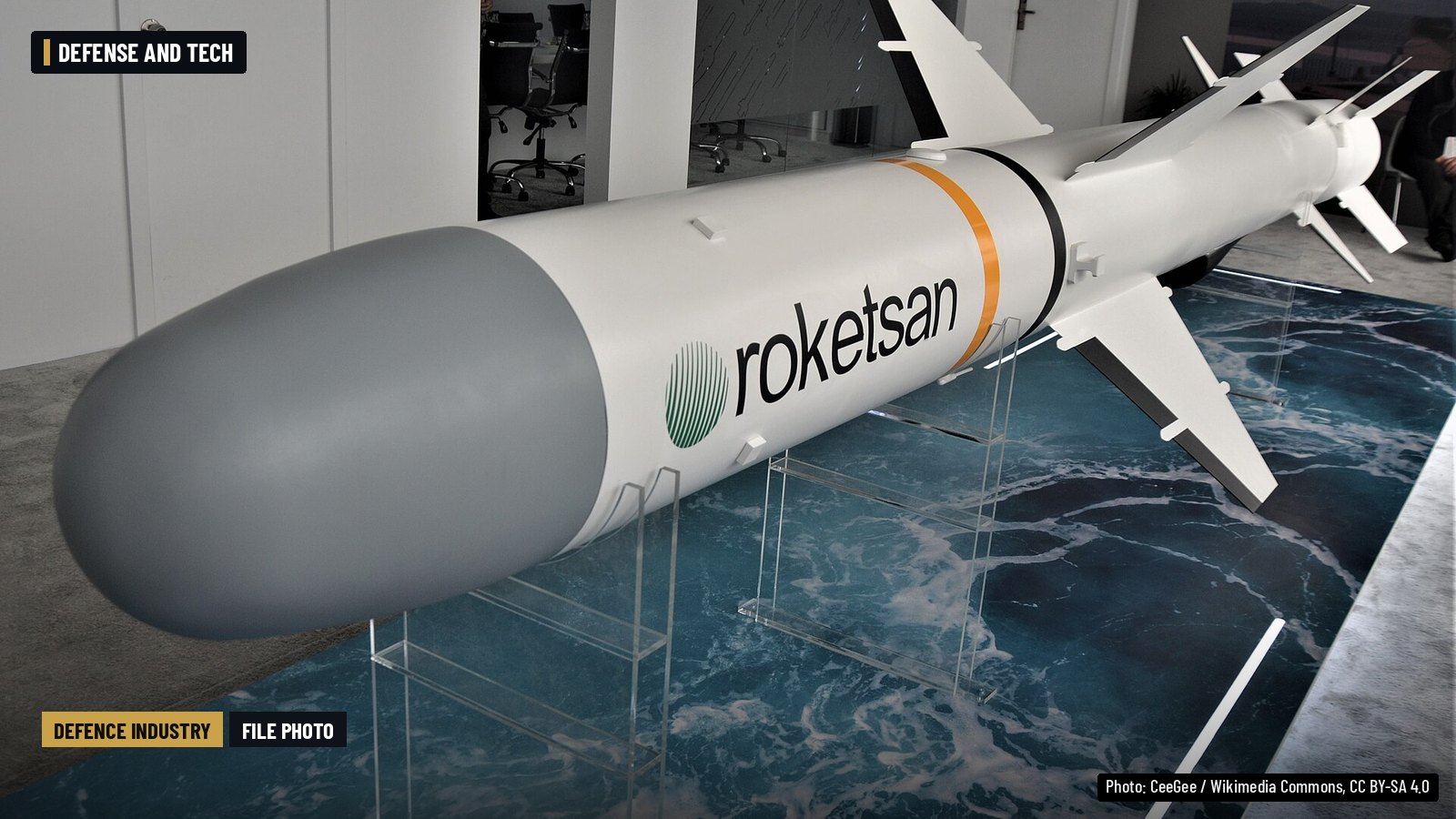
ASELSAN has signed contracts with ROKETSAN to supply missile data links and seeker heads, with a combined value of €1,281,101,744 (about €1.28 billion). Türkiye’s largest defence electronics company announced the deal on 16 November 2026 in a new business relationship disclosure to the Public Disclosure Platform (KAP) and on its official X account.
- ASELSAN and ROKETSAN signed contracts for missile data link and seeker systems worth €1,281,101,744 in total
- ASELSAN is the supplier and ROKETSAN the customer; the relationship starts on 16 November 2026
- ROKETSAN accounted for 5.6% of ASELSAN’s net sales in its latest published income statement
- The missiles involved, quantities, delivery dates and the split of the value were not disclosed
What ASELSAN disclosed
The filing is brief. It says contracts “regarding the procurement of Missile Data Link and Seeker Systems” were signed between the two state-linked companies, names ROKETSAN as the customer and gives 16 November 2026 as the start of the relationship. ASELSAN says the work “will positively affect the company’s revenue”. The Turkish text of the disclosure prevails over the English translation (see KAP, the Public Disclosure Platform).
The disclosure also puts ROKETSAN’s weight in ASELSAN’s books in numbers: it made up 5.6% of net sales in ASELSAN’s latest published income statement and 7.3% of trade receivables on its latest balance sheet.
What the filing does not say matters as much. ASELSAN did not name the missiles that will carry the seekers and data links, how the €1.28 billion is split between the two product lines, how many units are involved, or when deliveries are due. It also did not name an end user or say whether the work is tied to a programme run by the Presidency of Defence Industries (SSB).
Seekers and data links in plain terms
A seeker is the guidance section in a missile’s nose. It finds the target and locks on to it in the final phase of flight, so it largely decides whether the missile hits. A missile data link is a two-way radio link between the weapon in flight and the launcher or aircraft that fired it: it lets the operator send updated target data and receive status reports from the missile. Both are among the most expensive and technically demanding parts of a modern guided weapon.
A long supplier relationship
ASELSAN has supplied seekers to ROKETSAN for years, though earlier contracts it disclosed were much smaller. In 2016 it reported a contract to develop an infrared seeker for ROKETSAN’s KARAOK short-range anti-tank system, worth €7,451,002 plus TRY 43,994,661, with deliveries planned for 2018–2022 (KAP). In June 2024 it disclosed contracts and amendments for missile subsystems and seeker production worth $20,149,637.46, €45,697,336.60 and TRY 476,316,251, with deliveries in 2024–2028 (KAP). At that time ROKETSAN accounted for 2% of ASELSAN’s net sales.
In July 2025, at IDEF in Istanbul, SSB, ASELSAN and ROKETSAN signed a development contract for an active electronically scanned array (AESA) seeker, AGRAS 3101/AA, and a missile data link for the GÖKBORA long-range air-to-air missile. ASELSAN said the seeker would be the first AESA seeker developed nationally in Türkiye and that the data link is planned to work with the National Tactical Data Link (MTDL). That contract was signed by SSB President Prof. Dr. Haluk Görgün, ASELSAN CEO Ahmet Akyol and ROKETSAN General Manager Murat İkinci (ASELSAN). ASELSAN has not said whether the new contracts relate to GÖKBORA.
Why it matters for Turkish industry
Seekers and data links are the kind of subsystems many missile makers buy abroad, and access to them can be restricted by export licences. A contract of this size between two Turkish companies points to these components being sourced at home in volume, not just in development batches, although the filing gives no production figures to confirm the scale. For ASELSAN it follows a $1.1 billion air defence export contract it reported earlier this month (our report). Background on both companies is in our ASELSAN profile and ROKETSAN profile.
Sources: ASELSAN on X (16 November 2026); ASELSAN KAP disclosures of 16 November 2026, 13 June 2024 and 2016; ASELSAN news release, 23 July 2025.