Kazakhstan Launches 2026-2029 Plan for Sovereign Drone Production

Kazakhstan’s government has approved a four-year plan to build a domestic, “full-cycle” drone industry, covering everything from components and communications systems to software, according to the Ministry of Artificial Intelligence and Digital Development, which announced the measure on October 27. The Comprehensive Plan for the Development of Unmanned Systems for 2026-2029 was approved by government resolution on October 13 and brings together 18 state bodies, including the defense, transport and internal affairs ministries. Separately, Kazakhstan’s deputy defense minister has said the country is in preliminary, unconfirmed talks with Türkiye’s Baykar over possible licensed production of military drones, a track that remains, in his own words, “still in the planning phase.”
What Happened
The plan was issued through a government resolution dated October 13, 2026, following an April 10 instruction from the prime minister’s office tasking the Ministry of Artificial Intelligence and Digital Development with consolidating what officials described as a fragmented domestic drone sector. The ministry said the plan’s objective is “not merely to support large-unit assembly, but to establish fully sovereign, full-cycle production, from hardware components and communication systems to secure software.”
The program sets concrete, mostly civilian-economy targets for 2029: at least two research-and-development centers built with universities and international technology partners, at least 1,000 trained specialists (engineers, operators, software developers and cybersecurity staff), a unified digital platform for drone registration and flight-route approval, and a pilot autonomous-freight project scheduled for 2027-2028. It also calls for new infrastructure, including vertiports, drone ports and automated charging stations, and envisions moving some regulatory oversight of drone operation to the Ministry of Internal Affairs, alongside mandatory liability insurance and cybersecurity rules for drone communications that are still being drafted.
On the industrial side, companies registered with Kazakhstan’s Astana Hub technology zone would get procurement preferences, exemptions from national-treatment requirements in public tenders, and long-term offtake contracts, including state defense orders. The plan also aims to ease import of components and raw materials and remove barriers to exporting finished Kazakh-made drones.
A Separate, Unconfirmed Military Track
The civilian plan runs alongside a more cautious military effort that Kazakhstan has not yet finalized. In remarks reported in April, Deputy Defense Minister Askar Mustabekov said Astana was studying domestic production of both small tactical drones and larger reconnaissance or strike platforms, and that “preliminary agreements” existed with Türkiye’s Baykar. Mustabekov was explicit that the effort “is still in the planning phase” and has not moved to implementation. He tied any serious progress to Kazakhstan’s defense budget reaching roughly 1% of GDP, and noted that details of the program remain partly classified. No contract, unit numbers or timeline for a Baykar-linked production line have been announced, and neither government has confirmed a deal.
Existing Capabilities and Regional Context
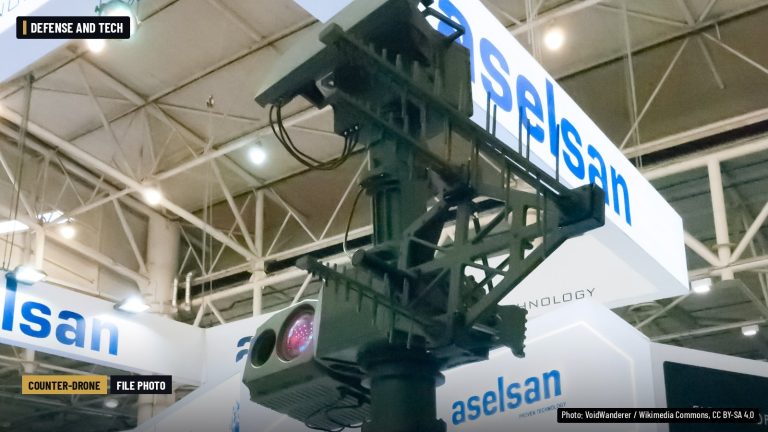
Kazakhstan already has some in-house drone activity to build on. Its Airborne Assault Forces reported in January that an in-house drone manufacturing and repair workshop had completed a full production cycle, and FPV-type drones built domestically were tested and displayed during the CSTO’s Rubezh 2026 exercise. In 2025, the Ministry of Defense launched a $1 billion Defense Industry Development Fund, and a Turkish-Kazakh joint venture, Kazakhstan Aselsan Engineering, already links Aselsan with the state-owned Kazakhstan Engineering.
The push mirrors a broader scramble among Central Asian states to reduce reliance on any single outside supplier. Uzbekistan has its own strike-drone development effort through its Defense Industry Agency, while Turkmenistan has leaned toward Chinese air-defense equipment as Russia’s traditional supplier role in the region shrinks, according to regional reporting. China has also sought drone-manufacturing footholds in Central Asia; a Chinese-linked firm, Yesil Technology, has separately announced plans for a commercial drone plant in Kazakhstan backed by Kazakh Invest. None of these programs is directly tied to the new government plan, but they illustrate the competitive landscape — Turkish, Chinese and domestic suppliers all vying for a market Russia once dominated, alongside Kazakhstan’s own moves toward balancing Russian and Chinese fighter offers and its existing transport and training aircraft deals with China and Russia — in which this new framework is being built.
Why It Matters
Kazakhstan has long pursued a “multi-vector” foreign policy that avoids deep dependence on any one power, balancing ties with Russia, China and Western and Turkic partners. A sovereign drone-production base — if it moves beyond policy paper to factories and contracts — would reduce reliance on imported systems at a moment when cheap, mass-produced drones have reshaped battlefields from Ukraine to Sudan and the South Caucasus. The civilian plan’s emphasis on “full-cycle” production, rather than simple assembly of foreign-designed kits, also signals an intent to capture more of the economic value of the drone boom domestically, with an eye toward export markets in Central Asia. The parallel, unconfirmed military track with Baykar — if it eventually proceeds — would be a more consequential shift, since Baykar’s exports and licensed-production deals elsewhere have typically opened broader access to avionics and control-system know-how, not just finished aircraft.
What Happens Next
Officials still need to finalize the regulatory pieces that remain open under the October resolution: mandatory drone-owner liability insurance, cybersecurity requirements for drone communications links, and a certification system for operators. The ministry has not yet published funding figures, named which companies will receive offtake contracts, or detailed firm production targets, so the scale of state investment remains unclear. On the military side, any movement from “preliminary agreement” with Baykar to an actual production or procurement contract would be the next concrete milestone to watch, as would any budget move toward the 1%-of-GDP defense-spending threshold that Mustabekov linked to the program’s progress.
FAQ
Is Kazakhstan building its own military drones now?
Not yet under contract. Kazakhstan’s October 2026 government plan targets a civilian and dual-use drone industry by 2029. A separate military track involving Türkiye’s Baykar was described by a deputy defense minister in April 2026 as still in the planning phase, with no signed deal confirmed by either government.
What is Kazakhstan’s Comprehensive Plan for the Development of Unmanned Systems?
It is a government resolution, approved October 13, 2026, and coordinated by the Ministry of Artificial Intelligence and Digital Development, aimed at building sovereign, full-cycle drone production (hardware, communications and software) rather than simple assembly, alongside new regulation, infrastructure and workforce training.
Which government bodies are involved?
Eighteen bodies are named, including the ministries of transport, defense and internal affairs, national security authorities, financial regulators, regional administrations and quasi-public development institutions, coordinated by the digital development ministry.
Is Kazakhstan working with Turkey’s Baykar?
Kazakh officials have said preliminary, non-binding talks have taken place about possible drone-related cooperation, but no production or procurement contract has been confirmed by either side.
How does this compare with other Central Asian states?
Uzbekistan is pursuing its own strike-drone development, and Turkmenistan has acquired Chinese air-defense systems, reflecting a region-wide trend of diversifying away from sole reliance on Russian suppliers.
Sources
- Trend News Agency, “Kazakhstan plans full-cycle drone production under 2026-2029 program,” October 27, 2026 — primary detail on the government resolution and ministry quote.
- The Astana Times, Aida Haidar, “Kazakhstan Targets Domestic Drone Industry Development by 2029,” October 27, 2026 — targets, education and infrastructure measures.
- Caspian Post, “Kazakhstan’s Drone Ambitions: A Shift Toward Domestic Defense Production,” April 23, 2026 — Deputy Defense Minister Askar Mustabekov’s remarks on Baykar talks and the military track.
- DKNews.kz, “Kazakhstan to become a drone manufacturing center: a project with $12 million in investments” — context on separate commercial drone manufacturing investment (Yesil Technology).