Rocket Lab Lands $150 Million Pentagon Loan Commitment to Speed Up Neutron Flights
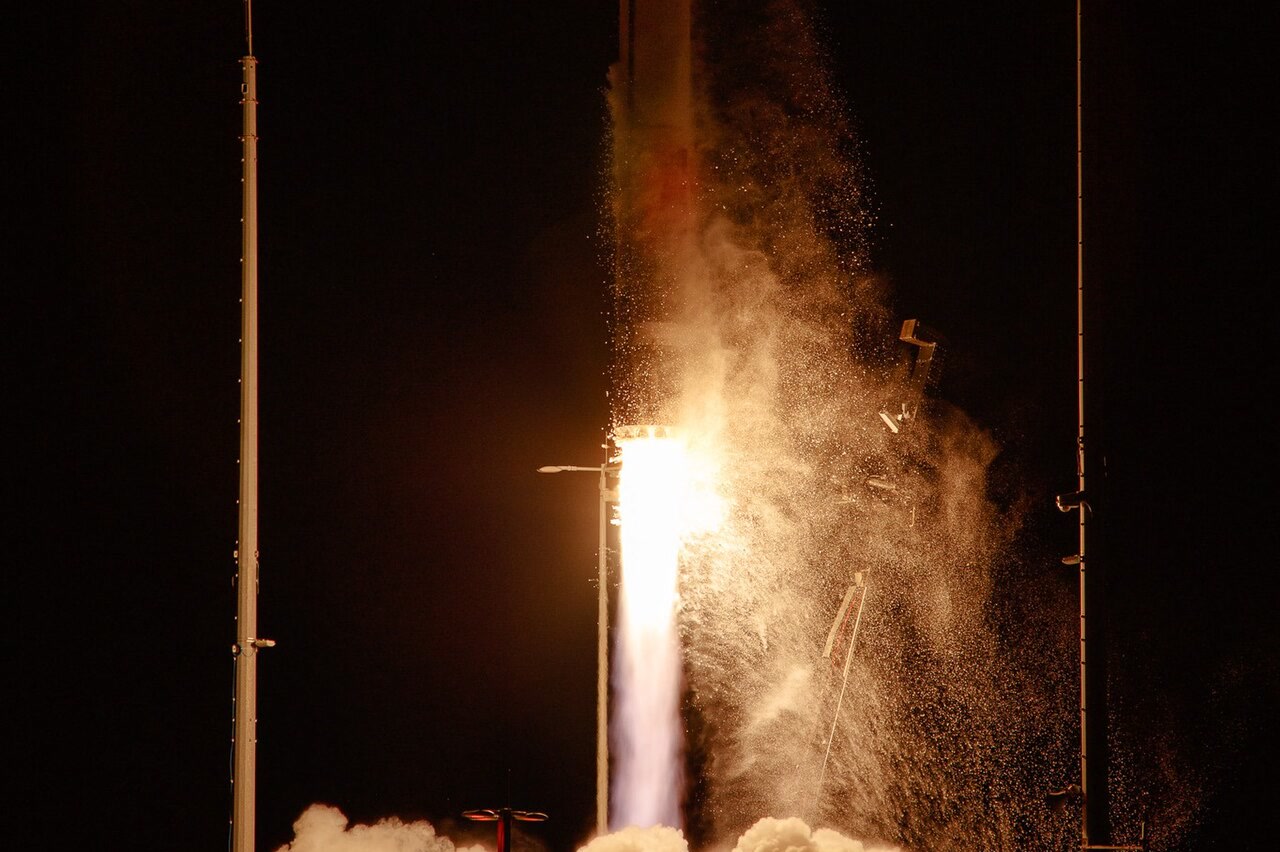
Rocket Lab has secured a $150 million conditional loan commitment from the Pentagon’s Office of Strategic Capital to raise the flight rate of its reusable Neutron rocket once the vehicle is flying. The office announced the commitment on November 9.
It is the third $150 million space loan the office has made public in about two weeks, after Stoke Space on October 26 and LeoLabs on November 4. Together the three commitments come to $450 million, Breaking Defense reported on November 11.
What the Neutron Loan Pays For
| Item | Detail |
|---|---|
| Lender | Office of Strategic Capital (OSC), US Department of War |
| Borrower | Rocket Lab USA, the main subsidiary of Rocket Lab Corp. |
| Amount | $150 million |
| Type | Conditional loan commitment, not yet closed |
| Purpose | Raise the Neutron flight rate beyond first launch |
| Planned uses | Recovery and transport vessels, engine and composite manufacturing upgrades, faster vehicle delivery and processing, turnaround infrastructure |
| Conditions | Due diligence plus financial, legal and technical requirements before closing |
| Announced | November 9, 2026 |
The money is aimed at what happens after Neutron’s debut, not at getting the rocket to the pad for the first time. According to the announcement, it would pay for additional vessels and equipment to recover and transport Neutron hardware at sea, factory upgrades to build more engines and carbon composite structures, and infrastructure that shortens the gap between flights.
Peter Anderson, the office’s senior vice president for investments, said the deal would add “a repeatable and reliable new space launch platform” to US launch capacity. Emil Michael, under secretary of war for research and engineering, said it helps build “the resilient, capable domestic launch network.”
A commitment is not a disbursement. Rocket Lab still has to clear due diligence and meet financial, legal and technical conditions before the loan closes, and Breaking Defense noted that OSC loans require a matching investment of company capital.
Three $150 Million Space Loans Compared
Two of the three borrowers are launch companies that have yet to fly their new rockets. The third builds radars that track objects in orbit.
| Borrower | Amount and date | Stated purpose |
|---|---|---|
| Stoke Space | $150 million, October 26 | Second launch pad at Cape Canaveral Space Force Station for the reusable Nova rocket; first liftoff now planned for March 2027 |
| LeoLabs | $150 million, announced November 4 | Deployment of the Scout mobile radar and expanded US radar manufacturing, including two large-scale facilities by 2028 |
| Rocket Lab | $150 million, announced November 9 | Higher Neutron flight rate through recovery vessels, engine and composite production, and faster turnaround |
An industry source told Breaking Defense that the Pentagon needed to finalise loans by the end of the fiscal year on September 30 and has been announcing them at a regular pace since. The same period brought non-space commitments too, including up to $450 million for drone maker Neros, which we covered in Pentagon Offers Neros Up to $450 Million to Scale Drone Production, and $75 million for silicon carbide wafer maker Halo Industries.
Neutron Still Has to Fly
Neutron is a reusable medium-lift rocket designed to put about 13,000 kg into low Earth orbit. It uses Rocket Lab’s methane-fuelled Archimedes engines and a carbon composite structure, and will launch from the Mid-Atlantic Regional Spaceport on Wallops Island, Virginia, where the company opened Launch Complex 3 in August 2025.
The schedule has moved several times. Rocket Lab originally planned a 2024 debut, then late 2025, then late 2026. The first launch is now expected in 2027, according to Breaking Defense.
That matters for military work. The Space Force added Rocket Lab and Stoke Space to its National Security Space Launch Phase 3 Lane 1 pool in March 2025, but each company must complete one successful flight before it can compete for task orders. Lane 1 covers lighter payloads and easier orbits. For more on the service buying those launches, see What Does the US Space Force Do?
The Launch Gap the Pentagon Is Worried About
Breaking Defense tied the loans to Pentagon concern about launch availability after 2028, when SpaceX is due to stop flying commercial payloads on Falcon 9. An October 29 report by Quilty Space projected a shortfall of at least 150 launches between now and 2030, with military payloads among those affected.
Lending to two rocket companies that have not yet reached orbit with their new vehicles is a bet on capacity that does not exist today. That reading is analysis, not a statement from the office.
The Office of Strategic Capital was created in 2022. Congress authorised its pilot lending programme in the fiscal 2024 defence policy bill, running through fiscal 2028. Its first funding notice, in September 2024, offered $984 million in direct loans across 34 dual-use technology categories, three of them specific to space. For fiscal 2026 the office received $97.8 million to subsidise up to $4.4 billion in loans, loan guarantees and technical assistance.
Rocket Lab Company Profile
| Item | Detail |
|---|---|
| Headquarters | Long Beach, California |
| Founded | 2006, in Auckland, New Zealand, by Peter Beck |
| CEO | Peter Beck |
| Employees | About 2,600 (May 2025) |
| Revenue | $602 million (2025) |
| Business areas | Launch services; spacecraft and space systems |
| Known programmes | Electron (more than 75 missions as of January 2026), HASTE hypersonic test launches, Neutron, 18 satellites for the Space Development Agency’s Tranche 3 Tracking Layer ($805 million, December 2025) |
Rocket Lab Neutron Loan FAQ
How much is the Pentagon lending Rocket Lab?
The Office of Strategic Capital signed a conditional commitment for $150 million. The loan has not closed.
What will Rocket Lab use the loan for?
Recovery and transport vessels, upgrades to engine and composite manufacturing, faster vehicle delivery and processing, and infrastructure to shorten the time between Neutron flights.
Has Neutron flown yet?
No. The first launch has slipped from late 2026 to 2027, according to Breaking Defense.
Who else received OSC space loans?
Stoke Space, for a second launch pad at Cape Canaveral for its Nova rocket, and LeoLabs, for its Scout mobile radar and radar manufacturing. Each commitment is $150 million.
What is the Office of Strategic Capital?
A Pentagon office created in 2022 that provides loans and loan guarantees to companies in technology areas the department considers critical.
- US Department of War – “The Department of War’s Office of Strategic Capital Signs $150 Million Conditional Loan Commitment With Rocket Lab” (release, November 9, 2026): war.gov
- Breaking Defense – “DoD pushes out 3 loans totaling $450M to bolster US space companies” (November 11, 2026): breakingdefense.com
- ExecutiveGov – “Rocket Lab Lands $150M OSC Loan Pledge for Neutron Rocket” (November 2026)
- SatNews – “Pentagon Backs Rocket Lab with $150M OSC Loan to Scale Neutron Production” (November 10, 2026)
- Wikipedia – Rocket Lab (company data)