Armenia’s Pivot From Russia: Gyumri Base in Question as France and India Arm Yerevan
Armenia says it would not object if Russia pulled its 102nd Military Base out of Gyumri, a stance Prime Minister Nikol Pashinyan set out at a press briefing on September 3, 2026 after President Vladimir Putin said Moscow was ready to withdraw “even tomorrow” if Yerevan judged the base unnecessary. Neither government has announced a withdrawal, and Armenian officials say they are equally ready to discuss the base staying. But the exchange has drawn fresh attention to how far Armenia has already moved away from Russian security guarantees: its armed forces now rely overwhelmingly on arms from France and India rather than Moscow, a shift that predates the Gyumri exchange by more than two years and has reshaped the security picture of the South Caucasus, a region this publication tracks closely alongside Russia’s wider web of alliances and arms relationships.
What Happened
At the September 3 briefing, Pashinyan said: “We have not raised the issue of the Russian military base even once during this period. If Russia decides to withdraw the military base from Armenia, we will not object. If they express a desire to remain, we are also ready to discuss that.” He was responding to remarks Putin made earlier, in which the Russian president said Moscow would leave if Armenians no longer wanted the base there, while making clear Russia would also stay if asked.
The exchange did not resolve anything. In October 2026, Russian officials pushed back, accusing Yerevan’s leadership of trying to shift responsibility for any withdrawal decision onto Moscow and insisting the idea of leaving was first raised publicly by the Russian side, not Armenia. Armenia’s parliament said it had received no formal notice from Moscow about a pullout. As of early November 2026, the base remains in place, and a Jamestown Foundation analysis judges an imminent closure unlikely, with quiet negotiation over troop numbers and legal terms a more probable path than a clean break.
The dispute matters less for what it resolves than for what it reveals: a Russian-Armenian security relationship that has been hollowed out from within since 2024, even as the formal structures — the base, Armenia’s nominal CSTO membership — remain technically intact.
The 102nd Military Base: Background
The Soviet Union established the base in Gyumri, Armenia’s second city, after the Second World War to watch the South Caucasus frontier with Türkiye. It survived the Soviet collapse with Armenian support because Yerevan, at war with Azerbaijan over Nagorno-Karabakh, depended on Russian protection. A 1995 interstate agreement set the base’s initial term, and a 2010 amendment extended Russia’s presence to 2044 without capping troop numbers. Current personnel levels are estimated at roughly 4,000, a figure that includes Russian border guards stationed along Armenia’s frontiers with Türkiye and Iran, according to French President Emmanuel Macron’s public estimate in May 2026 (other accounts put the figure closer to 5,000).
Armenian support for the Russian presence eroded over two separate tracks. Base personnel’s treatment of local civilians triggered protests in Gyumri as far back as 2015. More decisively, Russia and the CSTO did little to intervene when Azerbaijan retook Nagorno-Karabakh by force in 2020 and 2023, and when Azerbaijani forces crossed into Armenian sovereign territory in incidents in 2021-2022. Pashinyan has since said repeatedly that Russia is no longer a reliable strategic partner. Armenia announced it would freeze its participation in the CSTO in 2024 and has not formally rejoined active structures since.
Who Supplies Armenia’s Military Now
The clearest evidence of the shift is in procurement data. A decade ago Armenia sourced close to 90 percent of its arms imports from Russia; that share has fallen to under 10 percent, according to figures cited by the Eurasian Times in May 2026. France and India have taken Russia’s place as Armenia’s two largest suppliers.
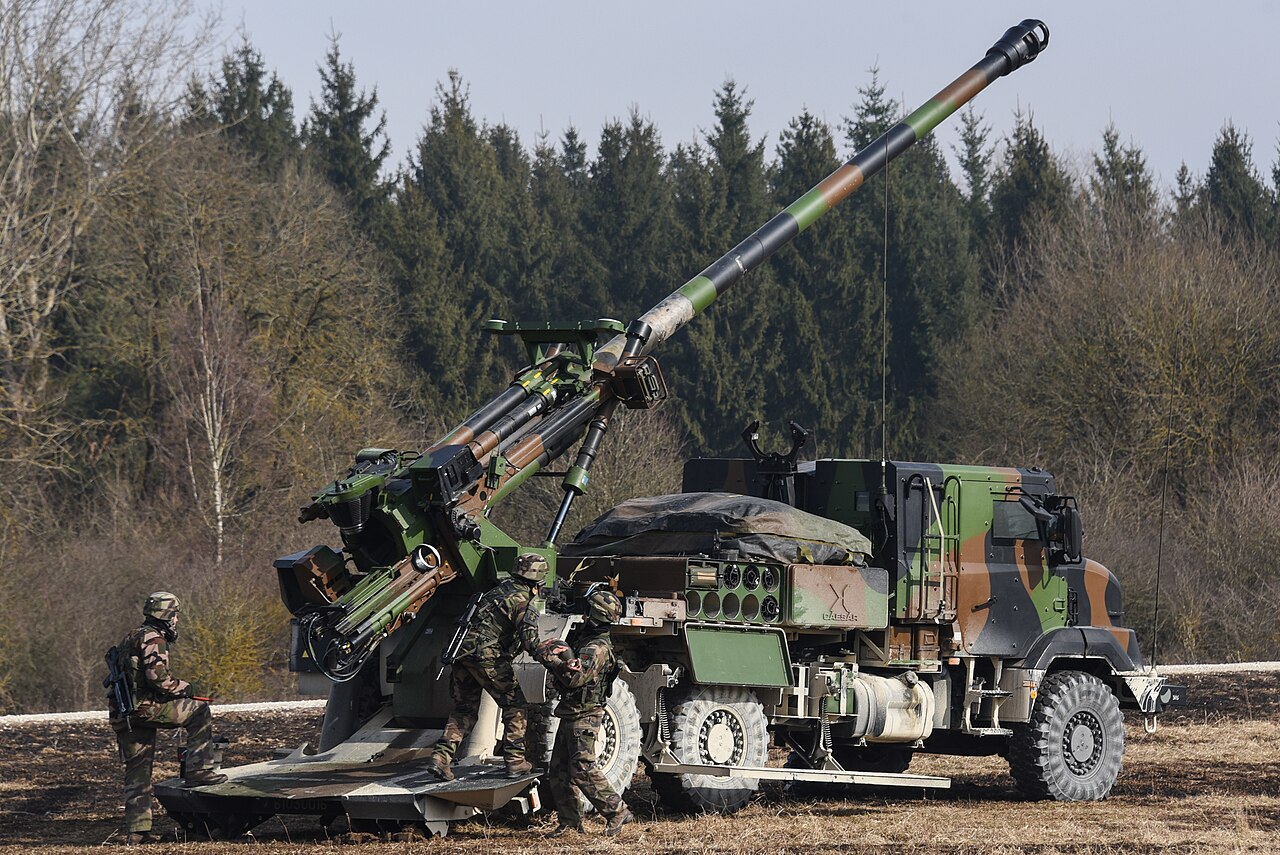
France: French Defense Minister Sébastien Lecornu announced on June 18, 2024, following talks with his Armenian counterpart Suren Papikian in Paris, that France had signed a deal to supply Armenia with CAESAR 155mm self-propelled howitzers — the same French-made gun-truck system that has seen heavy combat use in Ukraine. The contract reportedly covers 36 units, though neither government has published a delivery schedule, and CAESAR systems shown at Armenia’s May 2026 military parade do not by themselves confirm the full order has been filled. France has also delivered Bastion armored personnel carriers — vehicles originally intended for Ukraine but judged insufficiently protected against artillery and anti-tank fire for that front — with French Senate budget documents describing a program of 50 vehicles, of which 24 had been transferred and a further 26 were in production as of the document’s writing. Three Thales Ground Master 200 air-surveillance radars have been sold to Armenia, and the two countries signed a memorandum of understanding covering short-range Mistral air defense systems. A separate agreement with Airbus Helicopters reportedly covers six H145 multi-purpose helicopters, and Armenia’s defense ministry has signed an equipment-supply contract with the French industrial group Sofema.
India: India is now Armenia’s second-largest arms supplier, and Armenia has become India’s largest single arms-export customer. Deliveries confirmed to date include Pinaka multi-barrel rocket launchers, Akash-1S short-range surface-to-air missile systems, ATAGS 155mm towed howitzers, Swathi weapon-locating radars, and MArG truck-mounted artillery systems. Armenia is reportedly weighing further purchases of the newer Akash-NG air defense system and Astra Mk2 air-to-air missiles, along with a program to upgrade its existing Su-30 fighters toward the Su-30MKI standard already used by the Indian Air Force. A figure circulating in regional reporting puts Armenian imports of Indian systems at roughly $2 billion across 2025-26, though that number has not been independently sourced to an official disclosure and should be treated as approximate pending confirmation.
Reactions
Azerbaijan has been consistently and sharply critical of the French deliveries. Baku’s foreign ministry called the Bastion transfers proof of “provocative” French activity in the South Caucasus, and the defense ministry separately described the CAESAR order as evidence of French hypocrisy, noting Paris had previously said it would only supply Armenia with defensive equipment. Presidential aide Hikmet Hajiyev said France’s regional policy was damaging the fragile Armenia-Azerbaijan normalization process. Georgia, whose port of Poti has served as a transit point for at least one shipment of French Bastion vehicles bound for Armenia, has stated it applies its transit role equally to both Armenia and Azerbaijan and that both countries have the right to acquire weapons permitted under international agreements.
Russia has objected on different grounds. Foreign Ministry spokeswoman Maria Zakharova argued Armenia’s diversified procurement from multiple suppliers has “never contributed to improving defense capabilities,” a characterization Yerevan has not directly answered.
Why It Matters
The Gyumri exchange and the arms-supplier shift are two expressions of the same underlying change: a former Russian security client state in the South Caucasus is now arming primarily from France and India while leaving the question of a Russian troop presence formally open rather than forcing a breach. That ambiguity suits both governments for now — Moscow avoids the appearance of being expelled, and Yerevan avoids a decisive rupture while continuing to build an alternative supplier base. For Azerbaijan, a more French- and Indian-armed Armenia changes the long-term balance along a border where fighting has recurred repeatedly since 2020, even as both countries describe themselves as moving toward normalization. For Russia, the episode is one more marker of shrinking influence in a region it has treated as a core sphere of interest since the Soviet collapse, alongside its reduced leverage in Central Asia.
What Happens Next
No formal timeline governs either track. On the base, both sides have signaled openness to negotiation over troop levels and legal terms rather than an abrupt withdrawal, and the 2010 agreement’s 2044 horizon gives Moscow no automatic deadline to act on. On procurement, the open items — the remaining CAESAR and Bastion deliveries, the prospective Akash-NG and Astra Mk2 purchases, and the floated Su-30MKI upgrade — will be the clearest markers of whether Armenia’s pivot continues to deepen. Any of these could shift the picture before year’s end, and Defense & Tech will track confirmed deliveries and any formal move on the Gyumri base as they are reported by Armenian, French, Indian or Russian officials.
FAQ
Is Russia withdrawing its military base from Armenia?
Not as of early November 2026. Pashinyan said Armenia would not object if Russia chose to withdraw, and Putin said Russia was willing to leave if Armenia wanted that, but neither side has announced an actual withdrawal decision, and Armenian officials say no formal notice has been received from Moscow.
How many CAESAR howitzers has France delivered to Armenia?
The contract signed in June 2024 reportedly covers 36 units. CAESAR systems appeared at Armenia’s May 2026 military parade, but neither government has published a confirmed delivery count for the full order.
Why did Armenia move away from Russian weapons?
Armenian officials cite Russia’s and the CSTO’s failure to intervene when Azerbaijan retook Nagorno-Karabakh by force in 2020 and 2023 and during border incidents in 2021-2022, despite Armenia’s CSTO membership and reliance on Russian security guarantees.
Is India replacing Russia as Armenia’s main arms supplier?
France is currently Armenia’s largest supplier, with India second. Confirmed Indian deliveries include Pinaka rocket launchers, Akash-1S air defense systems, ATAGS howitzers, Swathi radars and MArG artillery, with further purchases reportedly under discussion.
How has Azerbaijan reacted to French arms sales to Armenia?
Baku has repeatedly condemned the sales, calling the Bastion vehicle transfers “provocative” and accusing France of hypocrisy for supplying systems it once said would be limited to defensive equipment only.
Sources
- Georgia Today, “Pashinyan: Armenia Would Not Object if Russia Decides to Withdraw Military Base,” September 3, 2026 — primary source for Pashinyan’s quotes and the date of the statement.
- Jamestown Foundation, “Future of Russia’s Military Base in Armenia Fraught,” 2026 — background on the base’s history, legal basis and analysis of likely outcomes.
- Radio Free Europe/Radio Liberty, “France Hails Deal to Provide Armenia With Howitzers as ‘New Important Milestone,'” June 18, 2024 — on the CAESAR deal announcement by Sébastien Lecornu.
- Eurasian Times, “Russia OUT! India & France Storm Armenia as Top Defense & Security Partners in South Caucasus Shake-Up,” May 7, 2026 — on the shift in Armenia’s supplier base and specific Indian and French systems delivered.
- Civil.ge, report on Bastion vehicle shipments via the port of Poti and Azerbaijani and Georgian government reactions, November 2023 — on shipment routing and official statements.
- Defense Security Monitor (Forecast International), “Armenia Orders French Howitzers as It Prepares CSTO Exit,” June 2024 — on the CAESAR contract and Armenia’s CSTO posture.