Seawolf-Class Submarine Explained: Why the US Navy Built Only Three of Its Most Powerful Attack Subs
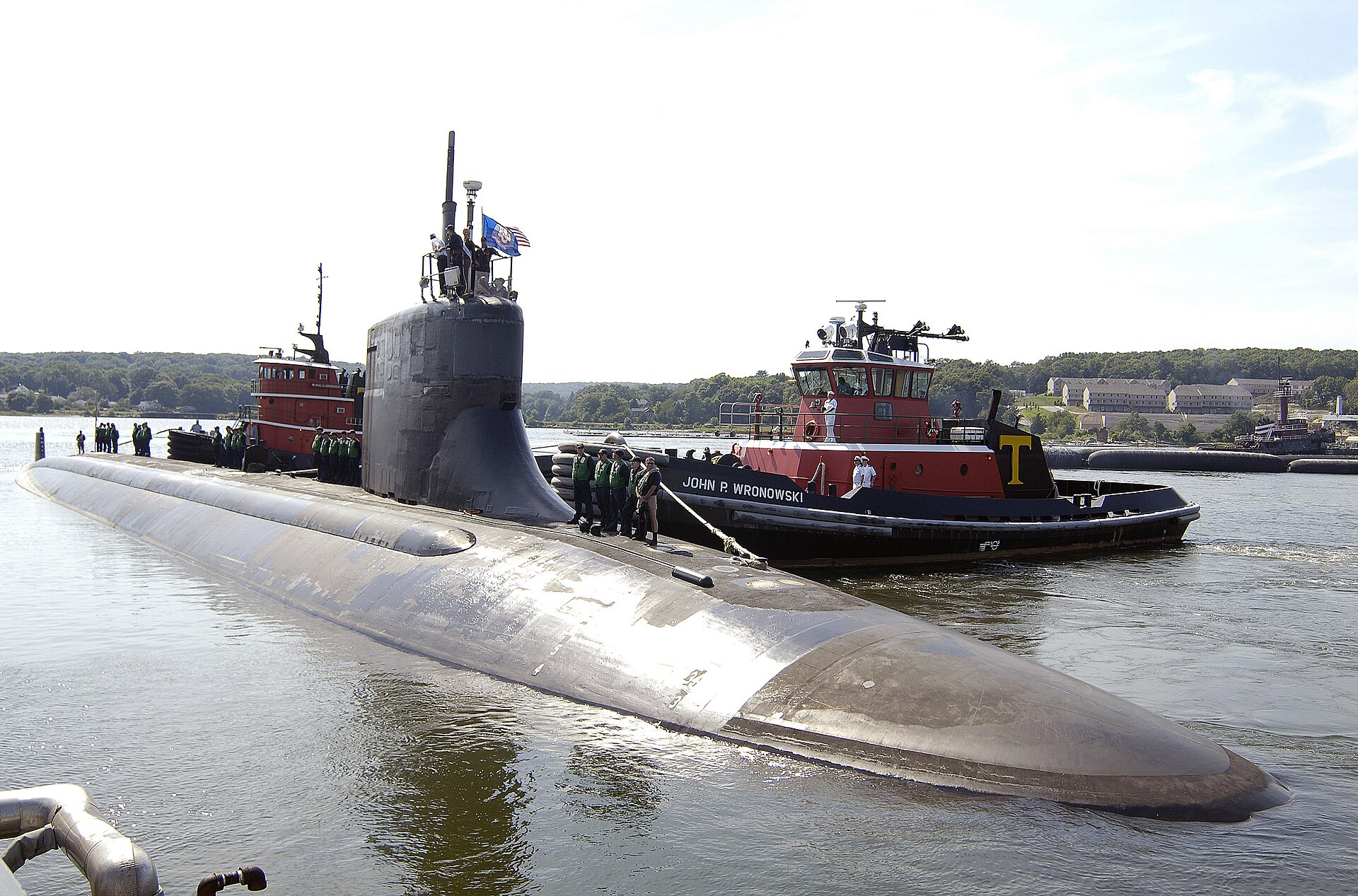

The Seawolf class was designed to be the ultimate Cold War hunter-killer, a submarine that could track and destroy the best Soviet boats under the Arctic ice. The Navy once planned to buy 29. It built just three. Even so, those three boats remain among the fastest, quietest and most heavily armed attack submarines in the world.
- Nuclear-powered fast attack submarines built by General Dynamics Electric Boat
- Only three boats: USS Seawolf, USS Connecticut and USS Jimmy Carter
- Eight torpedo tubes and up to around 50 torpedoes or missiles
- Top speed around 35 knots; very quiet at high tactical speeds
- All three are based at Naval Base Kitsap-Bremerton, Washington
Why the Seawolf was built
In the 1980s the Soviet Union introduced much quieter submarines, such as the Akula class, eroding America’s acoustic advantage. The Seawolf was the US Navy’s answer: a larger, faster, better armed submarine with a powerful S6W reactor, designed to operate in the Arctic and to hunt enemy ballistic missile submarines in their bastions.
Why only three?
The first boat was ordered in 1989, just as the Cold War was ending. With the Soviet threat gone and each submarine costing around $3 billion, Congress cut the programme to three boats. The Navy instead turned to the cheaper Virginia class, which became the backbone of the attack submarine fleet.
Capabilities
The Seawolf class displaces around 9,000 tonnes submerged and can reach about 35 knots. Its key advantage is the ability to stay quiet at high tactical speeds. It has eight large torpedo tubes, twice as many as the Virginia class, and carries a mix of Mk 48 torpedoes, Tomahawk missiles or mines, up to roughly 50 weapons in all. The hull is strengthened for operations under ice.
USS Jimmy Carter’s special missions
The third boat, USS Jimmy Carter, commissioned in 2005, was lengthened by about 30 metres with a Multi-Mission Platform section. It is widely reported to support special operations and intelligence missions, including work with underwater vehicles and seabed operations. It is one of the most secretive vessels in the US fleet.
The USS Connecticut collision
In October 2021 USS Connecticut struck an uncharted seamount in the South China Sea, injuring sailors and damaging the bow. The submarine returned to the US for lengthy repairs, and the Navy relieved its senior leadership. The incident highlighted the risks of operating close to China’s growing naval presence.
Verdict
The Seawolf class is a reminder of what American submarine design can achieve when cost is a secondary concern. Its three boats remain valuable high-end assets, and many of their ideas, including higher speed and larger weapons loads, are influencing the Navy’s next-generation SSN(X) attack submarine.
Featured image: U.S. Navy photo by Mr. John Narewski / Public domain, via Wikimedia Commons