FCAS Explained: Europe’s Next-Generation Fighter Programme and Why It Is in Trouble
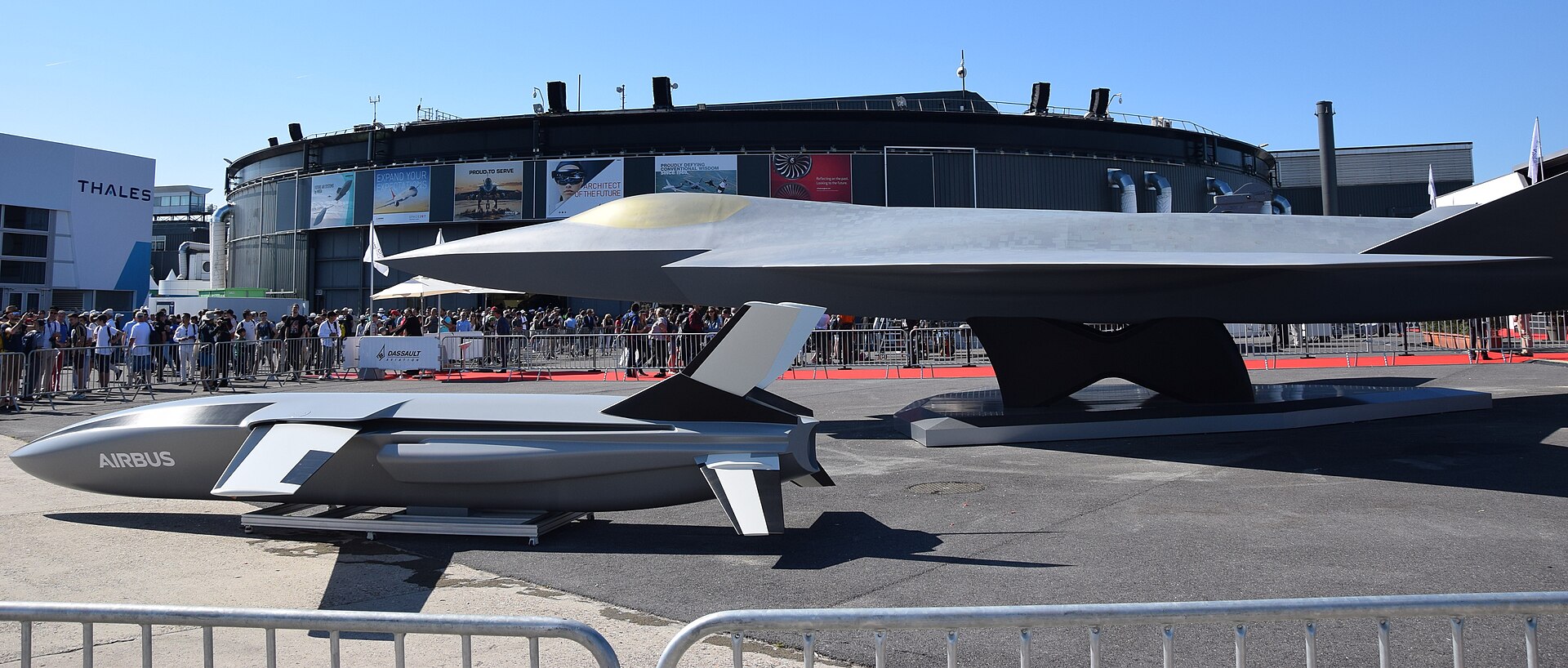
Europe has two rival projects to build a sixth-generation combat air system. One is GCAP, led by the UK, Italy and Japan. The other is FCAS, known in French as SCAF, led by France, Germany and Spain. FCAS is meant to replace the Rafale and Eurofighter around 2040, but it has become as famous for political quarrels as for technology. Here is what it is and where it stands.
- Joint programme of France, Germany and Spain launched in 2017
- Core is the New Generation Fighter (NGF) led by Dassault
- Includes drone “remote carriers” and a combat cloud
- Planned entry into service around 2040
- Workshare disputes have put its future in doubt
What is FCAS?
The Future Combat Air System was launched by France and Germany in 2017, with Spain joining in 2019. It is not just a fighter but a “system of systems”: a crewed New Generation Fighter (NGF), uncrewed “remote carriers” that fly alongside it, and a combat cloud that links aircraft, satellites, ships and ground forces into one digital network.
Who builds what
Dassault Aviation, maker of the Rafale, leads the NGF. Airbus represents Germany and Spain and leads the remote carriers and combat cloud, with Indra as Spain’s national lead. Engine work is shared between Safran and MTU, and Thales and others handle sensors. The goal is a stealthy, highly networked fighter able to operate from French aircraft carriers and carry France’s nuclear deterrent missile.
Timeline and cost
The programme has moved slowly through study and early demonstration phases. A flying NGF demonstrator was planned for around the end of the decade, with entry into service around 2040, although many analysts expect slippage. Total costs over the life of the programme are widely estimated at more than €100 billion.
Why it is in trouble
Since the start, Dassault and Airbus have clashed over leadership and workshare. In 2025 Dassault pushed for much greater control of the fighter, arguing that one clear prime contractor is needed, while Germany insisted on balanced industrial shares. The dispute delayed key decisions on the next phase and led to open speculation in Paris and Berlin about restructuring the programme, or even each country pursuing its own path. Differences in requirements, such as France’s need for a carrier-capable nuclear-armed jet, add to the strain.
FCAS vs GCAP
GCAP, uniting the UK, Italy and Japan, aims to field its fighter around 2035 and has so far shown more political unity. Some experts argue Europe cannot afford two sixth-generation programmes, and that eventual cooperation or merger may be unavoidable. Others say competition will produce better results.
Verdict
FCAS is Europe’s most ambitious defence project and a test of whether European countries can build top-tier military technology together. Its technical goals are realistic; whether its political foundations can hold is the real question.
Featured image: Tiraden / CC BY-SA 4.0, via Wikimedia Commons