How Strong Is Poland’s Military in 2026? Europe’s Fastest Military Buildup Explained
Poland is building what is set to become the largest land army in the European Union, and it is spending a bigger share of its economy on defense than any other NATO member. It ranks 21st in the Global Firepower 2026 index, but that number lags far behind the scale of what Warsaw has ordered since Russia’s full-scale invasion of Ukraine in 2022.
- Global Firepower 2026 rank: 21st
- Defense spending: about 4.5% of GDP (highest in NATO)
- Personnel: ~200,000, target ~300,000
- Key purchases: K2, K9, Abrams, Apache, F-35, HIMARS, Patriot
- Border defense: East Shield program
Spending: around 4.5% of GDP
Poland’s defense spending has climbed to roughly 4.5% of GDP, the highest share in NATO, and the government has set a goal of reaching 5%. Part of the money comes from a special Armed Forces Support Fund outside the regular budget, and Poland is one of the largest users of the EU’s new SAFE defense loans.
People: aiming for 300,000
The Polish Armed Forces have grown to around 200,000 personnel, including the volunteer Territorial Defense Force, and Warsaw’s long-term target is about 300,000, plus a much larger trained reserve. New voluntary training programs aim to give hundreds of thousands of civilians basic military skills.
A massive shopping list
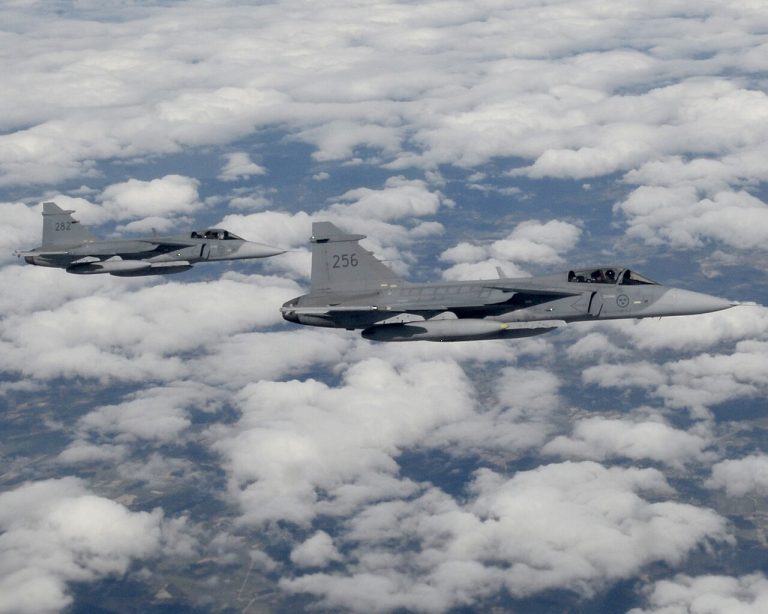
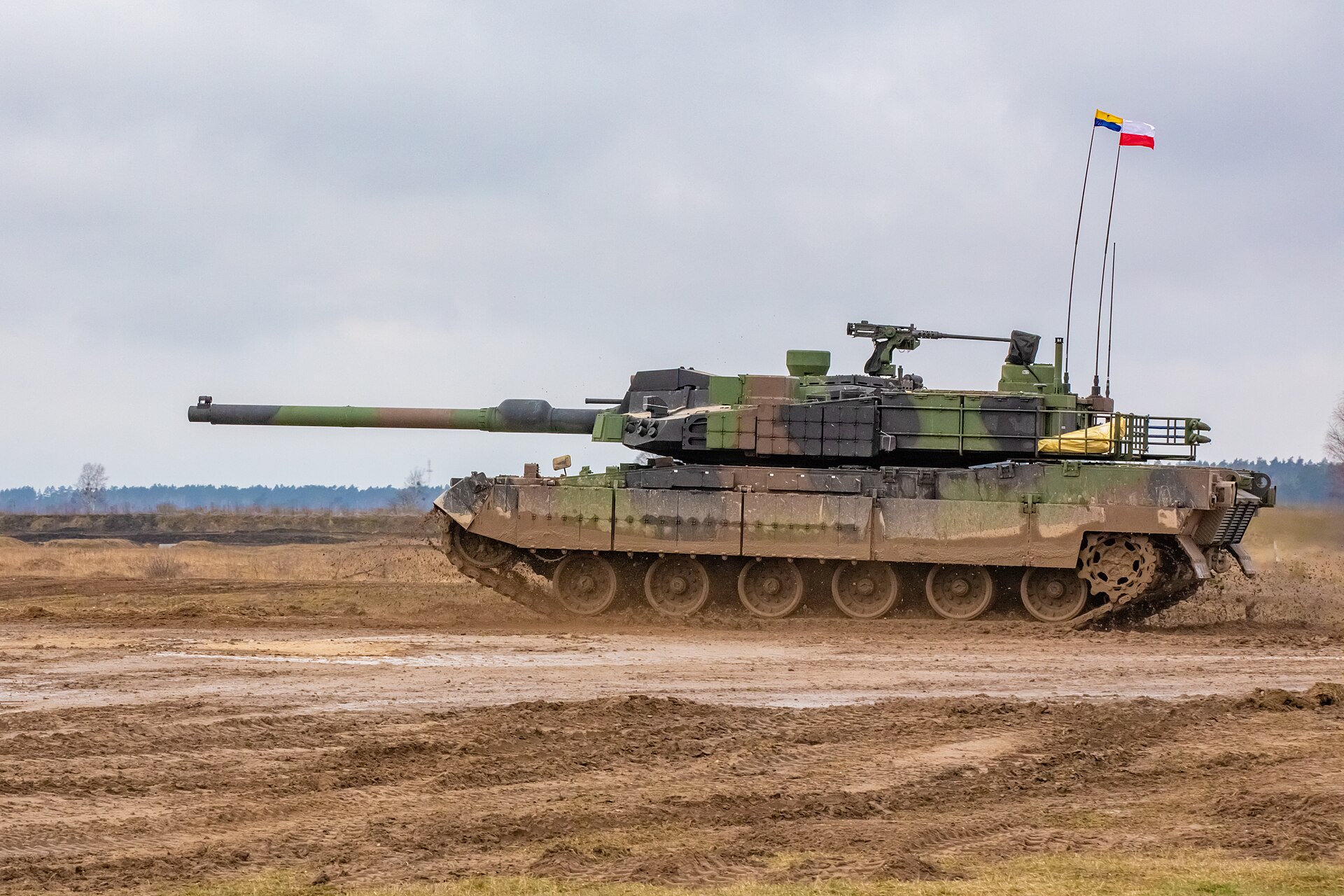
Since 2022, Poland has signed some of the biggest arms deals in Europe. From South Korea it ordered K2 tanks, K9 howitzers, FA-50 light fighters and K239 Chunmoo rocket launchers, with a second large K2 contract signed in 2025 that includes local production. From the United States it bought M1A2 Abrams tanks, AH-64E Apache helicopters, F-35A fighters, HIMARS launchers and Patriot air defense. Domestic firms add Krab howitzers, Borsuk infantry fighting vehicles, Piorun man-portable missiles and drones.
Air defense and the drone threat
Poland is building a layered air defense network, combining Patriot (the Wisła program) with British CAMM missiles (Narew) and short-range systems. In September 2025, Russian drones entered Polish airspace and were shot down, prompting NATO’s Operation Eastern Sentry and accelerating Poland’s investment in counter-drone systems.
East Shield
Along its borders with Russia’s Kaliningrad region and Belarus, Poland is building the East Shield, a multi-billion-euro network of fortifications, anti-tank obstacles, surveillance systems and minefield-ready areas, designed to slow down any invasion.
Challenges
Absorbing so much new equipment so quickly is a huge challenge: training crews, building bases, maintaining several different tank and artillery types, and paying for it all as debt rises. Poland also faces hybrid attacks, from sabotage to arson, including an attack on a Starlink ground station near Warsaw in 2026.
Verdict
Poland is turning itself into NATO’s front-line powerhouse in Europe. If its plans hold, by the end of the decade it will field more tanks and artillery than Germany, France and the UK combined, making it the cornerstone of NATO’s defense on its eastern flank.
Featured image: U.S. Army / Public domain, via Wikimedia Commons