What Drones Does the UK Have? Protector, Watchkeeper, StormShroud
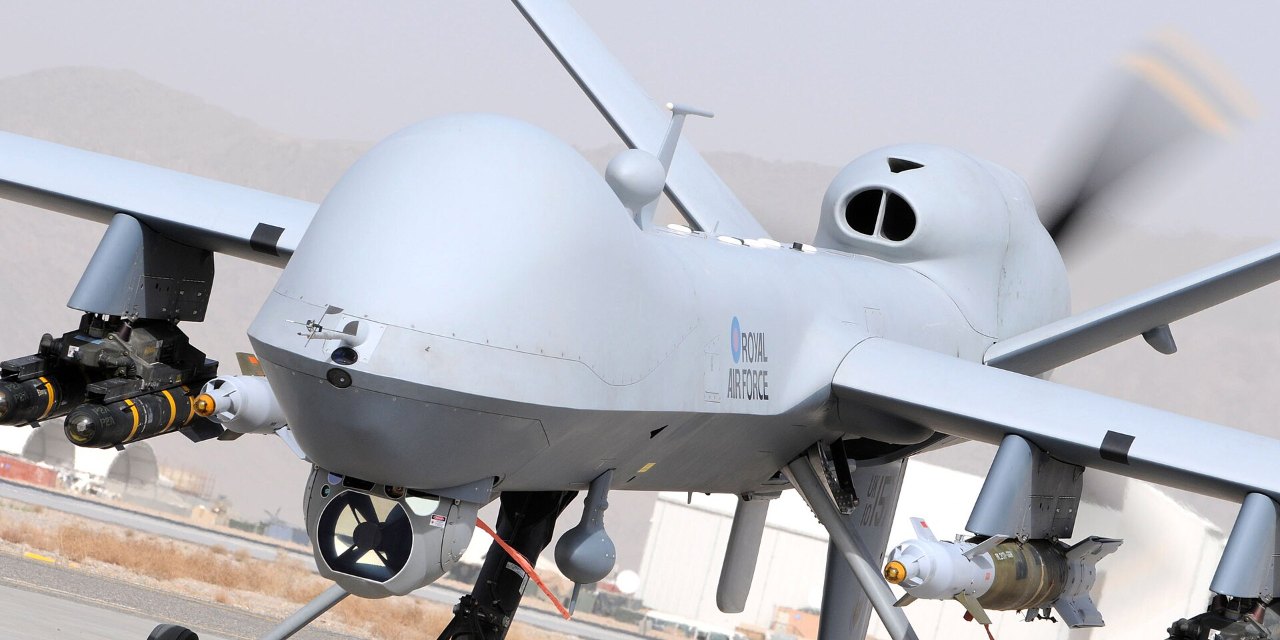
The British armed forces held 189 uncrewed aircraft weighing more than 25 kg in April 2026, from the large Protector flown by the RAF to small Puma and Wasp drones carried by soldiers. Thousands more small drones are not counted in that figure. Britain has a mixed record with drones. The Reaper served for 18 years; the army’s Watchkeeper cost more than £1 billion and barely flew. The Defence Investment Plan of 2026 is the largest bet yet, with about £5 billion for drones over four years.
This guide sets out what each service flies, what has gone wrong and what is being bought.
What drones does the UK have?
The Ministry of Defence counts only uncrewed aircraft heavier than 25 kg in its annual statistics. On 1 April 2026 there were 189.
| Drone | Service | Number | Type | Notes |
|---|---|---|---|---|
| Protector RG1 (MQ-9B) | RAF | 16 listed; 9 delivered | Long-endurance surveillance | Not yet cleared to carry weapons |
| Watchkeeper | Army | 44 | Tactical surveillance | To be replaced by the Tekever AR5 |
| Puma AE and LE | Army | 90 | Small hand-launched surveillance | Widely used in training and operations |
| Wasp | Army | 39 | Small hand-launched surveillance | Very light reconnaissance |
| Reaper (MQ-9A) | RAF | 0 | Armed long-endurance | Retired in September 2025 |
Protector: the RAF’s large drone
Protector is the British version of the General Atomics MQ-9B SkyGuardian. It was ordered to replace the MQ-9A Reaper, which the RAF flew against the Taliban in Afghanistan from 2007 and against Islamic State in Iraq and Syria until its retirement in September 2025. Protector can fly for more than 30 hours and, unlike the Reaper, is certified to fly in civil airspace, so it can be used for tasks over the United Kingdom such as search and rescue.
Sixteen were ordered. A freedom of information response published in June 2026 said nine had been delivered and that the type had not reached its initial operating capability. The aircraft have flown from RAF Waddington in Lincolnshire and, since October 2025, from Akrotiri in Cyprus. They are designed to carry Brimstone missiles and Paveway IV bombs but were not yet cleared to do so. The whole-life cost estimate has risen from £704 million to £1.46 billion.
Army drones: Watchkeeper and after
Watchkeeper was meant to give the army its own tactical surveillance drone. Based on an Israeli design and built by a Thales and Elbit joint venture in Leicester, it entered service late, suffered a string of crashes and flew very little on operations. The army spent more than £1 billion on it. It is to be replaced by the Portuguese Tekever AR5, with £400 million allocated in the Defence Investment Plan.
The army’s real use of drones is now at the small end. Soldiers carry hand-launched Puma and Wasp drones, and since the start of the war in Ukraine the army has bought large numbers of cheap commercial and first-person-view drones for training and experimentation. The plan includes a £2 billion contract to train 60,000 soldiers a year to fly them, and an artificial intelligence project, ASGARD, to link drones, sensors and weapons.
Drones beside the fighters and on the carriers
The RAF plans to fly drones alongside its crewed fighters. StormShroud, a small drone that jams enemy radars, is already funded, and £300 million has been set aside to start a larger armed collaborative combat aircraft, with BAE Systems and Boeing among the companies offering designs. These are meant to work with the aircraft in our guide to British fighter jets.
The Royal Navy wants its carriers, described in our guide to British aircraft carriers, to fly a mix of jets and drones. The plan includes £240 million for Project Pantheon, which is developing uncrewed aircraft for a future carrier air wing, and at least £1.3 billion for a hybrid fleet of crewed and uncrewed ships.
Defending against drones
The other half of the drone question is defence. The Defence Investment Plan includes £750 million for counter-drone systems for forces at home and abroad. Britain is also developing directed energy weapons, the DragonFire laser and a radio-frequency weapon that disables drone electronics, and its short-range missile systems are described in our guide to UK air defence. Turkey, the country that has done most to make armed drones a mass export, is covered in our guide to Turkish drones.
Frequently asked questions
What drones does the UK military use?
The RAF flies the Protector, the army uses Watchkeeper, Puma and Wasp, and all three services are buying smaller drones. The MoD held 189 drones over 25 kg in April 2026.
Does the UK have armed drones?
Not at present. The armed Reaper was retired in September 2025, and its replacement, Protector, had not yet been cleared to carry weapons by mid-2026.
How many Protector drones does the UK have?
Sixteen were ordered. A freedom of information response in June 2026 said nine had been delivered.
What happened to Watchkeeper?
The army spent more than £1 billion on it, but it suffered repeated crashes and was little used. It is being replaced by the Tekever AR5.
How much is the UK spending on drones?
The Defence Investment Plan of 2026 sets aside about £5 billion for military drones over four years, plus £750 million for counter-drone systems.
Does the UK make its own military drones?
Partly. BAE Systems is developing combat drones, and smaller British firms make surveillance and attack drones. The largest drones in service, Protector and Reaper, are American.
- UK Ministry of Defence – UK armed forces equipment and formations 2026: gov.uk
- Drone Wars UK – Protector drone update (June 2026): dronewars.net
- Drone Wars UK – Coverage of the Defence Investment Plan (2026): dronewars.net
- Defence Industry Europe – MoD equipment figures including uncrewed aircraft (August 2026): defence-industry.eu