

THE SILENT HUNTERS: THE STRATEGIC ROLE OF MODERN SUBMARINES

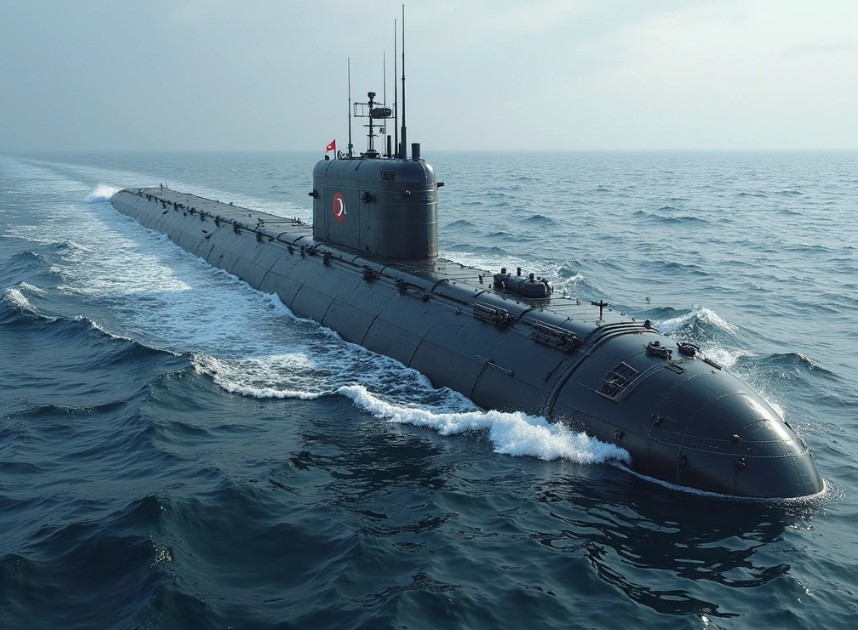

GLOBAL MARITIME DESK — In the realm of naval warfare, the most dangerous threat is the one you cannot see. Submarines represent the pinnacle of maritime stealth, capable of lurking in the deep for months, gathering intelligence, or preparing for a decisive strike. They are the ultimate “Sea Denial” assets, designed to make any adversary think twice before entering contested waters.
What is a Submarine and Why is it Necessary?
A submarine is a specialized watercraft capable of independent operation underwater. Unlike surface ships that can be tracked by satellites and long-range radars, a submerged submarine is nearly invisible, using the density of the ocean to hide its acoustic signature.
Why they are critical:
-
Stealth: They provide a “hidden” presence that creates psychological pressure on enemy fleets.
-
Survivability: In a full-scale conflict, surface ships are vulnerable to missiles; submarines are the most likely units to survive and counter-attack.
-
Strategic Deterrence: Nuclear-armed submarines ensure that a nation can respond to an attack even if its land-based bases are destroyed.
The Classification of the Deep: Types of Submarines
Submarines are categorized primarily by their Power Source and their Mission Profile.
1. Diesel-Electric Submarines (SSK)
These are the most common submarines, used by many navies for coastal and regional defense.
-
Technology: They use diesel engines on the surface to charge batteries and electric motors while submerged.
-
AIP (Air-Independent Propulsion): Modern SSKs (like the Type 214 or Soryu-class) use AIP technology to stay submerged for weeks instead of days, making them incredibly quiet and hard to detect in shallow waters.
2. Nuclear-Powered Attack Submarines (SSN)
Powered by a nuclear reactor, these “hunters” have unlimited range and high speeds.
-
Role: To hunt other submarines and surface ships. They are the primary protectors of Aircraft Carrier Strike Groups.
-
Advantage: They never need to surface for fuel, limited only by the food supply for the crew.
-
Examples: Virginia-class (USA), Astute-class (UK).
3. Ballistic Missile Submarines (SSBN)
Often called “Boomers,” these are the giants of the deep.
-
Role: Strategic nuclear deterrence. Their mission is NOT to fight other ships, but to stay hidden and wait for a command that hopefully never comes.
-
Feature: They carry Intercontinental Ballistic Missiles (SLBMs) capable of hitting targets across continents.
-
Examples: Ohio-class (USA), Borei-class (Russia).
[Image comparing the internal layout of a diesel-electric submarine and a large nuclear ballistic submarine]
Key Technologies: Acoustic Stealth and Sonar
The battle under the waves is a battle of Acoustics.
-
Sonar (Sound Navigation and Ranging): Since light doesn’t travel far in water, submarines use sound to “see.” Passive Sonar listens for enemy noises, while Active Sonar sends out pings (though this reveals the submarine’s own location).
-
Anechoic Tiles: Modern hulls are covered in rubber-like tiles that absorb sonar waves and dampen the noises coming from inside the submarine.