

Submarine
Kilo-class submarine (Project 636.3 Varshavyanka)
The Kilo-class Project 636.3 Varshavyanka is a diesel-electric attack submarine made by Admiralty Shipyards in Russia, based on the Project 877 that entered service in 1980. It is known for being quiet, carries Kalibr missiles and has been exported widely.
 Russia|Admiralty Shipyards
What Is the Kilo-class submarine? Overview, History and Development
Rubin Central Design Bureau designed the Kilo, with the Project 877 Paltus entering service in 1980 and the improved Project 636 and 636.3 following from the late 1990s and 2010. Displacement is about 3,950 t submerged, length 73.8 m and crew about 52. Speed is about 20 knots submerged with endurance of about 45 days. The US Navy nicknamed it the Black Hole for its low noise. It has six 533 mm torpedo tubes for 18 torpedoes or missiles, with Project 636.3 carrying Kalibr cruise missiles.
The Russian Navy reportedly has about 8 Project 636.3 boats in the Black Sea and Pacific fleets. Exports include China (12), India (about 7 remaining), Algeria (6), Vietnam (6), Iran (3), Poland (1) and Romania (non-operational). Kalibr strikes have been launched on Syria from 2015 and on Ukraine from the Black Sea Fleet. A Ukrainian strike damaged the Rostov-on-Don in Sevastopol in 2023, with Russian claims varying. Export cost is about 300 million dollars per boat. Rivals include the Type 214, Scorpène and Soryu.
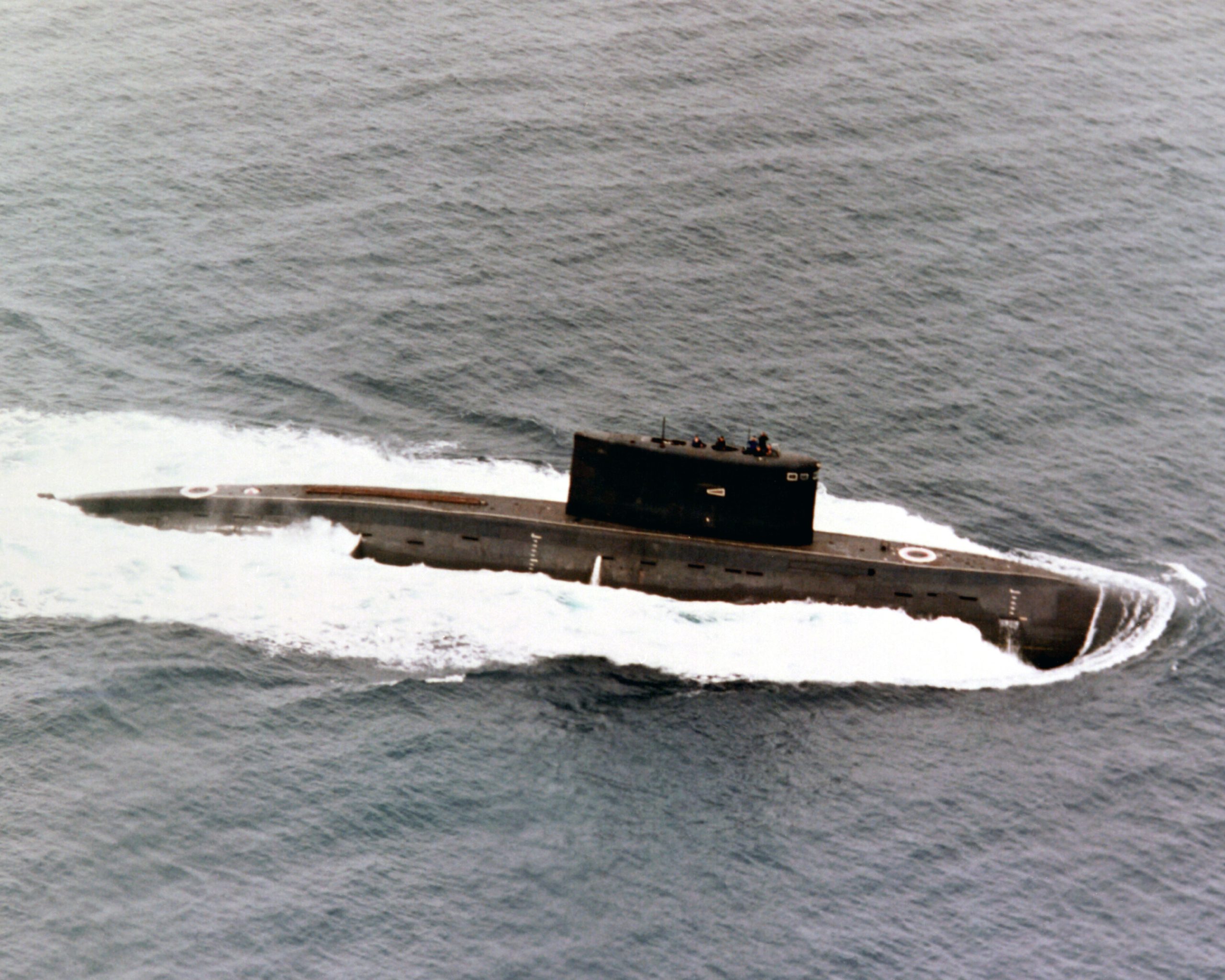
Kilo-class submarine Specifications: Displacement, Speed, Armament and Crew
Kilo-class submarine Variants and Versions Compared
The original Kilo, in service since 1980, with a lower level of weaponry.
The improved class, including the 636.3 that carries Kalibr cruise missiles.
A further improved sub-variant of the Varshavyanka, with details less widely published.
Which Countries Use the Kilo-class submarine? Operators and Users
Russia China
China India
India Algeria
 Vietnam
 Iran
Iran Poland
 Romania
Kilo-class submarine FAQ: Price, Range, Operators and Most Asked Questions
How much does a Kilo-class submarine cost?
A Kilo-class submarine costs about 300 million US dollars per boat for export, according to hedged estimates. Russia does not publish official prices.
Which countries have Kilo-class submarines?
Kilo-class submarines are used by Russia, China (12), India, Algeria (6), Vietnam (6), Iran (3) and Poland (1). Romania’s boat is non-operational, and operator numbers change over time.
Why is the Kilo called the Black Hole?
The Kilo-class submarine is called the Black Hole because it is extremely quiet, a nickname from the US Navy. It is regarded as one of the quietest diesel-electric designs.
Kilo vs Type 214: which is better?
The Kilo-class is larger than the German Type 214, at about 3,950 t submerged, and carries Kalibr missiles, while the Type 214 has air-independent propulsion for longer submerged time. Both are quiet diesel-electric designs.
What missiles does the Kilo-class carry?
The Project 636.3 Kilo-class carries Kalibr missiles, including 3M14 land-attack and 3M54 anti-ship versions, fired from its 533 mm torpedo tubes. Land-attack range is up to about 2,500 km, a claimed figure.
Does Türkiye operate Kilo-class submarines?
Türkiye does not operate Kilo-class submarines. It uses German-designed Type 209 submarines and builds the Type 214-based Reis class, and its MİLDEN project is under development.