Stealth Bomber
Tu-160
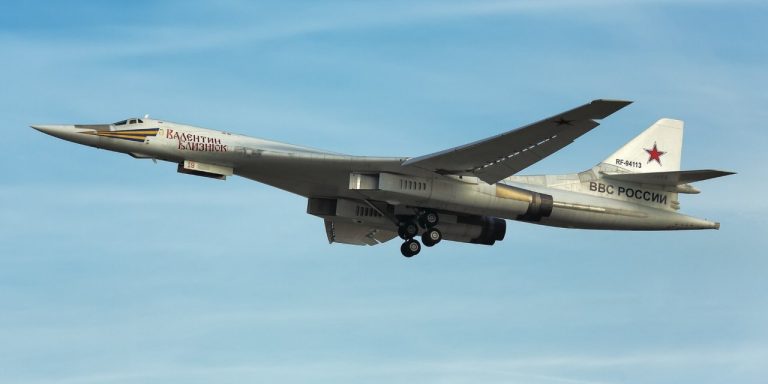
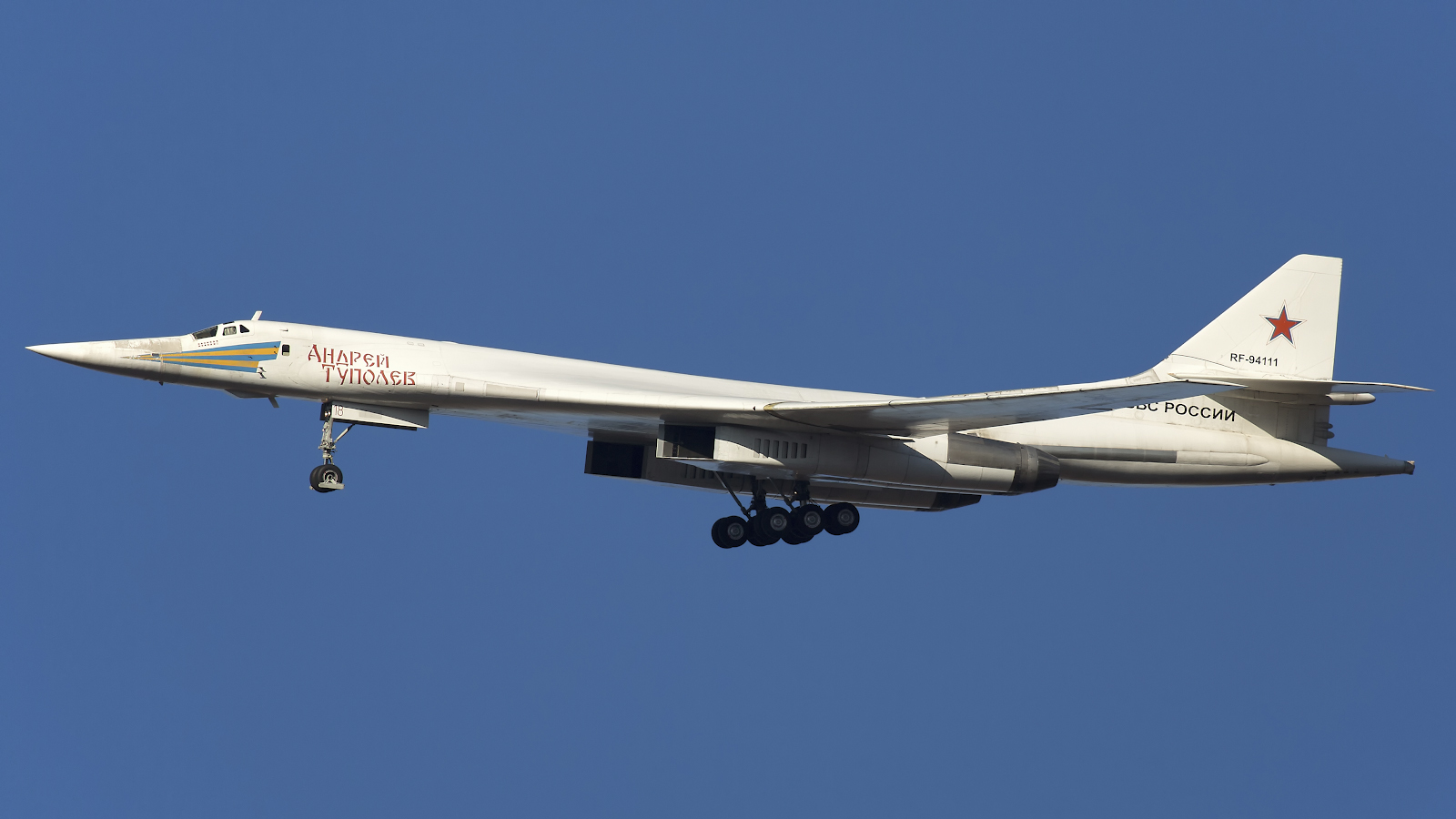
The Tu-160, nicknamed ‘White Swan’ in Russia and ‘Blackjack’ by NATO, is a supersonic variable-sweep-wing strategic bomber built by Tupolev at the Kazan Aviation Plant. It is the largest and heaviest combat aircraft ever built and the fastest bomber in service, with a top speed of about Mach 2.05.
 Russia|Tupolev (KAZ Kazan)
Overview
The Tu-160 first flew on 18 December 1981 and entered service in April 1987. Four Kuznetsov NK-32 afterburning turbofans, each producing about 245 kN, make it the most powerful engine installation ever fitted to a combat aircraft. Its wingspan changes from 55.7 m fully spread to 35.6 m fully swept, and it can fly about 12,300 km without refuelling. Two internal bays with rotary launchers hold up to 12 Kh-55, Kh-101 or nuclear Kh-102 cruise missiles, and the four-person crew sits on K-36LM ejection seats.
Russia flies about 16–18 Tu-160 and Tu-160M bombers from Engels air base; Ukraine scrapped or handed over the 19 it inherited, with eight going to Russia in 1999–2000. The modernised Tu-160M brought new avionics and Kh-101 integration, and production of new-build aircraft restarted, with the first flying in early 2022. The bomber made its combat debut in Syria in November 2015 and, since 2022, has launched cruise missiles at Ukraine from Russian airspace. It has also made long-range visits to Venezuela and South Africa.
Key Specifications
Variants
Tu-160: the original Soviet production bomber, of which about 36 were built in the Soviet and early Russian era, including test aircraft.
Tu-160M: the modernised standard with new avionics and Kh-101 cruise missile integration, first delivered as an upgrade in December 2014.
Tu-160M2: the name often used for new-build aircraft with NK-32-02 engines and modern systems, the first of which flew in early 2022.
Operators
RussiaFrequently Asked Questions
How much does a Tu-160 cost?
Russian reports put a new-build Tu-160M at roughly 15 billion rubles, or an estimated US$160–250 million depending on the exchange rate used. Russia is the only operator, so there is no export price to compare against.
How fast is the Tu-160?
The Tu-160 reaches about 2,220 km/h, or Mach 2.05, at high altitude, making it the fastest bomber in service. It normally cruises at about 960 km/h and has a range of about 12,300 km without aerial refuelling.
How many Tu-160 does Russia have?
Russia has about 16–18 Tu-160 and Tu-160M bombers in service with Long-Range Aviation, based at Engels. Around 41 had been built in total by 2024, including test aircraft and new-build Tu-160Ms that Russian reports say were delivered from 2023–2024.
Tu-160 vs B-1B: which is bigger?
The Tu-160 is bigger and faster. Both are swing-wing supersonic bombers with similar layouts, but the Tu-160 is longer, weighs up to about 275 tonnes at take-off and reaches Mach 2.05, compared with roughly Mach 1.25 for the B-1B Lancer.
Why is the Tu-160 called the White Swan?
The Tu-160 is called the ‘White Swan’ (Belyy Lebed) because of its white anti-flash paint and swept-wing silhouette. Russian crews use the nickname, while NATO’s official reporting name for the bomber is ‘Blackjack’.
Is the Tu-160 a stealth bomber?
No, the Tu-160 is not a stealth aircraft. It relies on high speed and long-range cruise missiles such as the Kh-101, launched from well outside enemy air defences, rather than on a low radar signature like the US B-2 Spirit.