Elmet Group and Tungsten Explained, Weapons Uses, Suppliers and China Supply Control
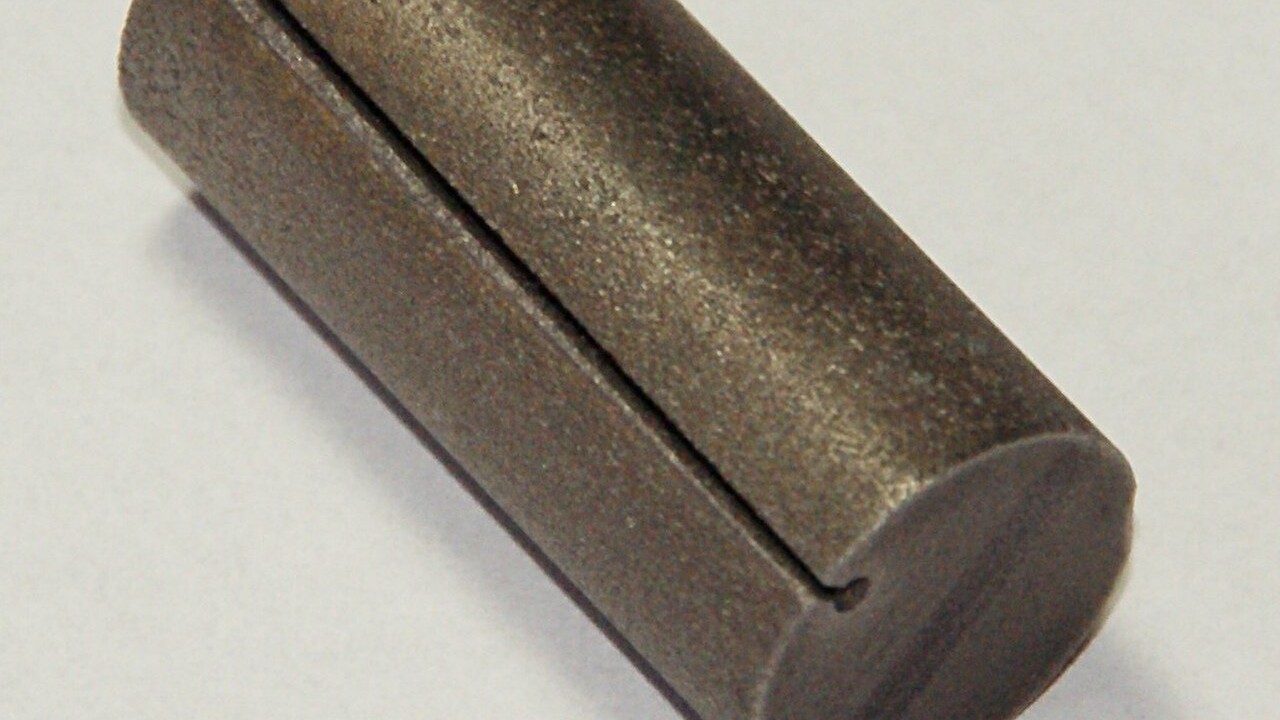
Tungsten is the densest and most heat-resistant metal used in modern weapons, and The Elmet Group of Portland, Maine, is the US company the Pentagon has just backed with $450 million to make more of it at home. China supplies roughly four-fifths or more of the world’s tungsten, and a US rule takes effect on 1 January 2027 that bars Chinese-origin tungsten from defense deliveries.
This explainer covers what tungsten does in weapons, who produces it and why one country dominates. For the terms of the deal itself, see our news report on the Pentagon’s Elmet stake. Elmet describes itself as the only US-owned, fully integrated tungsten producer, according to Defense News.
What Is Tungsten Used for in Weapons?
Two properties matter: density and heat resistance. Tungsten melts at 3,422 degrees Celsius, the highest of any known element, and its density of about 19.3 grams per cubic centimetre is close to that of gold and uranium, according to Wikipedia. Heavy metal packed into a small volume is what kinetic weapons and hot rocket parts need.
Alloyed with nickel, cobalt, copper or other metals, tungsten forms heavy alloys used in kinetic energy penetrators, the long darts fired by tank guns, as an alternative to depleted uranium. The penetrator design rests on physics: kinetic energy scales with mass and with the square of velocity, so designers choose the densest metals available. Tungsten has no radioactivity problem in handling, which is a practical reason to prefer it over uranium.
| Use | How tungsten is used | Source |
|---|---|---|
| Kinetic energy penetrators | Heavy alloy darts for armor-piercing ammunition, as an alternative to depleted uranium | Wikipedia |
| Ammunition | Dense alloys, mostly with nickel or cobalt, in projectiles | Wikipedia |
| Rocket nozzles | Heat-resistant nozzle material; the Polaris submarine-launched missile is an example | Wikipedia |
| Dense inert metal explosives | Tungsten powder raises lethality within a small radius while limiting collateral damage | Wikipedia |
| Heavy alloys and heat sinks | Armaments and heat-dissipating parts | USGS |
| Missile and combat systems | Elmet says its materials support more than 100 defense programs, including Patriot, Javelin, AEGIS, THAAD, Trident II and Virginia and Columbia class submarines | Defense News |
What Does The Elmet Group Do?
Elmet makes precision components from refractory metals, chiefly tungsten, molybdenum and niobium, and high-power microwave systems. Its customers span aerospace, defense, semiconductor equipment, medical devices, industrial systems and energy. The company has three divisions: Critical Materials Components, Engineered Microwave Products and the newly formed Elmet Refining & Trading, according to the company’s announcement.
Its Lewiston, Maine, plant began in 1929 under Philips Lighting making tungsten filament for light bulbs, and was later bought by its management and then, in 2015, by Portland-based Anania and Associates, per the Portland Press Herald. The 2023 purchase of H.C. Starck Solutions Americas made it what the paper called the largest US-based producer of tungsten and molybdenum materials and products.
| Item | Detail |
|---|---|
| Headquarters | Portland, Maine (main plant in Lewiston) |
| Origins | Elmet Technologies, established 1929 |
| Listing | Nasdaq: ELMT, public since 2026 |
| Revenue | $202 million (12 months to 31 December 2025) |
| Employees | More than 400 in three states (Press Herald, at IPO launch, 2026) |
| Chief executive | Peter V. Anania |
| Divisions | Critical Materials Components; Engineered Microwave Products; Elmet Refining & Trading |
| Other plants | Coldwater, Michigan; Euclid, Ohio |
Who Supplies the World’s Tungsten?
Wikipedia puts 2025 world mine output at 85,000 tonnes of contained tungsten, of which China produced 67,000, Vietnam 3,000 and Kazakhstan 2,400. That works out to about 79 percent for China. Defense News gives a higher figure of about 85 percent of world supply, and says China also controls about 40 percent of molybdenum. The sources do not explain the gap, so this article uses a range of roughly 79 to 85 percent.
| Country | Tonnes (tungsten content) | Share of world |
|---|---|---|
| China | 67,000 | About 79% |
| Vietnam | 3,000 | About 4% |
| Kazakhstan | 2,400 | About 3% |
| World total | 85,000 | — |
The United States has not mined tungsten since 2015, Defense News reports. Fastmarkets found China accounted for about 27 percent of US tungsten imports between 2020 and 2023, so the direct dependence is smaller than the global figure, but the processing chain is where Chinese leverage sits.
Why Does China Control Tungsten?
Geology and industrial policy both play a part. China holds the largest producing mines and the refining capacity that turns concentrate into ammonium paratungstate, the intermediate that feeds powder and alloy makers. Fastmarkets notes that Chinese mining quotas have fallen by around 6 percent a year for three consecutive years, with declining ore grades adding to the squeeze.
On 4 February 2025 Beijing began requiring export licences for tungsten and other metals, with exporters obliged to submit end-user and end-use statements showing the metal will not go to military applications. Fastmarkets reported Chinese tungsten prices up more than 200 percent during 2025, with ammonium paratungstate rising from $335-345 to $1,050-1,115 per metric tonne unit. One producer told the outlet that new supply takes three to five years to come online. A critical minerals analyst quoted by Defense News said the free flow of tungsten “is for now a thing of the past”.
| Date | Event |
|---|---|
| 2015 | Last year of US tungsten mining (Defense News) |
| 4 Feb 2025 | China introduces export licences and military end-use statements |
| 2025 | Chinese tungsten product prices rise more than 200% (Fastmarkets) |
| 11-15 Sept 2026 | DLA awards Elmet a stockpile contract of up to $2 billion; Pentagon announces $450 million investment |
| 1 Jan 2027 | Ban on tungsten mined or processed in China, Russia, Iran or North Korea takes effect |
What Is the January 2027 Procurement Rule?
The Defense Federal Acquisition Regulation Supplement clause covering tungsten already bars certain Chinese, Russian, Iranian and North Korean production stages. Through 31 December 2026 it covers atomization, calcination and reduction into powder, and final consolidation. From 1 January 2027 it extends to the whole chain, from mining or production of ore or feedstock, including recycled material, through tungsten metal powder and heavy alloy, according to the DFARS text. Finished or semi-finished parts containing tungsten heavy alloy are covered.
Analysis: a supplier that cannot show non-covered origin for its tungsten will not be able to deliver to the Pentagon after that date, which explains the urgency behind domestic and allied sourcing.
What Is the Pentagon Doing About Tungsten Supply?
The Pentagon’s $450 million commitment to Elmet is one part of a wider push. Per the company’s announcement, the deal uses redeemable preferred equity and warrants for up to 19.9 percent of common stock, with about $200 million drawn at closing. More than $165 million goes to Elmet plants in Lewiston, Coldwater and Euclid, and about $150 million to a majority-owned joint venture at the Springer Tungsten Complex in Imlay, Nevada, with Blue Moon Metals and EQ Resources. Defense News separately lists $100 million for a refining and trading division. A Defense Logistics Agency contract worth up to $2 billion over five years, with a $150 million guaranteed minimum, supports the National Defense Stockpile, according to Manufacturing Dive.
Defense News also notes Elmet agreements with Tungsten West, owner of the Hemerdon mine in England, and a partnership with Vietnam-based Masan High-Tech Materials worth about $125 million. Read the full deal breakdown on Defence & Tech.
| Source | Location | Role |
|---|---|---|
| Springer Tungsten Complex (Elmet, Blue Moon, EQ Resources) | Imlay, Nevada | Restart and expand ammonium paratungstate conversion |
| Tungsten West | Hemerdon mine, England | Supply agreement with Elmet |
| Masan High-Tech Materials | Vietnam | Investment partnership, about $125 million |
| Elmet plants | Maine, Michigan, Ohio | Manufacturing upgrades, $165 million or more |
Tungsten and Elmet FAQ
What is tungsten used for in the military?
Mainly kinetic energy penetrators and dense alloy ammunition, plus heat-resistant parts such as rocket nozzles. Elmet says its materials support more than 100 defense programs.
Why is tungsten used instead of depleted uranium?
Both are extremely dense. Tungsten alloys avoid the radioactivity issues uranium presents in munitions handling and processing, according to Wikipedia.
How much of the world’s tungsten does China produce?
About 79 percent of 2025 mine output on Wikipedia’s figures, and about 85 percent of supply according to Defense News.
Does the US mine tungsten?
Not at present. Defense News says the United States has not mined tungsten since 2015.
What is The Elmet Group?
A Portland, Maine, maker of refractory metal components and microwave systems, listed on Nasdaq as ELMT, with revenue of $202 million in 2025.
When does the ban on Chinese tungsten start?
1 January 2027, when the defense procurement restriction extends from processing stages to mining and the whole supply chain.
- Defense News – “Why the Pentagon just dropped $450M on tungsten mining” (30 September 2026): defensenews.com
- The Elmet Group announcement, 14 September 2026 (via Finviz): finviz.com
- Manufacturing Dive – Elmet Group DOD agreements: manufacturingdive.com
- Fastmarkets – Chinese tungsten product prices surge over 200% in 2025: fastmarkets.com
- DFARS 252.225-7052, restriction on acquisition of certain magnets, tantalum and tungsten: acquisition.gov
- Portland Press Herald – Elmet IPO coverage: pressherald.com
- Renaissance Capital – The Elmet Group files for IPO: renaissancecapital.com
- Wikipedia – Tungsten: en.wikipedia.org; Kinetic energy penetrator: en.wikipedia.org
- USGS National Minerals Information Center – Tungsten statistics and information: usgs.gov