

Russia Ships New Armored Convoy to Libya’s Tobruk Port

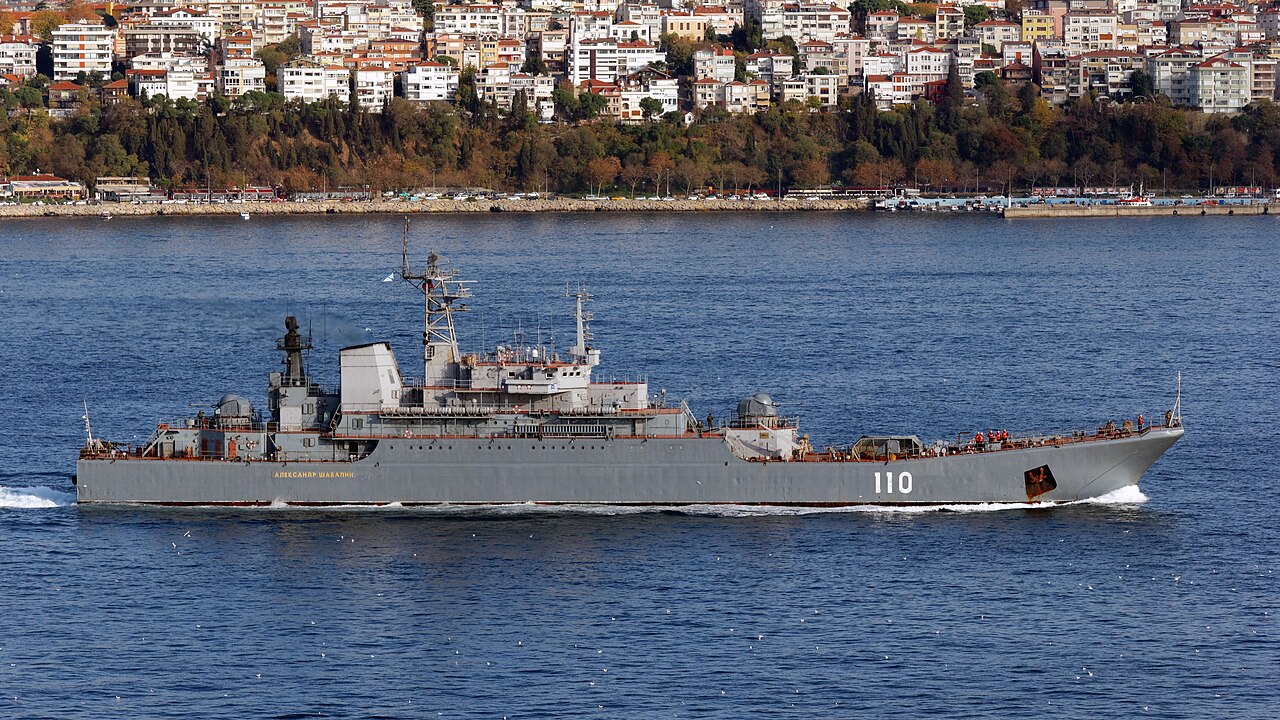
A Russian naval convoy has delivered armored vehicles and other military equipment to the eastern Libyan port of Tobruk, open-source maritime trackers reported on September 25, 2026 — the second documented Russian military shipment to the port this year. The convoy, escorted by a Russian Navy landing ship and tracked from the Baltiysk naval base in Kaliningrad through the Strait of Gibraltar with its transponders switched off, delivered equipment into territory controlled by forces loyal to Field Marshal Khalifa Haftar, deepening Moscow’s logistics foothold in North Africa even as its own military absorbs heavy vehicle losses in Ukraine.
What Happened
According to reporting by the Ukrainian outlet Militarnyi, citing the open-source project Russia Maritime Watch, two Russian-flagged cargo ships, Anastasiia and Yuriy Arshenevskiy, crossed the Mediterranean under armed escort from the Ropucha-class large landing ship Aleksandr Shabalin and docked at Tobruk. Imagery reviewed by trackers showed armored personnel carriers, mine-resistant ambush-protected (MRAP) vehicles, logistics trucks, and at least three Ural-63706-0010 “Tornado-U” armored trucks being unloaded and driven west from the port on low-loaders. Euromaidan Press, drawing on the same open-source tracking, additionally cited social media imagery from the loading stage at Baltiysk showing what appeared to be multiple-barreled rocket launchers under tarpaulins.
The convoy’s movements were independently corroborated by military-aviation trackers. Italian outlet itamilradar reported that an Italian Air Force P-72A maritime patrol aircraft monitored the convoy on September 10, and that a U.S. Army ARTEMIS II signals-intelligence aircraft (a Bombardier Challenger 650 operating under the callsign BRIO66) flew repeated orbits off Tobruk on September 14 while conducting an electronic-intelligence mission from a base in Constanta, Romania.
By September 24–25, ship-tracking data reviewed by Maritime Executive showed Yuriy Arshenevskiy transiting the Dardanelles northbound toward the Black Sea, while Anastasiia was reported cruising west between Sicily and Malta — suggesting both vessels had completed their delivery runs and were returning. All three vessels involved in the convoy are currently under Western sanctions tied to prior military cargo movements.
The Convoy and the Equipment
The Aleksandr Shabalin is a Project 775/II Ropucha-class large landing ship built in Poland and commissioned into the Soviet, later Russian, Navy in 1985. Ships of this class form the backbone of Russia’s Baltic and Black Sea Fleet sealift capacity and have repeatedly been used for logistics runs supporting Russian deployments in Syria and, increasingly, Libya. The Tornado-U is a modernized version of the Ural 8×8 family of armored logistics trucks, used extensively by Russian ground forces, including in Ukraine, for troop and cargo transport in contested environments. Specific cargo tonnage and total vehicle counts have not been disclosed by any tracker, and neither the Russian Ministry of Defense nor the Libyan National Army (LNA) has publicly confirmed the shipment’s contents.
Who Controls the Delivery Point
Tobruk and most of eastern Libya are held by the LNA under Field Marshal Khalifa Haftar, a rival power center to the United Nations-recognized Government of National Unity (GNU) based in Tripoli. Multiple independent trackers agree that Tobruk, rather than Russia’s traditional Mediterranean hub at Tartus in Syria, was this convoy’s destination — a shift that Libya-focused outlets attribute in part to Moscow reorganizing its logistics posture after the fall of the Assad government disrupted its Syrian basing arrangements.
Russian personnel in Libya today operate under the framework of Africa Corps, the Russian Ministry of Defense-run successor to Wagner Group’s Libyan deployment. Wagner first inserted personnel and equipment into Libya from 2018 in support of Haftar’s LNA, including MiG-29 and Su-24 aircraft that the U.S. military said were flown in around 2020; most of that footprint was folded into Africa Corps after Wagner’s reorganization following Yevgeny Prigozhin’s 2023 death.
One claim requires an explicit hedge. The Italian news agency Agenzia Nova, citing unnamed sources, reported that part of the vehicles unloaded at Tobruk were subsequently transferred onward to Mali via the Africa Corps network, which maintains a separate presence supporting Mali’s junta government. That specific onward-transfer claim appears in only the one outlet reviewed for this article and has not been independently corroborated by Militarnyi, Euromaidan Press, Maritime Executive, or LibyaReview; it should be treated as reported but unconfirmed.
Separately, LibyaReview reported — citing satellite-imagery analysis associated with the U.S. National Geospatial-Intelligence Agency’s Tearline open-source program — that Russia is developing infrastructure at six Libyan air bases: Al-Jufra, Al-Khadim, Al-Qardabiyah, Brak al-Shati, Maaten al-Sarra, and Tamanhint. Those facilities reportedly host Russian personnel, air-defense systems, MiG-29 fighter jets, and drones, with Maaten al-Sarra’s location seen as positioning Russian assets to support onward operations toward Sudan and the Sahel.
A Pattern of Deliveries
This is at least the second Russian naval military shipment under armed escort documented arriving at Tobruk in 2026, according to Euromaidan Press and Militarnyi. The pattern follows a broader diplomatic track: LibyaReview reported that Lieutenant General Saddam Haftar, deputy commander of the LNA and son of Khalifa Haftar, traveled to Moscow in August 2026 and met Russian Defense Minister Andrei Belousov, a meeting that preceded this month’s shipment.
Russia’s defense-export arm, Rosoboronexport, separately disclosed in early September that it had signed roughly $13 billion in arms-export contracts in the first half of 2026, with its leadership citing rising demand for Russian equipment specifically in Africa and the Middle East. Libya, however, is not a conventional export customer; the Tobruk shipments are government-to-government military support tied to Russia’s basing and influence strategy rather than a disclosed commercial contract.
Rival Interests in the Mediterranean
The shipment lands in an already contested strategic space. Turkey backs the rival Tripoli-based GNU and has previously provided direct military support, including air power, to Tripoli-aligned forces against the LNA; continued Russian deliveries to Haftar’s Tobruk deepen the east-west military imbalance inside Libya. Italy, whose air force is actively tracking convoy movements, has a direct strategic stake given Libya’s proximity and its role in Mediterranean migration and energy routes. The United States’ use of an Army intelligence-collection aircraft to monitor the port reflects Washington’s own concern about Russian activity so close to NATO’s southern flank. Ukrainian and Ukraine-aligned outlets, for their part, are actively publicizing the shipments to argue that Moscow continues funding a discretionary African military-logistics network even as, per a statement from Britain’s defense chief cited by Euromaidan Press, Russia has lost more than 10,000 armored and protected vehicles in Ukraine since its 2022 invasion.
Why It Matters
The Tobruk shipments indicate that Russia’s African military-logistics network is not simply a residual Wagner-era commitment but an active strategic priority that Moscow continues to resource despite severe materiel pressure on the Ukrainian front. The reported development of infrastructure across six Libyan air bases, combined with Maaten al-Sarra’s positioning toward Sudan and the Sahel, points to Libya assuming a wider logistics-hub role beyond its own civil conflict — one that could extend Russian reach into Sudan’s ongoing war and the Sahel band where Africa Corps already backs juntas in Mali and other states. The deliveries also complicate near-term prospects for Libyan military unification: they arrived in the same month that political and military figures on both sides of Libya’s divide marked the 86th anniversary of the Libyan Army with renewed calls for a unified national force, even as one side continues to receive unilateral foreign military support.
What Happens Next
Expect continued open-source tracking of shuttle runs between Baltiysk and Tobruk; both cargo ships involved in this delivery appear, as of September 25, to be returning toward Russian or Black Sea waters, a pattern consistent with another resupply cycle following. Corroboration or denial of the reported onward transfer of equipment to Mali will be worth watching, as will any formal response from Italian, U.S., or Turkish officials. Further satellite-imagery releases through the NGA’s Tearline program are likely to refine the picture of MiG-29 and drone deployments at the six identified Libyan air bases, and any confirmed Russian aircraft movements into or out of those facilities would mark a significant escalation beyond the current logistics-and-basing footprint.
Frequently Asked Questions
What is Russia’s Africa Corps?
Africa Corps is the Russian Ministry of Defense-run successor to Wagner Group’s African deployments, established after Wagner’s reorganization following Yevgeny Prigozhin’s 2023 death. It has taken over Wagner’s role supporting Khalifa Haftar’s Libyan National Army, as well as operations in Mali and other Sahel states.
Who controls Tobruk, Libya?
Tobruk and most of eastern Libya are controlled by the Libyan National Army under Field Marshal Khalifa Haftar, a rival power center to the UN-recognized Government of National Unity based in Tripoli.
Has Russian military equipment from this Libya shipment really reached Mali?
One outlet, the Italian news agency Agenzia Nova, reported — citing unnamed sources — that part of the convoy’s cargo was moved onward to Mali via the Africa Corps network. That claim has not been independently corroborated by the other trackers reviewed for this article and should be treated as reported but unconfirmed.
How many Russian-linked air bases are there in Libya?
Open-source satellite-imagery analysis associated with the U.S. National Geospatial-Intelligence Agency’s Tearline program has identified infrastructure development at six sites: Al-Jufra, Al-Khadim, Al-Qardabiyah, Brak al-Shati, Maaten al-Sarra, and Tamanhint.
Why is Russia still sending military equipment abroad despite heavy losses in Ukraine?
Analysts and Ukrainian officials argue that sustained deliveries to Libya show the Kremlin treats its African logistics and basing network as a distinct strategic priority — offering potential access to Mediterranean basing and a route toward the Sahel and Sudan — separate from Russia’s equipment needs on the Ukrainian front.
Sources
- Militarnyi, “New Russian Convoy Arrives in Libya Carrying Military Equipment,” September 25, 2026. militarnyi.com — primary account of convoy composition and cargo, citing Russia Maritime Watch.
- Maritime Executive, “Russian Military Cargo Ship Heads for Turkey from Tobruk,” September 25, 2026. maritime-executive.com — used for vessel-tracking timeline and departure from Tobruk.
- Euromaidan Press, “Russia ships armor to Libya despite mounting vehicle losses in Ukraine,” September 16, 2026. euromaidanpress.com — used for equipment detail and Russian vehicle-loss context.
- LibyaReview, “Why Is Russia Expanding Its Military Presence In Libya?,” September 19, 2026. libyareview.com — used for the six-air-base list and the Saddam Haftar-Moscow meeting.
- Itamilradar, “ARTEMIS II Over Tobruk: Timing Raises Questions About Russian Activity in Eastern Libya,” September 14, 2026. itamilradar.com — used for ISR aircraft tracking and confirmation of Tobruk as the likely destination.
- Agenzia Nova, “Fonti Nova: mezzi russi da Tobruk all’Africa Corps, una parte dei veicoli è stata trasferita in Mali” (Italian), September 2026. agenzianova.com — sole source for the unconfirmed claim of an onward vehicle transfer to Mali; cited here with an explicit hedge.



[…] Russian personnel and equipment at as many as six Libyan air bases. On September 25, 2026, Russia shipped a new armored convoy to Tobruk in eastern Libya, according to open-source tracking — part of a pattern of resupply that has […]