
Yerevan Flag Provocation: Turkish Outrage and the Strategic Trap in the Caucasus


 React
React
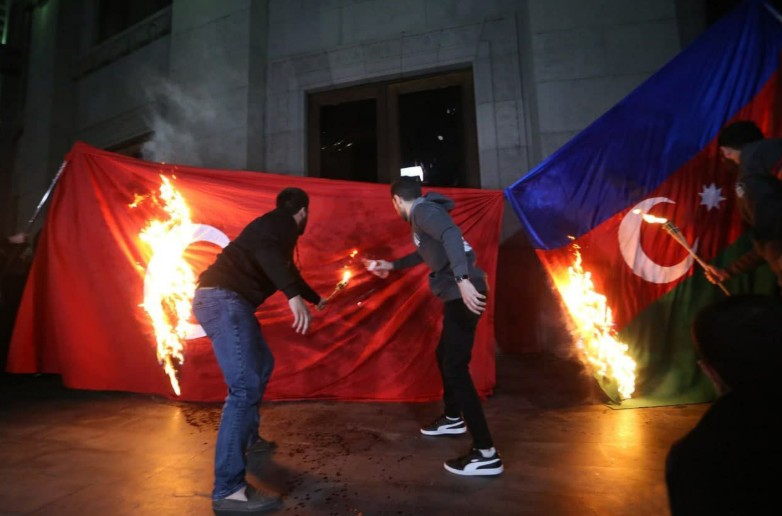
The capital of Armenia has once again become the flashpoint for a geopolitical crisis designed to test the fragile foundations of peace in the Caucasus. On the evening of April 23, during a torchlight procession in Yerevan’s Republic Square, radical nationalist groups publicly burned the flags of Turkey and Azerbaijan.
The incident instantly triggered massive public outrage across Turkey. A nation’s flag is the ultimate symbol of its sovereignty and honor, and the visceral reaction from the Turkish public and state officials is both justified and inevitable. However, in the realm of high-stakes diplomacy, emotional escalation is often exactly what the perpetrators are hoping to achieve.
To understand the true nature of this crisis, defense and intelligence analysts must look past the smoke and identify the strategic mechanics at play.
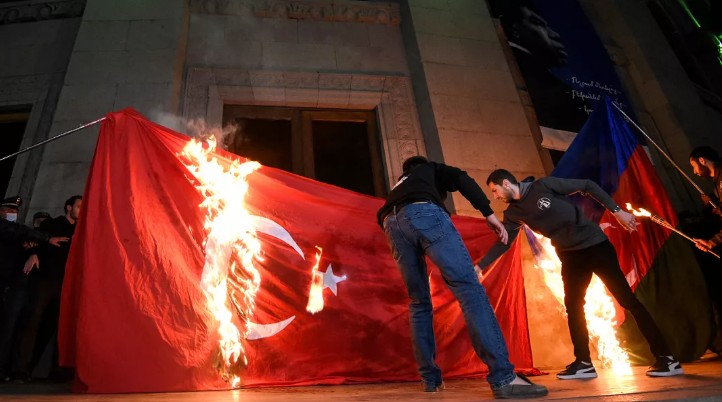
1. The Perpetrators: A Faction, Not the State In international relations, accurately attributing an action is critical. This flag-burning was not a state-sponsored event orchestrated by the Armenian government. It was executed by the youth wing of the Dashnaktsutyun (Armenian Revolutionary Federation – ARF).
This radical nationalist faction bases its entire political survival and identity on perpetual conflict. For decades, they have fiercely opposed any opening of borders or normalization of ties with Ankara and Baku. Their political capital relies on keeping the region locked in a state of historical hostility.
2. The “Spoiler” Strategy In conflict resolution theory, groups that actively attempt to sabotage peace negotiations are known as “spoilers.” The provocation in Yerevan is a textbook spoiler tactic.
The radical faction recognizes that they do not have the political power to legally stop the Armenian government from pursuing normalization with Turkey. Therefore, they resort to an asymmetric tactic: they attack Turkey’s national symbols, hoping to incite such severe outrage in Ankara that the Turkish government is forced by its own public to walk away from the diplomatic table. If Turkey abandons the peace process in anger, the radicals in Yerevan win.
3. An Unprecedented State Response The most crucial detail of this event—one that separates it from decades of similar historical provocations—is the reaction of the Armenian state. In the past, administrations in Yerevan would routinely ignore or silently endorse such nationalist displays.
This time, the diplomatic landscape shifted. Shortly after the incident, the office of Armenian Prime Minister Nikol Pashinyan issued a stark condemnation, labeling the burning of a neighboring state’s flag as “irresponsible, unacceptable, and provocative.” This unprecedented official rebuke sends a clear signal to the international community: the current administration in Yerevan is actively trying to insulate the normalization process from its own domestic radicals.
Conclusion: Statecraft vs. Provocation The outrage in Turkey is a natural reflex to an aggressive insult. However, the true test of statecraft is strategic patience.
By forcefully condemning the act while simultaneously noting the Armenian government’s swift disavowal of the radicals, Ankara can maintain the diplomatic high ground. Long-term security and economic dominance in the Caucasus will not be secured by reacting to the flames lit by desperate fringe groups, but through the cold, calculated execution of strategic diplomacy. The ultimate victory over the provocateurs is rendering their tactics irrelevant.
React