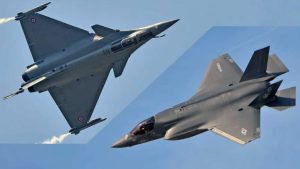

FIFTH-GENERATION JET FIGHTERS: THE SUPREMACY OF THE STEALTH DOMAIN


 React
React
STRATEGIC ANALYSIS — In the high-stakes arena of modern aerial warfare, the distinction between victory and defeat is measured in milliseconds and decibels of radar return. The “Fifth Generation” is not merely an incremental upgrade to the jet fighters of the past; it is a total paradigm shift. It represents the transition from a “pilot-centric” era to a “data-centric” era, where the aircraft functions as a low-observable, high-speed node in a global intelligence network.
The DNA of the 5th Generation
To be classified as a true fifth-generation platform, a jet must possess a specific suite of capabilities that work in perfect synergy.
-
Low Observability (Stealth): This is the foundation. Through advanced radar-absorbent materials (RAM) and precision-engineered geometry, these jets achieve a Radar Cross Section ($RCS$) comparable to a small bird or a marble. This allows them to penetrate integrated air defense systems (IADS) undetected.
-
Sensor Fusion: A fifth-generation pilot does not look at individual screens for radar, infrared, and electronic warfare. The aircraft’s onboard “brain” fuses all sensor data into a single, unified tactical picture, providing unprecedented situational awareness.
-
Supercruise: The ability to sustain supersonic flight—typically above Mach 1.5—without the use of afterburners. This allows for high-speed intercepts while maintaining a low thermal signature and preserving fuel for the engagement.
-
Internal Weapon Bays: To maintain a “clean” stealth profile, all munitions are carried internally. External pylons are only utilized in “Beast Mode” scenarios where stealth is no longer the primary requirement.
The Global Leaderboard: Who Owns the Sky?
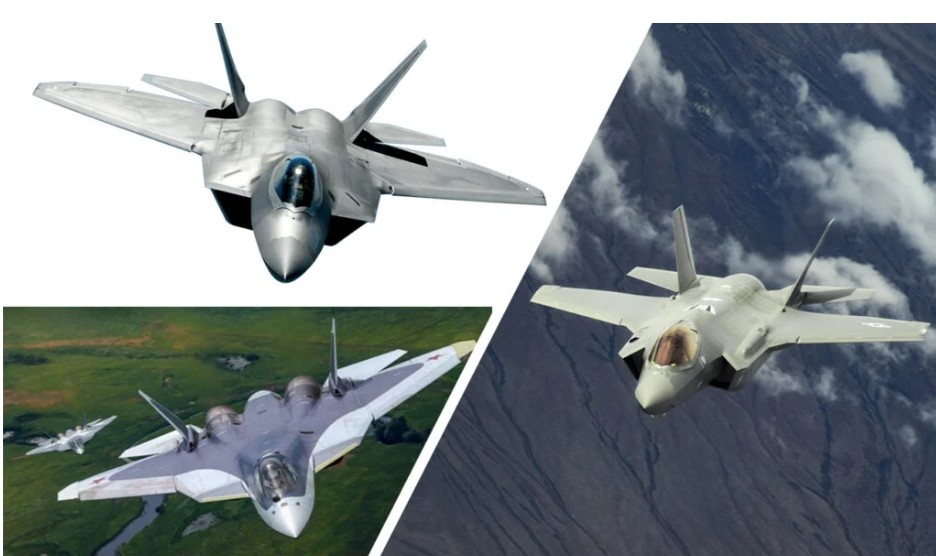
While many nations aspire to 5th-gen status, only a handful of platforms have achieved operational maturity or advanced testing phases.
-
F-22 Raptor (USA): The undisputed king of air superiority. Its combination of $RCS$ reduction and extreme supermaneuverability via thrust-vectoring nozzles makes it the gold standard.
-
F-35 Lightning II (USA/International): The most prolific 5th-gen platform. It is optimized as a multi-role strike fighter and serves as the digital backbone for allied air forces worldwide.
-
J-20 Mighty Dragon (China): A formidable long-range interceptor that has significantly narrowed the technological gap with the West, featuring advanced AESA radars and domestic high-thrust engines.
-
Su-57 Felon (Russia): Focused on high maneuverability and standoff lethality, the Su-57 serves as Russia’s primary answer to stealth-focused Western doctrines.
-
KAAN (Türkiye): One of the most ambitious 5th-gen programs globally. KAAN is designed to integrate advanced domestic sensors and a massive internal weapon capacity, positioning Türkiye as a top-tier aerospace power.
Beyond the Cockpit: The Cyber Frontier
The modern 5th-gen fighter is often described as a “flying data center.” With millions of lines of code governing every flight control and sensor, cyber-resilience has become as critical as aerodynamic lift. These aircraft are designed for “Network-Centric Warfare,” meaning they can direct the fire of naval destroyers or ground-based batteries, acting as the “eyes” of the entire battlefield.
React