Italy’s F-35 Programme Cost Rises by €7.3bn to €20.8bn for 115 Jets
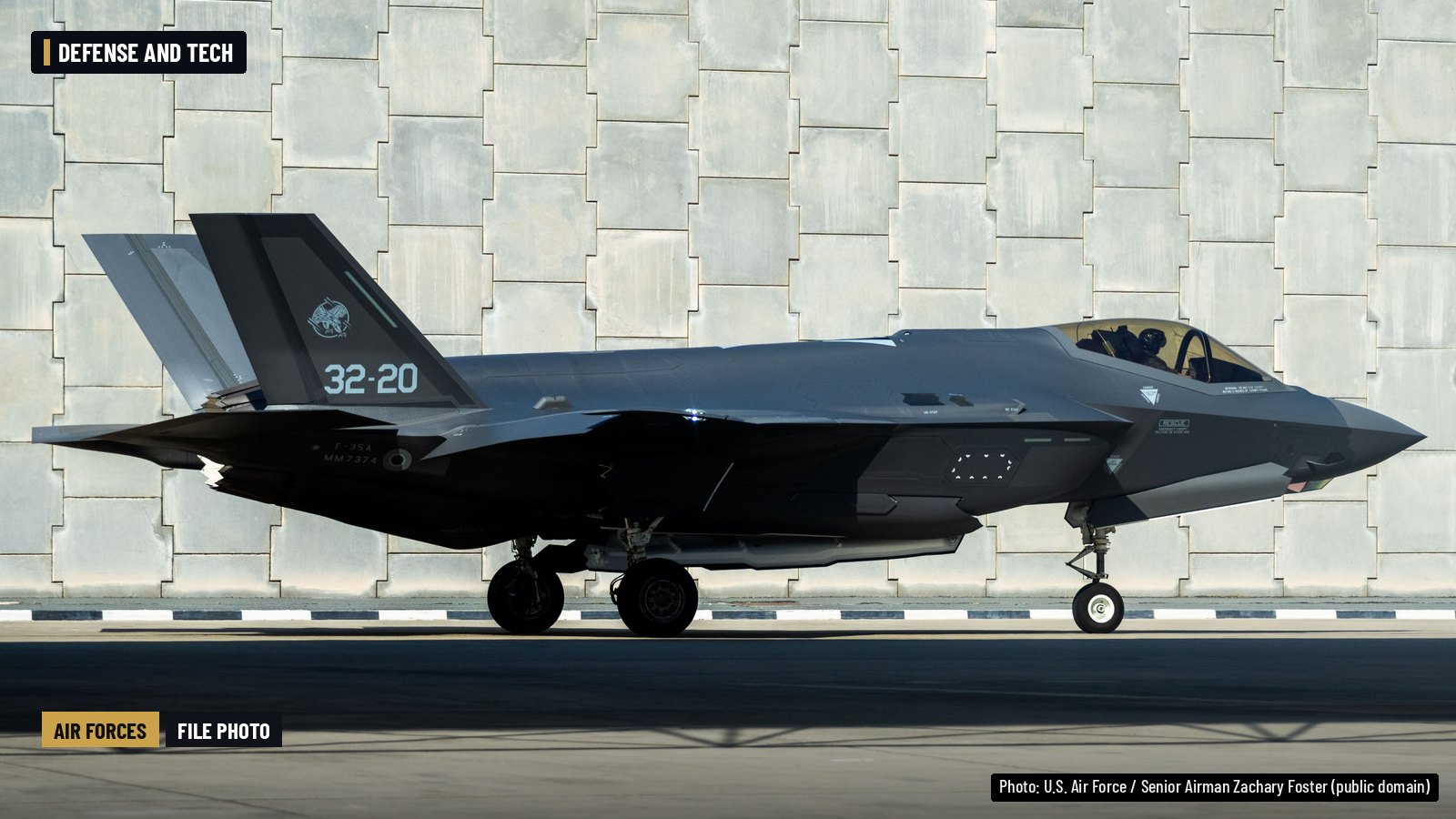
Italy’s government has asked parliament to approve an extra €7.28bn for its F-35 programme, lifting the planned total to €20.84bn, according to a parliamentary dossier on the draft decree that was reported on 10 November 2026. The draft, sent to parliament on 30 October as Government Act No. 452, covers the purchase of F-35 Lightning II jets and the expansion of the Cameri final assembly and maintenance site near Novara. Reuters described the increase as more than 50% above the original budget.
- The draft decree (Government Act No. 452, programme SMD 5/2026) puts the F-35 programme’s total cost at €20,844.6 million at 2026 prices
- The 2009 authorisation was about €13.5bn, so the increase is about €7.3bn
- According to the parliamentary research reports, the plan now covers 115 aircraft: 75 F-35A and 40 F-35B, against an initial requirement of 131
- The defence committees of both chambers have until 13 December 2026 to give their opinion
What the draft decree says
The new programme, SMD 5/2026, continues programme SMD 2/2009, which parliament’s research service says was authorised for about €13.5bn: about €12.9bn for the aircraft and about €0.6bn for the Cameri final assembly line (FACO) and its maintenance, repair, overhaul and upgrade (MRO&U) role. The updated total cost is €20,844.6m at 2026 economic conditions. The programme is planned to run from 2027 to 2039.
The government gives three reasons for the rise: a necessary revision of security requirements, higher costs for technology upgrades to the weapon system, and inflation and euro-dollar exchange-rate changes in recent years. According to Il Sole 24 Ore, which cites the research reports of the Chamber and the Senate, the plan provides for 75 F-35A conventional take-off jets for the Air Force and 40 F-35B short take-off and vertical landing jets, split equally between the Air Force and the Navy. That makes 115 aircraft, against 131 in the original requirement.
When the money would be spent
The yearly schedule starts at €175m in 2027 and €230m in 2028, according to Il Sole 24 Ore, with most of the new spending falling between 2029 and 2034. Il Fatto Quotidiano reported that the schedule ends with €20m in 2039, and that the ministry’s multi-year defence planning document for 2025-2027 had shown €12.3bn of funding for the F-35 programme, running to 2046.
What happens next in parliament
The Senate’s foreign affairs and defence committee and the Chamber of Deputies’ defence committee have until 13 December 2026 to give their opinion. These opinions are advisory in most cases. Under the military code, as summarised in the dossier, the government must send the decree back with its reasons if it does not accept the committees’ conditions. It cannot adopt the programme only if the committees then vote against it by an absolute majority on the grounds that it does not fit the multi-year defence plan. The opposition is challenging the request: Democratic Party senator Alessandro Alfieri said the opposition had obtained a postponement of the discussion in the Senate committee, Il Fatto Quotidiano reported.
Background: Italy and the F-35
Italy is a partner nation in the F-35 programme and flies both the F-35A and the F-35B; the Navy’s F-35Bs are intended to operate from the aircraft carrier Cavour. The Cameri site, run by Leonardo, is Italy’s F-35 final assembly and check-out facility and, as the dossier notes, also has a maintenance, repair, overhaul and upgrade role. For the aircraft itself, see our F-35 specifications and variants guide, our explainer on how much an F-35 costs and the list of F-35 operators. For Italy’s wider force structure, read how strong Italy’s military is in 2026.
Industry context
The figures are a programme cost covering aircraft, upgrades and the industrial site over 13 years, not a unit price, and they should not be divided by the number of jets. The government’s own explanation shows how exchange rates affect European buyers of a dollar-priced aircraft, a point other F-35 customers in Europe and the Middle East will follow as they plan their budgets.