Royal Marines Explained: Commando Training, Role, Units and the Future Commando Force
The Royal Marines are Britain’s amphibious commando force and one of the most recognisable military units in the world. Known for the green beret and some of the toughest basic training of any Western military, they are going through their biggest transformation in decades. Here is how they are organised, how they train and where they are heading.
- Formed on 28 October 1664; part of the Royal Navy’s Naval Service
- Around 6,000 to 7,000 regular personnel
- Recruit training lasts about 32 weeks at Lympstone, Devon
- Main fighting formation: 3 Commando Brigade
- Reorganising as the Future Commando Force with smaller, dispersed teams
Who are the Royal Marines?
The Royal Marines trace their history to the Duke of York and Albany’s Maritime Regiment of Foot, raised in 1664. They are naval infantry: soldiers who fight from the sea and belong to the Royal Navy rather than the British Army. Over the centuries they have fought at Gibraltar, Gallipoli, Normandy, the Falklands, Iraq and Afghanistan. The Special Boat Service, the Navy’s special forces unit, recruits heavily from their ranks.
Commando training
Recruits complete around 32 weeks of training at the Commando Training Centre Royal Marines (CTCRM) in Lympstone, one of the longest basic infantry courses in NATO. Officers train for over a year. It ends with the four commando tests: the endurance course across Woodbury Common, a nine-mile speed march, the Tarzan assault course and the 30-mile march across Dartmoor, which must be completed in under eight hours. Passing earns the green beret.
Units
The core fighting formation is 3 Commando Brigade, including 40 Commando in Taunton, 42 Commando in Plymouth, 45 Commando in Arbroath and 30 Commando Information Exploitation Group, supported by Army commando-trained artillery and engineers. 43 Commando Fleet Protection Group guards the UK’s nuclear deterrent at Faslane.
Arctic warfare
The Royal Marines are NATO specialists in mountain and cold-weather warfare. They train every winter in northern Norway, and their Arctic skills have taken on new importance as Russia’s Northern Fleet and the High North become more central to NATO planning.
The Future Commando Force
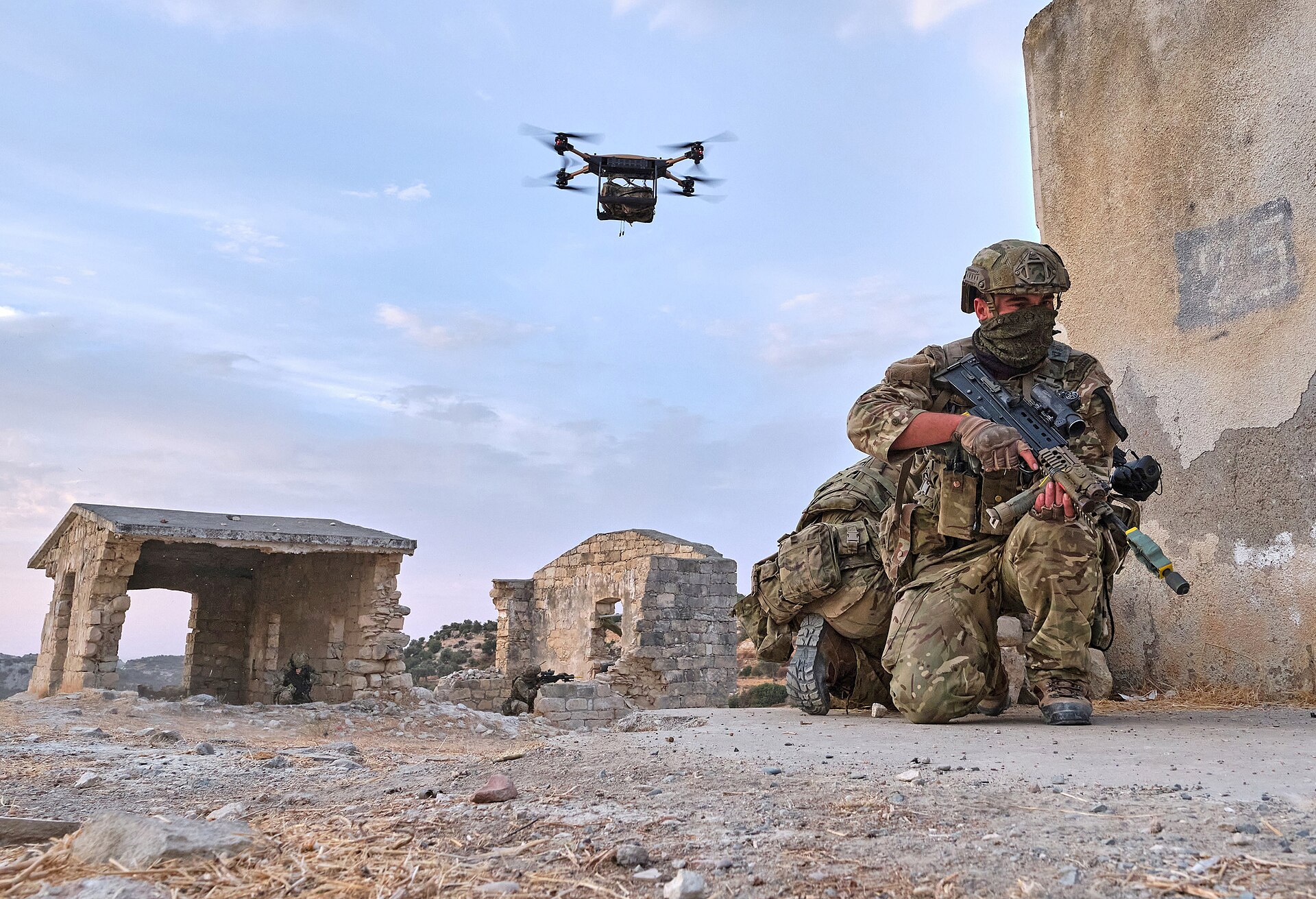
Since 2019 the Marines have been reorganising into the Future Commando Force: smaller, highly mobile teams that operate from ships and remote coastlines, carry out raids, gather intelligence and guide long-range fires. Two Littoral Response Groups, one focused on Europe and the High North and one on the Mediterranean and beyond, are central to the concept.
Challenges
The biggest question is transport. The UK decided in 2024 to retire the amphibious assault ships HMS Albion and HMS Bulwark early, leaving the Marines more reliant on auxiliary ships and allied navies until new Multi-Role Strike Ships arrive in the 2030s. Recruitment pressures and budget limits add to the strain.
Verdict
The Royal Marines remain an elite force with a strong brand and unique skills, especially in the Arctic. Their shift towards small, agile commando teams suits modern warfare, but their effectiveness will depend on Britain giving them the ships and equipment to get to the fight.
Featured image: UK Ministry of Defence / OGL v1.0, via Wikimedia Commons