NATO’s Eastern Flank Explained: Troops, Brigades and Defences From the Baltic to the Black Sea
NATO’s eastern flank stretches from Finland’s Arctic border to the Black Sea coast of Romania and Bulgaria. Since Russia’s full-scale invasion of Ukraine in 2022, it has become the most heavily reinforced frontier in Europe since the Cold War. Here is how NATO defends it in 2026.
- Eight multinational NATO forces from Estonia to Bulgaria
- Germany’s Panzerbrigade 45 based permanently in Lithuania
- Poland’s East Shield and the Baltic Defence Line fortify borders
- Finland and Sweden turned the Baltic Sea into a NATO-dominated sea
- Eastern Sentry and Baltic Sentry protect skies and undersea cables
From tripwire to forward defence
After Russia annexed Crimea in 2014, NATO deployed four small multinational battlegroups to Estonia, Latvia, Lithuania and Poland, led by the UK, Canada, Germany and the US. They were a tripwire: too small to stop an invasion, but enough to ensure allied troops would be involved from the first hour. After 2022, four more were added in Slovakia, Hungary, Romania and Bulgaria, and NATO agreed to scale them up to brigade size where needed. The new aim is to defend “every inch” of allied territory from day one.
Key national contributions
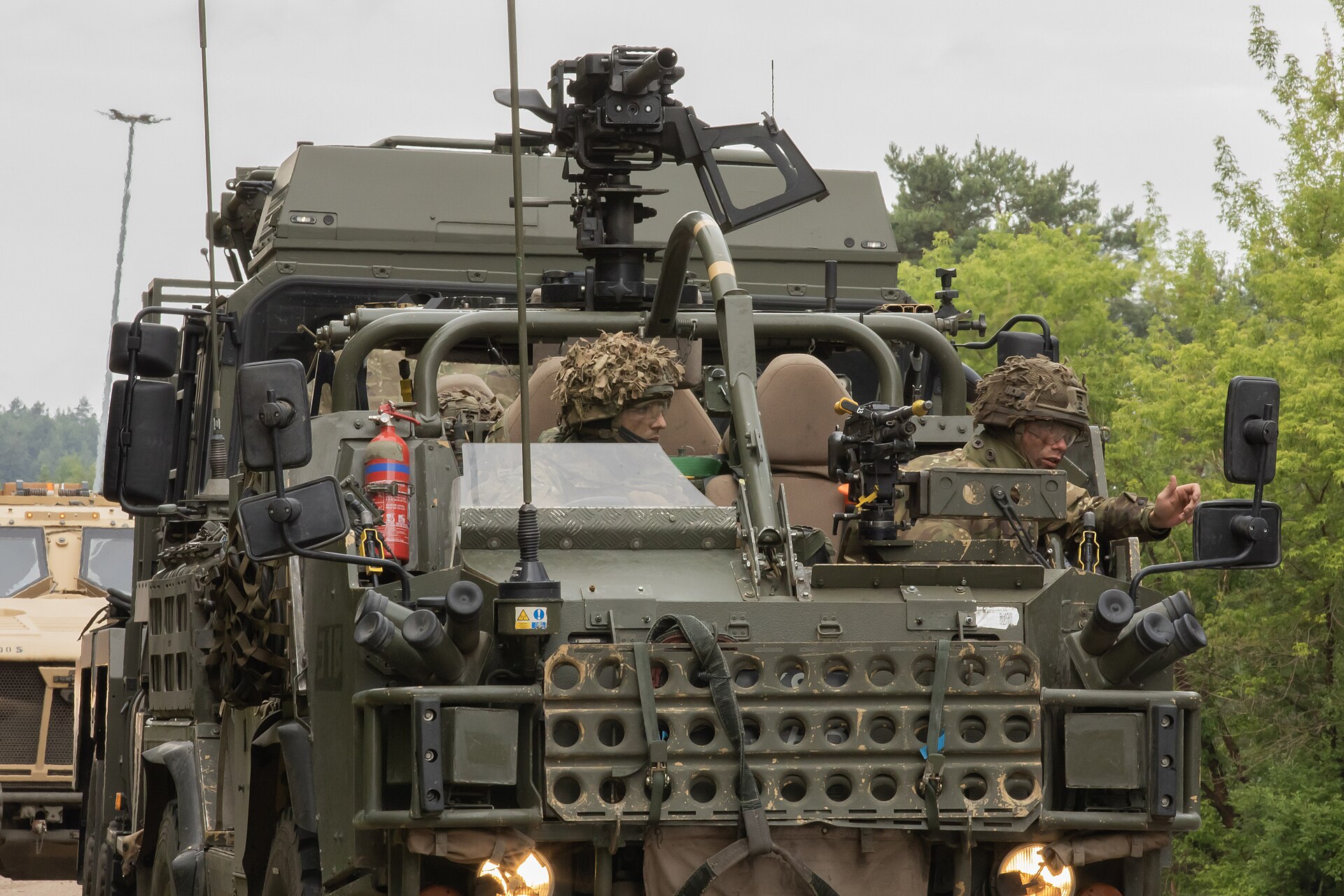
Germany has permanently stationed a combat brigade, Panzerbrigade 45, in Lithuania, its first such deployment abroad since the Second World War, with around 5,000 troops planned. Canada is expanding its brigade in Latvia, the UK leads in Estonia, and the US keeps thousands of troops in Poland, where it also runs a permanent army garrison headquarters. France leads the multinational force in Romania.
Building walls and lines
Frontline states are fortifying their borders. Poland’s East Shield programme is building obstacles, bunkers, sensors and anti-drone systems along its borders with Russia and Belarus. Estonia, Latvia and Lithuania are constructing the Baltic Defence Line with hundreds of bunkers, anti-tank ditches and pre-positioned obstacles. Several of these countries have left the Ottawa treaty banning anti-personnel mines so they can mine their borders if needed.
The Nordic game-changer
Finland joined NATO in 2023 and Sweden in 2024, doubling the alliance’s land border with Russia and giving it strong air forces, submarines and an experienced conscript army. The Baltic Sea is now almost entirely surrounded by NATO members, making it far easier to reinforce the Baltic states, including through the vulnerable Suwałki Gap between Poland and Lithuania.
Air, sea and hybrid threats
NATO has launched missions to deal with new threats. Baltic Sentry protects undersea cables and pipelines after a series of suspected sabotage incidents, and Eastern Sentry was launched in 2025 after Russian drones violated Polish airspace. Air policing, integrated air and missile defence and large exercises such as Steadfast Defender are now routine.
The weaknesses
Despite progress, gaps remain. Many brigades are not yet fully manned or equipped, air defence is thin, and reinforcing the east quickly depends on roads, rail and bridges that still need upgrading. Questions about the long-term size of the US presence in Europe also worry eastern allies.
Verdict
NATO’s eastern flank is far stronger than in 2022, and the trend is toward permanent, larger and better-armed forces. Whether it is strong enough depends on how fast allies fill the remaining gaps and how much Russia rebuilds its own army after Ukraine.
Featured image: U.S. Army photo by Sgt. Alex Soliday / Public domain, via Wikimedia Commons