Russia’s State Armament Programme Explained: What Moscow Is Buying for the Next Decade
Russia does not buy weapons year by year in the way most Western countries do. Instead it sets ten-year State Armament Programmes, known by the Russian initials GPV, which decide which tanks, aircraft, ships and missiles the armed forces will receive. The war in Ukraine has upended the current plan and is shaping the next one. Here is how the system works and what Moscow is prioritising.
- Ten-year plans set what the Russian military buys
- Current programme covers 2018-2027
- A new programme to the mid-2030s is being prepared
- Priorities: drones, air defence, missiles, nuclear forces
- SIPRI: about $190 billion military spending in 2025
How the programmes work
A GPV is drafted by the Ministry of Defence, the defence industry and the government and approved by the president. It sets spending ceilings and the main purchases for a decade, while the annual State Defence Order turns the plan into concrete contracts. The current programme, GPV-2027, covers 2018 to 2027 and was worth around 20 trillion roubles when adopted.
What the war changed
GPV-2027 was written for a modernising peacetime army, with priorities such as new Armata tanks, Su-57 fighters and a larger navy. The war forced a dramatic shift toward mass production of what the front needs: artillery shells, Geran attack drones, glide-bomb kits, missiles, and armoured vehicles, many of them refurbished from Soviet-era storage. Prestige projects like the T-14 Armata have been largely sidelined.
The new programme
Russia is preparing a new armament programme running into the mid-2030s. Officials have signalled that it will build on war lessons: unmanned systems of all kinds, electronic warfare, air and missile defence, long-range strike, space-based reconnaissance and communications, and continued modernisation of the nuclear triad. The navy is expected to receive less than it once hoped, with priority for submarines and missile-armed corvettes.
How much money?
According to SIPRI, Russia spent about $190 billion on its military in 2025, roughly three times its pre-war level in rouble terms and well above 5 percent of GDP. Total security spending, including the police and security services, is even higher. Officials have suggested that defence spending will ease slightly after the peak, but much depends on the course of the war.
Industrial strengths and limits
Russia’s defence industry, led by Rostec, has shown it can surge production quickly, running factories around the clock and building new drone plants such as the facility at Alabuga. But it faces serious constraints: labour shortages, high interest rates, inflation, sanctions on machine tools and electronics, and dependence on imports from China, Iran and North Korea for some components and munitions.
Why it matters
The next armament programme will shape the Russian military that NATO faces in the 2030s. If Moscow can keep funding it, Europe will confront a larger, more experienced and drone-heavy Russian army. If the economy weakens, ambitions will be cut, just as they were in the 1990s. Either way, the plan shows that Russia is preparing for long-term confrontation, not a return to peacetime.
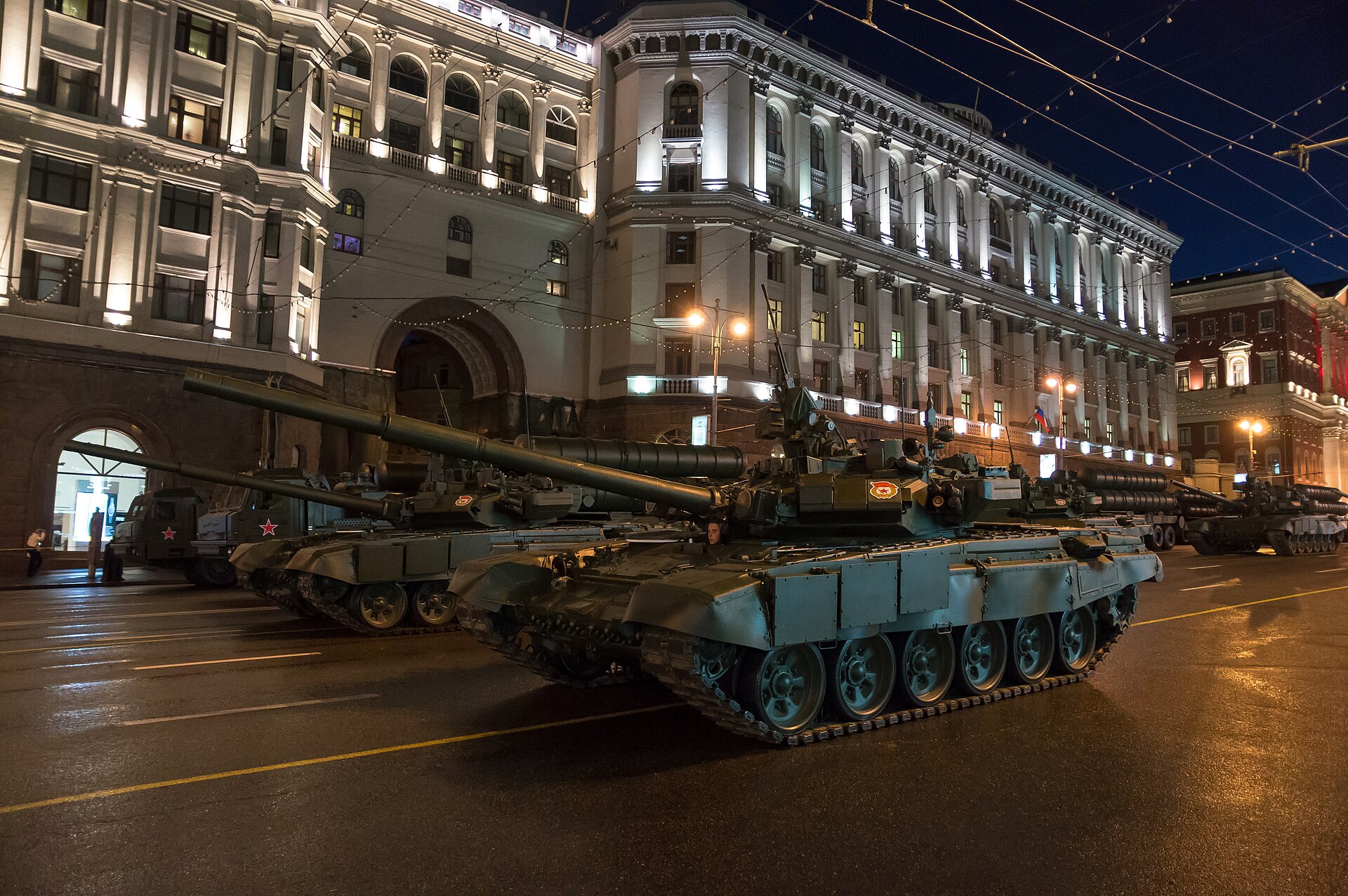
Featured image: Vyacheslav Argenberg / CC BY 4.0, via Wikimedia Commons