

Aircraft Carrier
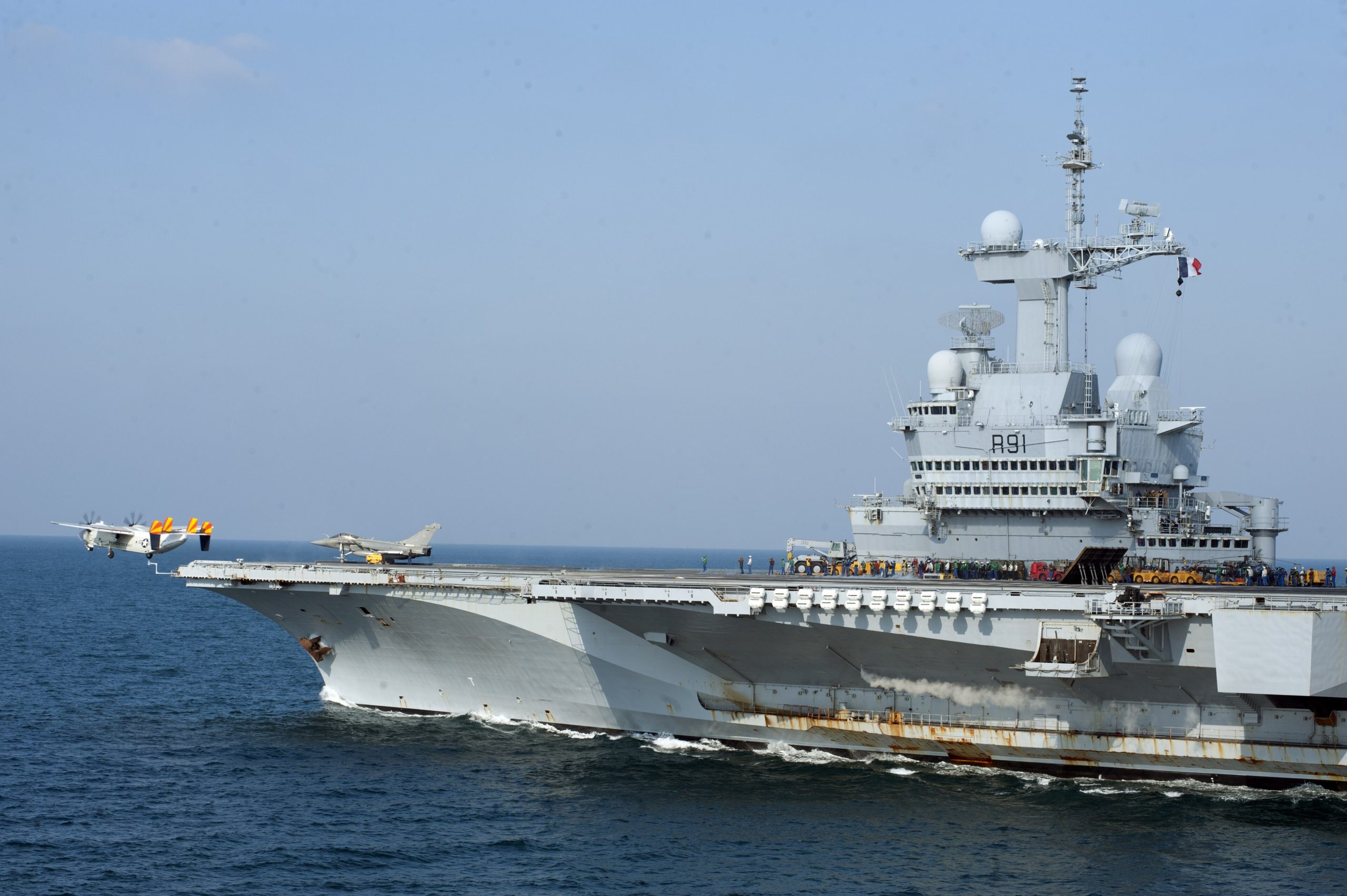
Charles de Gaulle (R91) aircraft carrier
The Charles de Gaulle (R91) is a nuclear-powered aircraft carrier built by DCNS (now Naval Group) at Brest in France and commissioned in 2001. It is the only nuclear-powered carrier outside the US Navy and carries Rafale M fighters.
 France|Naval Group (DCNS)
What Is the Charles de Gaulle aircraft carrier? Overview, History and Development
The ship was laid down in 1989, launched in 1994 and commissioned on 18 May 2001. It displaces about 42,500 t at full load and is about 261.5 m long, with a flight deck about 64 m wide. Two K15 pressurised-water reactors of 150 MW each drive two shafts for a speed of about 27 knots. It is a CATOBAR ship with two steam catapults and arrestor wires, and carries about 30 to 40 aircraft, typically 24 Rafale M, 2 E-2C Hawkeye and helicopters.
The crew is about 1,950 including the air group. Defences include Aster 15 missiles, Mistral and 20 mm guns. A mid-life refit in 2017–2018 cost about 1.3 billion euros, with the next overhaul planned for 2025–2026. The carrier has served in Afghanistan, Libya, Iraq and Syria (Operation Chammal) and the Indian Ocean. Its successor, PANG, is a planned nuclear carrier of about 75,000 t for around 2038. Only the US, with 11 carriers, and France operate nuclear carriers. Rivals include the Queen Elizabeth class and Fujian.
Charles de Gaulle aircraft carrier Specifications: Displacement, Speed, Armament and Crew
Charles de Gaulle aircraft carrier Variants and Versions Compared
The sole ship of the class, in service since 2001 with nuclear propulsion and catapults.
The planned nuclear successor of about 75,000 t, expected around 2038.
The French naval Rafale fighters that operate from the ship’s catapults.
Which Countries Use the Charles de Gaulle aircraft carrier? Operators and Users
FranceCharles de Gaulle aircraft carrier FAQ: Price, Range, Operators and Most Asked Questions
How much did the Charles de Gaulle cost?
The Charles de Gaulle cost about 3.2 billion euros originally, according to historical figures. A mid-life overhaul in 2017–2018 added about 1.3 billion euros.
Is the Charles de Gaulle nuclear-powered?
The Charles de Gaulle is nuclear-powered, using two K15 reactors of 150 MW each. It carries conventionally armed aircraft only, and it is the only nuclear carrier outside the US Navy.
How many aircraft does the Charles de Gaulle carry?
The Charles de Gaulle carries about 30 to 40 aircraft, typically 24 Rafale M fighters, 2 E-2C Hawkeye aircraft and helicopters. It launches them with two steam catapults.
Charles de Gaulle vs Queen Elizabeth: which is better?
The Charles de Gaulle is smaller, at 42,500 t against 65,000 t, but it is nuclear-powered and has catapults, which let it launch heavier aircraft such as the E-2C. The Queen Elizabeth carries more F-35Bs.
What will replace the Charles de Gaulle?
The Charles de Gaulle will be replaced by PANG, a nuclear-powered carrier of about 75,000 t planned for around 2038. France decided on it in December 2020, and formal go-ahead was announced in 2025.
Which countries have nuclear aircraft carriers?
Only the United States, with 11 carriers, and France, with the Charles de Gaulle, operate nuclear-powered aircraft carriers. Other navies use conventional propulsion.