Fighter Aircraft
F/A-18E/F Super Hornet
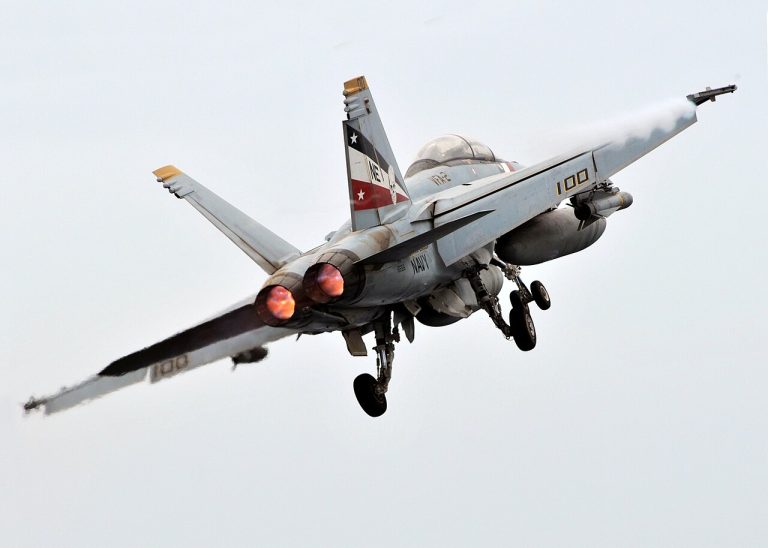
The F/A-18E/F Super Hornet is Boeing’s twin-engine, carrier-capable multirole fighter and the backbone of US Navy carrier air wings alongside the F-35C.
 United States|Boeing
Overview
Despite its name, the Super Hornet is a larger, largely new aircraft compared with the original F/A-18 Hornet, with about 25% more wing area, more internal fuel and two extra weapons stations. It entered US Navy service in 2001 and performs air superiority, strike, aerial refueling and reconnaissance missions.
The Block III upgrade adds an advanced cockpit, conformal fuel tanks, a stronger airframe and improved networking. The EA-18G Growler electronic attack variant is based on the two-seat F/A-18F. Australia and Kuwait are the only export operators.
Key Specifications
Variants
Single-seat Super Hornet used for fighter and strike missions.
Two-seat version with a weapons systems officer, used for strike and forward air control.
Electronic attack aircraft based on the F/A-18F, used for jamming and air-defense suppression.
Operators
United States Australia
 Kuwait
Frequently Asked Questions
How much does a Super Hornet cost?
A Block III F/A-18E/F Super Hornet costs roughly $65–70 million per aircraft.
How fast is the F/A-18 Super Hornet?
The Super Hornet has a top speed of Mach 1.8, about 1,915 km/h at altitude.
What is the difference between the Hornet and the Super Hornet?
The Super Hornet is about 20% larger, with rectangular air intakes, more fuel, longer range, two more hardpoints and newer avionics than the legacy F/A-18A–D Hornet.
Is the Super Hornet still in production?
Production is winding down; Boeing is completing the final US Navy orders, with the line expected to close in the late 2020s.
Which countries fly the Super Hornet?
The United States Navy, the Royal Australian Air Force and the Kuwait Air Force operate the Super Hornet.
Is the Super Hornet better than the F-35C?
The F-35C is stealthier with better sensors, while the Super Hornet is cheaper to operate, carries more external weapons and can refuel other aircraft. The US Navy flies both in the same air wings.