

Ursa Major, the Engine Maker America’s Missile Boom Depends On
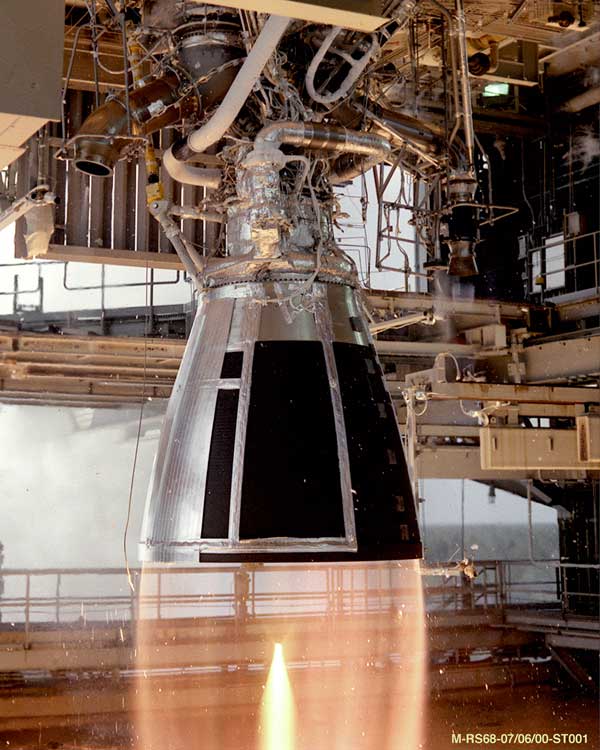
Every missile America wants to build faster shares one bottleneck, the rocket motor, and Ursa Major exists to break it. Founded in 2015 by a SpaceX propulsion alumnus, the Berthoud, Colorado company spent its first decade selling engines to space startups. Now the Pentagon’s munitions crisis has turned it into something rarer, an independent American propulsion house at the exact moment the industrial base needs one.
Why rocket motors became the bottleneck
For three decades the United States let its solid rocket motor industry consolidate until effectively two suppliers remained, Northrop Grumman and L3Harris’s Aerojet Rocketdyne. That worked when munitions orders were flat. It stopped working when the war in Ukraine began consuming Western missile stockpiles faster than they could be rebuilt, and when every new program, from hypersonics to ship-killing cruise missiles, joined the same queue for propulsion. Motors, not electronics or airframes, became the pacing item across dozens of programs.
Washington’s answer has been to fund new entrants deliberately, and Ursa Major is among the biggest beneficiaries. The company’s pitch is that propulsion should be a product you order from a catalog, built with additive manufacturing on repeatable lines, not a bespoke artifact engineered once per program and priced accordingly.
From Hadley to Arroway, the engine family
Ursa Major’s liquid-engine catalog spans the thrust range a small launch industry needs. Hadley, a 5,000-pound-thrust oxygen-rich staged combustion engine burning liquid oxygen and kerosene, is the workhorse, flight-proven and in production for customers including Stratolaunch’s hypersonic testbeds. Ripley scales the same architecture to 50,000 pounds for medium launch, while Arroway, a 200,000-pound-thrust methane engine, aims at the heavier end of the market.
| Engine | Thrust | Propellant | Status |
|---|---|---|---|
| Hadley | 5,000 lbf | LOX / kerosene | Flight-proven, in production |
| Draper | 4,000 lbf | Hydrogen peroxide / kerosene | Flown January 2026 |
| Ripley | 50,000 lbf | LOX / kerosene | In development |
| Arroway | 200,000 lbf | LOX / methane | In development |
| Lynx SRMs | Various | Solid propellant | Additive production line |
The quieter revolution is Lynx, the company’s additively manufactured solid rocket motor line. By 3D-printing motor cases and tooling, Ursa Major argues it can stand up new SRM production in months rather than years, exactly the elasticity the Pentagon’s replenishment plans assume but the legacy base struggles to deliver.
Draper and the HAVOC gambit
Draper is where Ursa Major stops being a supplier and starts being a weapons company. The 4,000-pound-thrust engine burns storable hydrogen peroxide and kerosene, meaning it needs no cryogenic handling and can sit ready like a solid motor while throttling like a liquid. After a January 2026 flight demonstration, the company unveiled HAVOC in February 2026, a missile system built around Draper that it positions between traditional hypersonic weapons and ballistic missiles, maneuvering on liquid power throughout flight.
The move mirrors what Castelion is attempting from the airframe side, vertical integration aimed at collapsing hypersonic costs. Whether the Pentagon wants its engine suppliers becoming prime competitors is an open question, but the precedent of SpaceX suggests the department will tolerate ambition that ships hardware.
The business of being a third supplier
Ursa Major’s funding history tracks the defense-tech repricing, an $85 million Series C led by BlackRock-managed funds in late 2021, followed by later rounds and a stream of government agreements spanning the Navy, Air Force and hypersonic test programs. Roughly 270 people worked there as of 2023, a figure that has grown with its Navy standard-missile propulsion work and SRM expansion.
The strategic logic runs both directions. Primes want a credible second or third source to discipline pricing and absorb surge demand, while the government wants insurance against a single point of failure in the motor base. A startup that can be that insurance, profitably, occupies one of the most defensible niches in the industry.
Risks on the pad
None of this is guaranteed. Propulsion is unforgiving engineering with brutal qualification requirements, and the legacy suppliers are expanding their own capacity with government help, which could compress the gap Ursa Major exists to fill. The company must also prove that additive manufacturing holds up across thousands of motors, not dozens, and that its move into complete weapons does not alienate the primes who are also its customers.
What is not in doubt is demand. Every public projection of American munitions production assumes motor capacity that does not yet exist. Someone will build it, and Ursa Major has positioned itself closer to that money than almost any company its size.
Frequently asked questions
What does Ursa Major make?
Liquid rocket engines (Hadley, Ripley, Draper, Arroway), additively manufactured solid rocket motors, and since February 2026 the HAVOC missile system built around its Draper engine.
Who founded Ursa Major?
Joe Laurienti, a former SpaceX and Blue Origin propulsion engineer, founded the company in 2015 in Berthoud, Colorado.
Why do solid rocket motors matter so much?
US SRM production consolidated to two main suppliers, and surging missile demand since 2022 made motors the pacing constraint across many Pentagon programs.
What is HAVOC?
A missile system unveiled in February 2026 that uses the storable liquid Draper engine to maneuver throughout flight, positioned between hypersonic and ballistic missile categories.
- Wikipedia – Ursa Major Technologies (accessed October 2026)
- Company announcements on Draper flight testing and HAVOC
- Trade reporting on the US solid rocket motor industrial base


