ROKETSAN: Company Profile, Products, Exports and Role in the Turkish Defense Industry (2026)
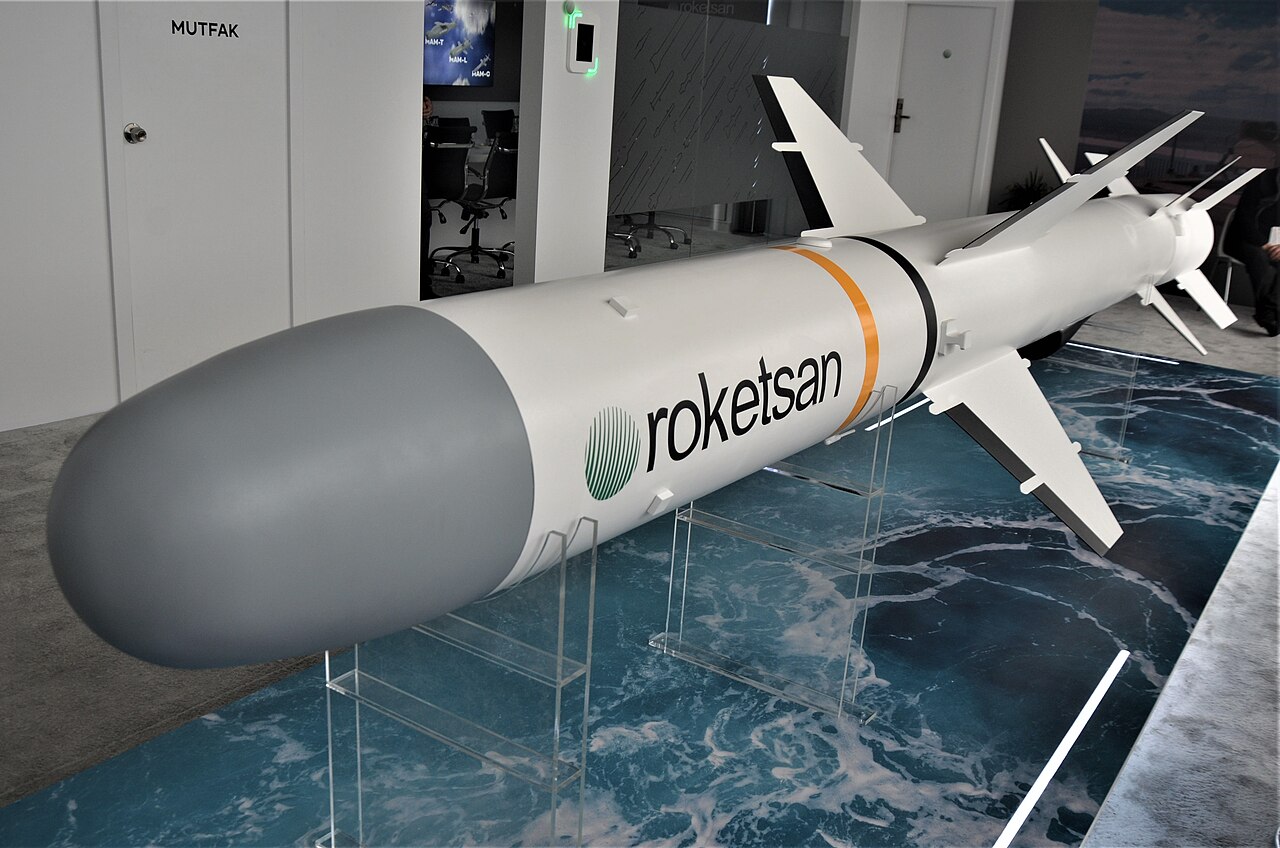
ROKETSAN is Türkiye’s national missile house and one of the fastest-growing companies in the Turkish defense industry. Founded in Ankara in 1988, it designs and builds almost every guided weapon the Turkish Armed Forces fire, from shoulder-launched anti-tank missiles and artillery rockets to the Tayfun ballistic missile, the Atmaca anti-ship missile and the Hisar and Siper air defence interceptors. In 2025 its revenue passed $2 billion for the first time, and the company is in the middle of a $3 billion expansion programme that is meant to multiply its production capacity.
- Founded: 14 June 1988, Ankara, by decision of the Defence Industry Executive Committee
- Ownership: majority held by the Turkish Armed Forces Foundation (about 55%); ASELSAN, MKE and Vakıfbank are among the other shareholders
- General manager: Murat İkinci
- Employees: more than 7,000 (company statement, May 2026)
- Revenue: over $2 billion in 2025; Defense News Top 100 2026 ranks it 64th with $2.37 billion in FY2025 defence revenue
- Exports: about $750 million in 2025, customers in nearly 50 countries
- Flagship products: Tayfun, Atmaca, SOM, Hisar, Siper, UMTAS, Cirit, TRG-300, MAM smart munitions
Overview
ROKETSAN (Roketsan Roket Sanayii ve Ticaret A.Ş.) is the prime contractor for rockets, missiles, guided munitions and their propulsion and warhead technologies in Türkiye. Its main campus sits in the Elmadağ–Lalahan area east of Ankara, and it also operates large production and test sites in Kırıkkale and elsewhere. Like ASELSAN and TUSAŞ, it is controlled by the Turkish Armed Forces Foundation (TSKGV), a structure that ties the company closely to the needs of the armed forces while letting it operate commercially.
The company’s growth over the last five years has been steep. Management says turnover rose by roughly half in 2025 alone, to more than $2 billion, while export income reached about $750 million. In the Defense News Top 100 list published in 2026, ROKETSAN ranked 64th worldwide, with $2.37 billion in defence revenue for fiscal 2025. Chief executive Murat İkinci has described the workforce as “a family of over 7,000”, a large share of them engineers working in research and development, and the company reports a local content rate of about 92% across its products.
History
ROKETSAN was created on 14 June 1988 by a decision of Türkiye’s Defence Industry Executive Committee, with a clear mission: to build a national industrial base for rockets and missiles after years of dependence on imported munitions. Its first big programme was European co-production of the Stinger man-portable air defence missile in the early 1990s, which gave Turkish engineers hands-on experience with solid propellants, seekers and precision assembly.
Through the 2000s the company moved from licence work to indigenous designs. The 122 mm and 300 mm artillery rocket families, the Cirit laser-guided rocket and the UMTAS anti-tank missile showed that it could take a weapon from concept to series production. The 2010s brought the strategic jump: the SOM cruise missile (developed with TÜBİTAK SAGE and produced by ROKETSAN), the Bora/KHAN tactical ballistic missile, the Atmaca anti-ship missile and the Hisar family of air defence missiles. In August 2020 the company opened a Space and Advanced Technologies Research Centre and a plant for HMX/RDX high explosives, removing another import dependency. Since 2023 the Tayfun ballistic missile and the Siper long-range air defence system have become the headline programmes.
Products by domain
Ballistic and cruise missiles
The Tayfun short-range ballistic missile is ROKETSAN’s most powerful weapon and is now in serial production; a heavier Tayfun Block-4 was displayed in 2026. The Bora (exported as KHAN) and the older J-600T Yıldırım complete the ballistic line. For long-range precision strike, the company builds the Atmaca anti-ship missile, its land-attack derivative Kara Atmaca, the smaller Çakır cruise missile and the SOM air-launched cruise missile. You can see how these fit together in our guide to the missiles Türkiye has.
Air defence
ROKETSAN supplies the interceptors for Türkiye’s layered air defence network: Hisar-A and Hisar-O for low and medium altitude, Hisar-D RF with a radio-frequency seeker, Siper for long range and the Sungur portable system. It has also developed the Levent close-in weapon system and the ALKA directed-energy weapon. These missiles form a core part of the Steel Dome architecture described in our Steel Dome explainer, and recent trials such as the Siper in-flight target change test show how quickly the family is maturing.
Anti-tank, rockets and smart munitions
The UMTAS, L-UMTAS, OMTAS and Karaok missiles cover anti-armour missions from helicopters, drones, vehicles and infantry teams; several appear in our list of the top anti-tank missiles. Artillery rockets include the TRG-122, TRLG-122 and TRLG-230 guided rockets and the TRG-300 Kaplan, fired from the MCL multi-calibre launcher. ROKETSAN’s MAM-L, MAM-C and MAM-T mini smart munitions are the standard weapons of Turkish armed drones, while TEBER and LAÇİN kits turn unguided bombs into guided ones.
Air-to-air, naval and space
The Gökbora beyond-visual-range air-to-air missile is under development under a contract signed with the Presidency of Defense Industries (SSB) in July 2025, with a range quoted at more than 100 nautical miles. At sea, the company builds the Atmaca and its submarine-launched AKATA variant, first fired in March 2025, as well as the AKYA heavyweight and Orka lightweight torpedoes and the Barbaros coastal defence system. In space, ROKETSAN is developing a micro-satellite launch system and the ŞİMŞEK space project.
Exports and international deals
Exports are a growing part of the business. ROKETSAN says its products are used in nearly 50 countries, and export revenue grew strongly in 2025 to about $750 million. Bangladesh received TRG-300 Tiger rocket launchers in 2021, and laser-guided rockets and smart munitions travel abroad on Turkish drones and helicopters.
Two recent deals stand out. In June 2025, at Indo Defence in Jakarta, ROKETSAN signed contracts with Indonesia’s PT Republik Defence covering the Atmaca missile system and the creation of a joint production venture. In July 2025 an artillery cooperation protocol with Azerbaijan took effect, under which the local company AZROKSAN will produce 122 mm rockets. ROKETSAN also supplies surface-to-air missiles for the Trident air defence system of Czechoslovak Group, shown at Eurosatory in 2026.
Recent contracts and news (2025-2026)
2025 was a record year for testing: the company reported more than 800 test days at over 20 sites. Kara Atmaca flew beyond 400 km in March, Hisar-D RF scored a direct hit in November, Levent completed its first guided firing, and Tayfun hit its target in December. At the IDEF fair in July 2025 ROKETSAN signed the Gökbora development contract, a TRLG-122 supply protocol and engine contracts for cruise missiles with Kale Jet Engines.
On 25 November 2025 the SSB signed Steel Dome contracts worth a combined $6.5 billion with ASELSAN, ROKETSAN and HAVELSAN, the largest single air defence package in Turkish history. On 7 April 2026 the company opened new facilities: a solid-propellant plant in Kırıkkale costing about $450 million that is expected to raise national solid-fuel output roughly fivefold, a $350 million warhead facility in Lalahan and a $100 million advanced technologies R&D centre. About $1 billion of the $3 billion expansion plan was complete at that point. In September 2026 a €1.23 billion contract for air defence components was disclosed between ROKETSAN and ASELSAN.
Role in the Turkish defense industry
ROKETSAN is the integrator that turns sensors, platforms and propulsion into usable firepower. Nearly every Turkish platform, from the Bayraktar TB2 and AKINCI drones to MİLGEM corvettes, T129 ATAK helicopters and the coming KAAN fighter, depends on its munitions. It also anchors a large supply chain: more than 100 firms take part in its business partners programme and about 2,000 suppliers work with it. That makes the company one of the main channels through which defence spending reaches small and medium-sized firms across the Turkish defense industry.
Outlook
The next few years will be shaped by volume. Steel Dome, the continuing demand for drone munitions and the Tayfun programme all require much higher output, which is why ROKETSAN is investing so heavily in propellant, warhead and test capacity. Export growth in Asia, the Gulf and Europe, combined with technology projects such as Gökbora, hypersonic research and space launch, should keep revenue rising. The main risks are supply-chain bottlenecks, export licence politics and the challenge of hiring enough engineers.
FAQ
Who owns ROKETSAN?
The Turkish Armed Forces Foundation holds the majority, about 55%. ASELSAN, MKE and Vakıfbank are among the other shareholders.
How big is ROKETSAN?
It has more than 7,000 employees and reported revenue above $2 billion in 2025. Defense News ranked it 64th in the world in 2026, with $2.37 billion in defence revenue.
What is ROKETSAN’s most important product?
The answer depends on the mission. Tayfun is its longest-range ballistic missile, Atmaca its main anti-ship weapon, Hisar and Siper the backbone of national air defence, and MAM munitions the most widely used weapons on Turkish drones.
Does ROKETSAN export missiles?
Yes. It exports to nearly 50 countries. Recent deals include Atmaca for Indonesia and rocket production with Azerbaijan.
Featured image: CeeGee, CC BY-SA 4.0, via Wikimedia Commons