
Who Builds Europe’s Electronic Warfare Systems?
Europe’s electronic warfare industry is led by a handful of national champions rather than one continental player: Thales (France), Leonardo (Italy/UK), Saab (Sweden), Hensoldt and Rohde & Schwarz (Germany), the ELT Group/Elettronica (Italy), Indra (Spain) and Terma (Denmark) build most of the jammers, radar-warning receivers, decoys and signals-intelligence systems now being bought across NATO’s European members. No single firm dominates the way MBDA does in missiles; instead, each builds for its home air force and competes, or partners, for export orders elsewhere.
Why This Matters
Russia’s war on Ukraine turned electronic warfare from a specialist niche into a front-line priority. Ukrainian brigades now run dedicated electromagnetic-spectrum cells to keep drones, radios and strike assets working in what NATO officers have called one of the densest jamming environments ever recorded, and Russia’s own EW units have shown how effectively that spectrum can be used to isolate and target ground forces. European militaries, by contrast, spent the three decades after the Cold War retiring dedicated electronic-attack aircraft such as the Tornado ECR without building a clear replacement, leaving allies more reliant on American jamming assets than on a European one. That gap is now driving new orders, new NATO coordination and new industrial investment across the continent.
European Context
NATO formally treats the electromagnetic environment as an operational concern rather than a separate domain of war, which has made coordination harder than in air, land or sea operations. The alliance and Ukraine set up a dedicated Electronic Warfare Coalition, with Germany in a leading role, to formalise the exchange of equipment, training and doctrine between members and Kyiv. Separately, the European Commission’s 2026 European Defence Fund work programme, worth around €1 billion in collaborative research and development, named electronic warfare among its priority areas alongside quantum-secured networks and multi-domain operations, with one call built around a “cognitive” EW system capable of real-time signal analysis in contested, congested spectrum. The 2026 round drew a record 612 project proposals across all EDF categories, with results due by March 2027.
For background on how jamming, electronic support and counter-jamming actually work, see DefenceAndTech’s explainers on what electronic warfare is, the capabilities behind the “invisible battlefield”, and the difference between ECM and ECCM.
System / Technology
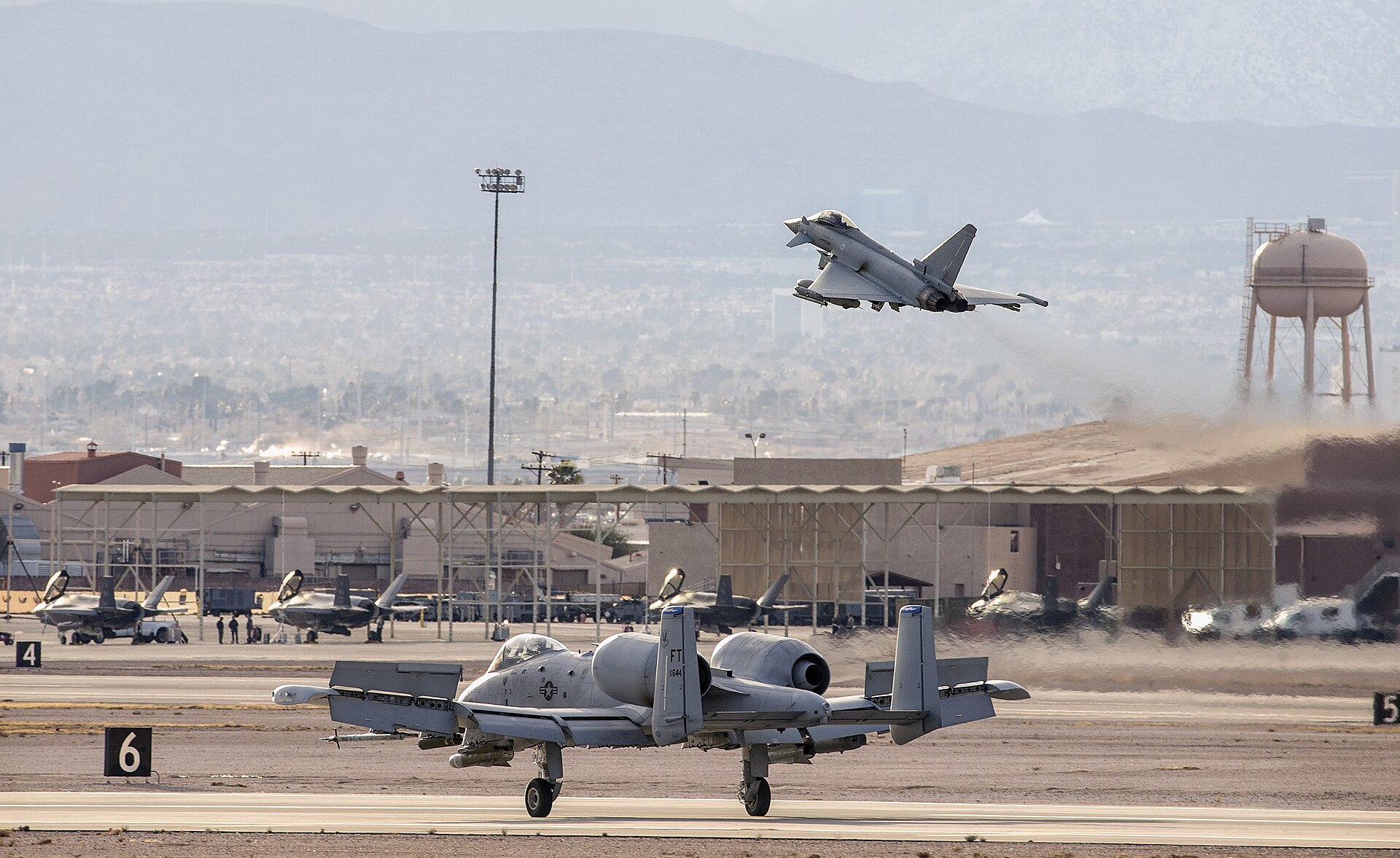
Modern European EW programmes fall into a few broad categories: airborne self-protection suites that warn a jet or helicopter it is being tracked and jam or decoy the threat (Leonardo’s Praetorian on the Typhoon, Saab’s Arexis); stand-off and escort jamming pods designed to suppress hostile radars from outside their effective range; ground- and ship-based electronic support measures (ESM) that passively detect and classify radar and radio emissions; and signals-intelligence (SIGINT/ELINT) systems that collect and analyse the wider electromagnetic picture for national intelligence use. A newer category, cognitive or AI-assisted EW, uses machine learning to recognise and counter unfamiliar waveforms faster than a human operator could reprogram a jammer, and is the focus of several 2026 European procurement and research efforts described below.
| Country | Programme / system | Lead builder(s) | Status |
|---|---|---|---|
| Germany | Eurofighter EK escort-jammer suite (Arexis) | Saab, with Airbus Defence and Space and Helsing | ORDERED (two contracts worth approx. €549m, Tranche 4/5 aircraft) |
| Germany | Pegasus airborne SIGINT system | Hensoldt (Kalaetron-based) | CONTRACTED (“billion-dollar” award, value undisclosed; three Global 6000 aircraft) |
| United Kingdom | Typhoon Praetorian DASS / BriteCloud decoys | Leonardo UK | OPERATIONAL (in-service self-protection suite; BriteCloud also sole-sourced by the US Navy) |
| United Kingdom | NATO JEWCS electronic-warfare training upgrade | Leonardo UK | CONTRACTED (approx. £158m / €180m, UK as NATO host nation) |
| France | Joint tactical SIGINT system (replacing COHORTE/MINREM2) | Thales and Airbus Defence and Space | IN PROGRESS (10-year DGA framework, incremental upgrades) |
| Italy | G550 airborne electronic-attack aircraft | L3Harris (US prime), BAE Systems subsystem support | ORDERED (two aircraft, approx. $300m programme) |
| Germany / Norway | Type 212CD submarine EW/radar suite | Indra | CONTRACTED (six submarines, two for Germany, four for Norway) |
| Denmark | Nationwide counter-drone command-and-control system | Terma | CONTRACTED (August 2026 award, value undisclosed) |
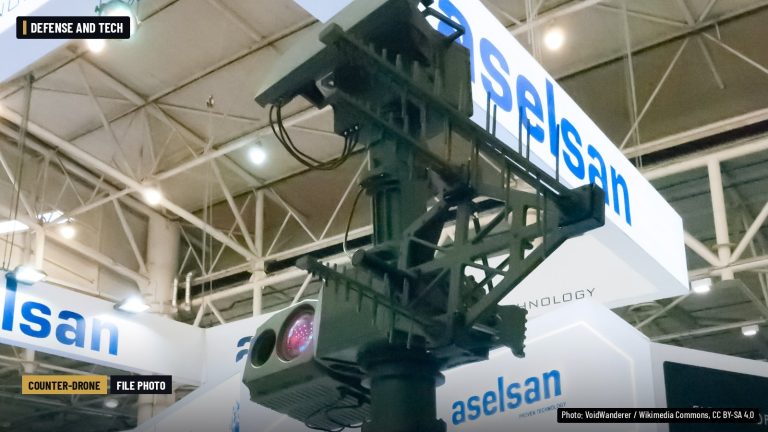
| Poland (reported) | KORAL electronic-support/attack system | ASELSAN (Türkiye) | ORDERED (ASELSAN discloses a $410m export to an unnamed NATO member; trade press links the deal to Poland, unconfirmed by either government) |
Industrial Players
Unlike missiles, where MBDA (jointly owned by Airbus, BAE Systems and Leonardo) acts as a continental consolidator, European electronic warfare remains organised around national prime contractors, each tied closely to its home air force or navy and exporting opportunistically.
| Country | Company | EW focus | Recent signal |
|---|---|---|---|
| France | Thales | SIGINT/ELINT, tactical jamming, naval ESM | 10-year DGA tactical-SIGINT framework with Airbus; counter-drone cooperation with Destinus (2026) |
| Italy / UK | Leonardo | Fighter self-protection (Praetorian, BriteCloud), NATO EW training | Pitching itself as the industrial base for a restored NATO electronic-attack capacity; leads EW for the UK’s GCAP/Tempest work |
| Sweden | Saab | Fighter EW suites (Arexis) | €549m in new Eurofighter EK orders from Germany, with AI partner Helsing |
| Germany | Hensoldt | Jamming (Kalaetron), airborne SIGINT (Pegasus) | Teaming with Israel’s Rafael on an escort-jammer pod for the Eurofighter; naval Kalaetron variant in development |
| Germany | Rohde & Schwarz | SIGINT/EW sensors, spectrum management | Cooperation agreement with Italy’s ELT Group (2026); partnership with Ukraine’s Infozahyst on jamming systems |
| Italy | ELT Group (Elettronica) | Naval and airborne EW, electronic-intelligence satellites | First EW-focused satellite payload launched; part of the GCAP sixth-generation fighter supply chain |
| Spain | Indra | Submarine and naval EW/radar, aircraft EW maintenance | Expanded Type 212CD submarine EW contract with Germany and Norway via Kongsberg |
| Denmark | Terma | Aircraft self-protection, counter-drone C2 | New nationwide Danish counter-drone command system; long-standing F-16/F-35 self-protection supplier |
| Poland | PIT-RADWAR, WB Group | Emerging EW and counter-UAS, informed by Ukraine | Smaller-scale national programmes; WB Group cites direct lessons from Ukrainian battlefield EW use |
Procurement Status
Most of the activity described above sits at the contracted-to-in-progress stage rather than at full-rate production. Germany’s Eurofighter EK programme, which combines the Saab Arexis sensor suite with Airbus integration work and a Helsing AI platform, is the largest single European EW buy of the past year, covering 15 Tranche 4 aircraft already converting plus 20 new-build Tranche 5 jets. Hensoldt’s Pegasus SIGINT aircraft and Leonardo’s NATO training-equipment upgrade are both under contract but have not disclosed full financial terms. France’s tactical-SIGINT modernisation, run jointly by Thales and Airbus under the DGA, is a long-running framework rather than a single procurement event, adding capability in stages across the French armed forces. Smaller, faster-moving awards, such as Denmark’s counter-drone command system and Spain’s expanded submarine-EW scope, reflect how much current European EW spending is going toward counter-drone and counter-UAS applications rather than classic fighter-jet jamming.
Production Capacity
European EW manufacturing capacity is harder to measure than missile or artillery output because most programmes are sensor- and software-heavy rather than built on large physical production lines, and companies rarely publish unit-rate figures. The clearest capacity signal is financial: the European Commission’s 2026 EDF work programme lists a single cognitive-EW call with a budget reported as high as €422 million, alongside smaller, more specific allocations, and the Commission says the fund’s 2026 calls drew a record 612 proposals overall. Market-research estimates, which should be treated as vendor-style projections rather than verified figures, put the European EW market at roughly $5.8 billion in 2026, rising toward $13.6 billion by 2031 on the back of counter-drone and spectrum-dominance spending. Industrially, the picture is one of several mid-sized national suppliers (Hensoldt, Saab, Leonardo UK, Elettronica, Indra, Terma) scaling existing product lines and teaming internationally, Hensoldt with Israel’s Rafael, Saab with Germany’s Helsing, Rohde & Schwarz with Italy’s ELT Group and Ukraine’s Infozahyst, rather than any single company building new EW-dedicated factories at the scale seen in missile or artillery-shell production.
Competing Systems
Europe’s EW builders do not compete head-to-head so much as occupy different niches shaped by their home customer. Saab’s Arexis and Leonardo’s Praetorian/BriteCloud combination both protect fast jets, but Arexis is being sold as an escort-jammer-capable sensor suite for the Eurofighter EK variant, while Leonardo’s systems are built around the baseline Typhoon and, through BriteCloud, the F-35. Hensoldt’s Kalaetron line spans jamming and SIGINT roles, and its teaming with Rafael targets the same Eurofighter EK requirement that Saab already supplies, giving Germany two competing, allied-sourced options rather than one. Thales and Indra work mainly in SIGINT, submarine and naval ESM, areas where Saab and Leonardo have less presence. None of these programmes has published data that would support a ranking by effectiveness; comparisons here are limited to mission role, customer base, production stage and degree of international teaming, not classified performance claims.
Türkiye, US and Israeli Alternatives
Outside the EU and UK, three other suppliers shape the European EW market in different ways. The United States remains the default source for allies without a national EW industry, largely through Foreign Military Sales of Raytheon (RTX), BAE Systems and Northrop Grumman equipment, and Italy’s new G550 electronic-attack aircraft (built by L3Harris with BAE Systems support) shows that even larger European air forces still buy some EW capability from American primes. Israel contributes mainly as a technology partner rather than a direct seller into Europe: Rafael’s teaming with Hensoldt on an escort-jammer pod for the Eurofighter is a joint development, not a straightforward export contract. Türkiye’s ASELSAN has become a more independent case. Its KORAL electronic support and attack family and VURAL radar electronic-support/attack systems are produced domestically for the Turkish armed forces’ Steel Dome air-defence architecture, and the company has disclosed a $410 million direct export of electronic warfare systems to an unnamed NATO member in 2025–26, which several outlets, without government confirmation on either side, link to Poland. That places ASELSAN among a small group of non-US, non-Israeli suppliers now exporting EW systems inside NATO, a role South Korea’s defence industry, strong in artillery and air defence, has not taken up in this particular niche. Readers wanting more on ASELSAN’s broader EW portfolio can see Envanter Medya’s Turkish-language explainer on the VURAL 100 radar electronic-support and attack system.
What Changes Next
Three things are likely to move this picture over the next two to three years. First, Germany’s Eurofighter EK programme will clarify how Saab’s Arexis and the Hensoldt-Rafael teaming actually compete or coexist, with an EK “Step 2” escort-jammer standard targeted for the mid-2030s. Second, the European Defence Fund’s 2026 cognitive-EW call, along with the roughly 600 other proposals submitted this year, will start producing selection results by March 2027, giving the first real sign of which national champions the EU is willing to co-fund. Third, counter-drone EW, already visible in Denmark’s new nationwide command system and in WB Group’s Ukraine-informed product work in Poland, is likely to keep growing faster than classic fighter-jet jamming, as European militaries treat small-drone jamming as a more immediate, cheaper problem to solve than full-spectrum SIGINT modernisation. For the air-defence side of this picture, see DefenceAndTech’s explainer on the European Sky Shield Initiative, and for how electronic and electromagnetic warfare differ in practice, see our EW vs EMW explainer.
Frequently Asked Questions
Which companies build Europe’s electronic warfare systems?
The main European builders are Thales (France), Leonardo (Italy/UK), Saab (Sweden), Hensoldt and Rohde & Schwarz (Germany), the ELT Group/Elettronica (Italy), Indra (Spain) and Terma (Denmark), with smaller national programmes emerging in Poland through PIT-RADWAR and WB Group.
Is there a single European “MBDA of electronic warfare”?
No. Unlike missiles, where MBDA consolidates French, British and Italian programmes under one company, EW remains split along national lines, with each builder tied to its home air force or navy and exporting case by case.
How does NATO’s electronic warfare capability compare with Russia’s?
Officials and analysts have described NATO as having under-invested in dedicated electronic-attack capability since the Cold War, retiring aircraft such as the Tornado ECR without a clear replacement, while Russia has fielded a large, battle-tested EW force in Ukraine. This gap, not a single measurable ranking, is the main driver of current European programmes.
What is the NATO-Ukraine Electronic Warfare Coalition?
It is a framework, with Germany in a leading role, set up to formalise the exchange of EW equipment, training and doctrine between NATO members and Ukraine, drawing on lessons from the war’s intense electromagnetic environment.
Which European countries are buying new jammers or EW suites right now?
Germany (Eurofighter EK, Pegasus SIGINT aircraft), Denmark (nationwide counter-drone command system), and Spain/Norway/Germany jointly (Type 212CD submarine EW suites) all have active 2025–26 contracts, alongside France’s longer-running tactical-SIGINT modernisation.
How does Türkiye’s ASELSAN fit into the European electronic warfare picture?
ASELSAN builds its KORAL and VURAL systems domestically for Türkiye’s own air-defence architecture and has disclosed a $410 million EW export to an unnamed NATO member, reported by trade press to be Poland. That makes it one of a small number of non-US, non-Israeli suppliers exporting EW systems within NATO.
What is the EU doing to fund electronic warfare research?
The European Defence Fund’s 2026 work programme, worth about €1 billion overall, names electronic warfare as a priority area and includes a call for a cognitive, AI-assisted EW system; results from the record 612 proposals submitted across all EDF categories are expected by March 2027.
Is Saab’s Arexis the same system as Leonardo’s Praetorian?
No. Arexis is Saab’s sensor and jamming suite being sold for the Eurofighter EK variant, while Praetorian is Leonardo’s long-standing defensive-aids system for the baseline Typhoon; they are competing, not identical, products aimed at overlapping but distinct requirements.
Sources
- Saab, two Arexis orders for German Eurofighter EK (reported January 2026), JED Online and EDR Magazine
- Hensoldt-Rafael Kalaetron Attack teaming for Eurofighter EK, Shephard Media
- Hensoldt Pegasus airborne SIGINT contract, Shephard Media
- Thales and Airbus, DGA tactical-SIGINT framework, Airbus press release
- Leonardo’s pitch to rebuild NATO electronic-attack capacity and JEWCS training contract, UK Defence Journal
- Rohde & Schwarz and ELT Group electronic-warfare cooperation agreement, Rohde & Schwarz
- Elettronica/ELT Group’s first electronic-warfare satellite payload, Shephard Media
- Indra Type 212CD submarine EW and radar contract expansion, report via Pulse
- Terma nationwide Danish counter-drone command-and-control contract, Drone Intelligence counter-drone contract tracker
- ASELSAN $410 million NATO-member electronic warfare export disclosure, report on ASELSAN’s public disclosure
- NATO-Ukraine Electronic Warfare Coalition and European EW strategy shift, JED Online
- European Defence Fund 2026 work programme and record proposal count, European Commission and defence-industry.eu
- Europe electronic warfare market sizing (vendor estimate), MarketsandMarkets
- Italian Air Force G550 electronic-attack aircraft order, Shephard Media
Last updated: 4 November 2026.