FIM-92 Stinger Missile Explained: Range, How It Works and the Search for a Replacement
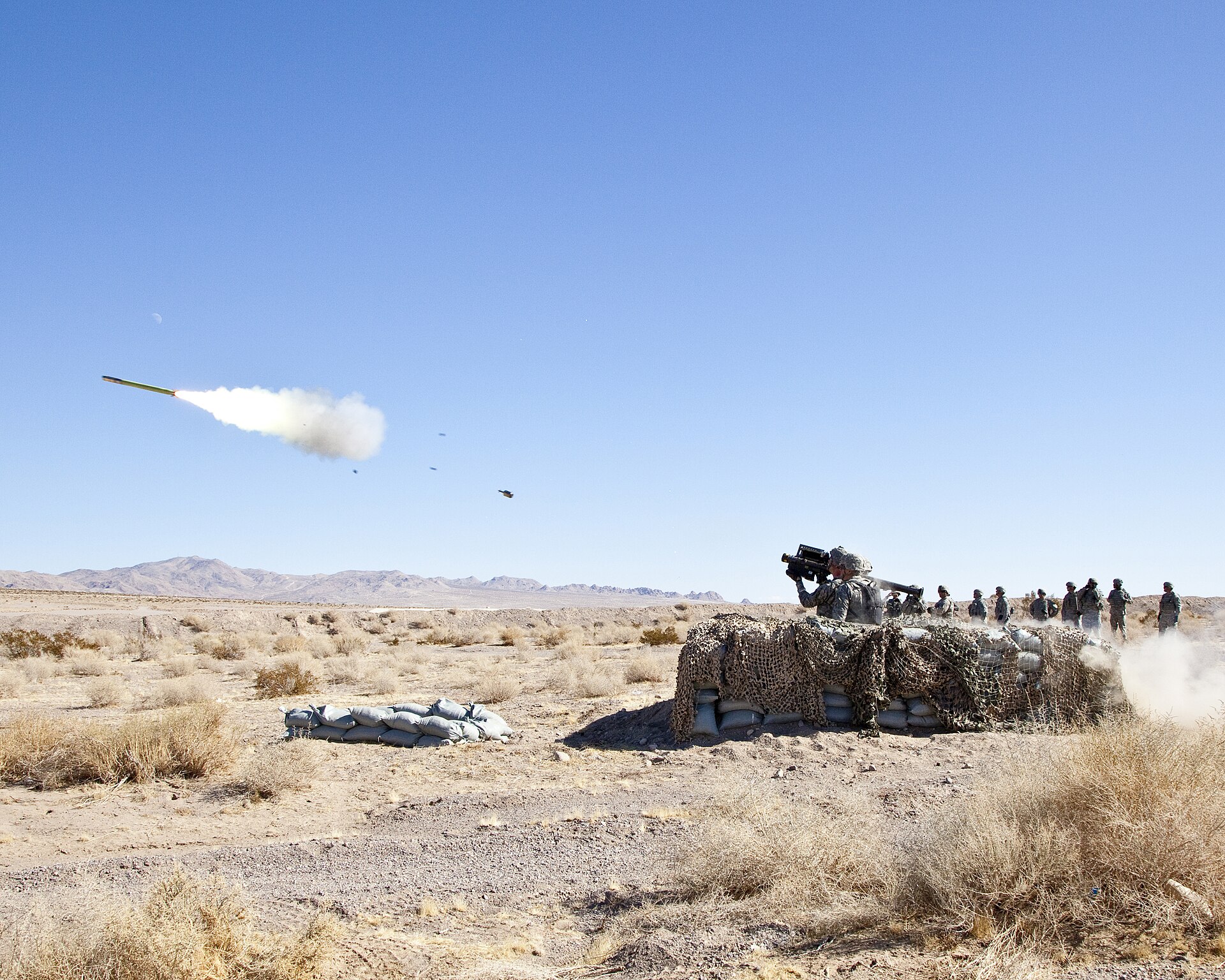
Few weapons have shaped modern warfare as much as the Stinger. Since the 1980s, the shoulder-fired American missile has threatened helicopters and low-flying aircraft from Afghanistan to Ukraine. Today the Stinger is in high demand again, even as the US Army works on a successor. Here is what you need to know.
- Man-portable air defence system (MANPADS) made by RTX (Raytheon)
- Entered US service in the early 1980s
- Passive infrared/ultraviolet seeker, fire-and-forget
- Effective range of roughly 4.8 km against low-flying targets
- Being replaced by the Next-Generation Short-Range Interceptor (NGSRI)
What is the Stinger?
The FIM-92 Stinger is a man-portable surface-to-air missile fired from the shoulder by one soldier. It homes on the heat of an aircraft’s engine and exhaust, so the operator can take cover as soon as it is launched. Beyond the shoulder launcher, Stingers are fired from vehicles such as the Avenger and M-SHORAD Stryker, and from helicopters including the AH-64 Apache.
Range and performance
The missile accelerates to well over Mach 2 and can engage targets out to roughly 4.8 km and up to a few kilometres in altitude. The complete system, including the gripstock launcher, weighs around 15 kg. Later versions added a dual infrared and ultraviolet seeker to resist flares, and the newest variants can use proximity fuzes to deal with small drones.
Combat history
The Stinger became famous in the 1980s when the CIA supplied it to Afghan mujahideen fighting the Soviet army. It forced Soviet helicopters and jets to change tactics. Four decades later, the United States and its allies sent thousands of Stingers to Ukraine, where they have been used against Russian helicopters, aircraft, cruise missiles and drones.
Production problems
The war in Ukraine exposed a weakness: the US had not bought new Stingers for years, and some components were obsolete. RTX had to redesign parts and bring retired engineers back to restart full production. Output has since increased, but the episode highlighted how thin Western stockpiles of key munitions had become.
The replacement: NGSRI
The US Army’s Next-Generation Short-Range Interceptor programme aims to field a successor with better range, sensors and resistance to countermeasures, and the ability to fit existing launchers. RTX and Lockheed Martin were selected to develop competing designs, and Lockheed reported the first flight test of its interceptor in January 2026.
Verdict
The Stinger remains one of the most effective and widely used air defence weapons in the world. Its successor will need to handle a battlefield filled with drones and cruise missiles, but for the rest of this decade, the Stinger will stay on the front line.
Featured image: Casey Slusser, U.S. Army / Public domain, via Wikimedia Commons